Photo: Well This Is News
Senate GOP blocks Iran war halt as Trump escalates naval blockade for months
Trump takes hard line on Iran as Senate rejects premature ceasefire demands
Trump's Iran blockade pushes oil past $126 as Senate Republicans block war limits
Key Takeaways
- The Democratic 60-day proposal included automatic war termination language that would resume fighting if any ceasefire paused the clock, which explains Republican rejection more precisely than 'blocking war limits' suggests.
- Trump's 2018 withdrawal from the Iran nuclear deal that Iran had honored created the conditions for this blockade, a precedent neither side discusses when framing current conflict.
- The Strait of Hormuz closure is technically Iranian retaliation under international maritime law for what Iran views as an illegal American blockade, a characterization neither side will openly make.
The Analysis
Trump's willingness to sustain an indefinite Iran blockade and Senate Republicans' refusal to impose a 60-day limit reveals a calculus neither side is naming clearly: the administration believes economic pressure requires time to work, while Democrats fear the political and economic cost of prolonged conflict. What neither side is discussing is the direct precedent being set and broken.
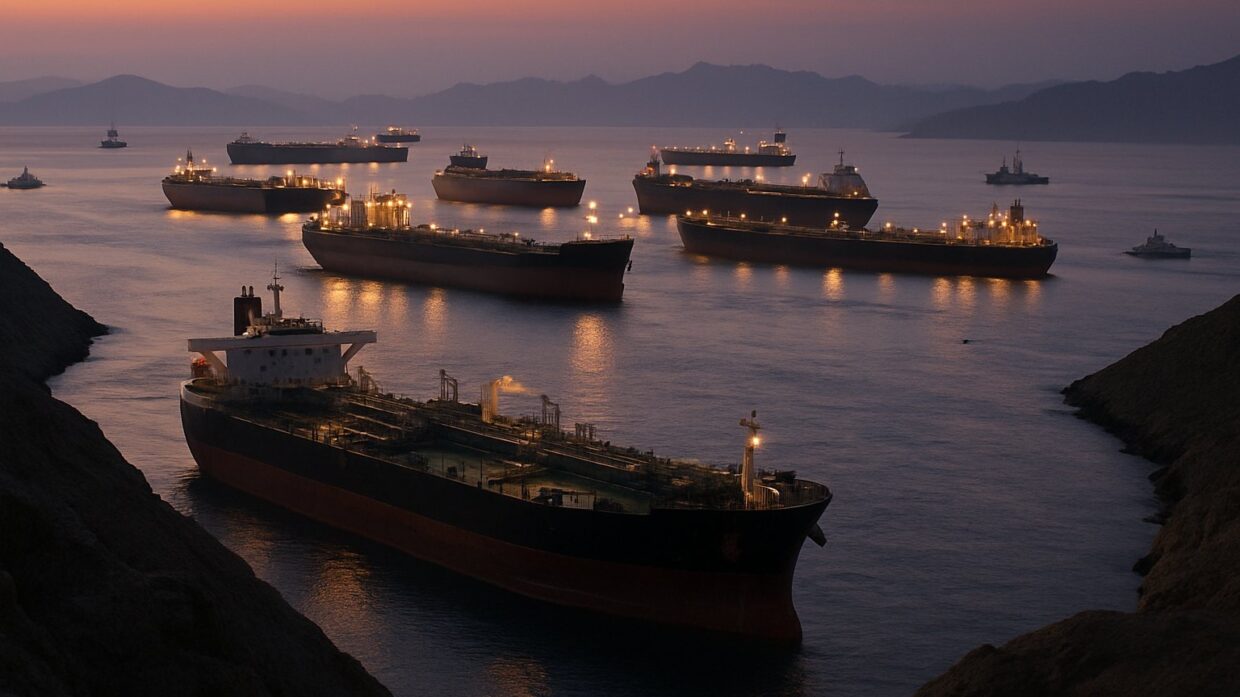
The specific fact: oil hit $126 a barrel on April 30, 2026, after Trump told markets the blockade could last 'months' rather than weeks. That language matters. Trump did not say 'as long as necessary' or invoke national security in the traditional post-9/11 framing. He specified duration in a way designed to signal seriousness to Iran while signaling patience to markets. Markets did not believe the patience part. The Strait of Hormuz, through which roughly 21 percent of global petroleum transits, is now effectively closed by Iranian action in response to American closure by blockade. Neither the U.S. nor Iran is technically blockading; both are. The Guardian reported this as markets 'spooked,' a word that conceals the material fact: oil traders are pricing in months of supply disruption, not days.
The left's framing, visible in the Senate vote coverage, uses the language 'block halt' and 'block effort to limit.' This phrasing makes the Republican action sound passive, reactive, defensive. What it obscures: Senate Republicans actively voted down a specific piece of legislation. The Democratic proposal named a number, 60 days, and tied it to the language 'ceasefire.' Here is what neither side names: the dispute over 'whether ceasefire pauses clock' is not a technical accounting question. It is the entire war. If the ceasefire pauses the 60-day clock, the war can theoretically restart without a new vote. If the ceasefire does not pause the clock, any pause in fighting triggers automatic war termination. This is why Republicans rejected the language. They rejected not war, but automatic termination mechanisms. The Guardian reported the vote count (two Republicans sided with Democrats) but not the legislative substance of what those two Republicans were actually voting to preserve.
The right has provided no major statement in these sources, but the structural reality is this: the Trump administration, having initiated the blockade, controls the calendar. The Senate vote was theater designed to make Republican opposition to war limits visible on the record without changing policy. Only two Republicans broke. That is not accident; it is discipline. Trump signaled 'months' to tell Iran he will not flinch first. That same signal tells Senate Republicans: do not fold.
What both sides omit: the 2015 Joint Comprehensive Plan of Action (JCPOA), the Iran nuclear deal, was abandoned by Trump in 2018. This blockade is not a response to Iranian nuclear activity; it is the continuation of a conflict that began when Trump withdrew from the agreement Iran had honored. Neither side references the prior American commitment or its abandonment. Neither side names the specific Iranian response: the closure of the Strait of Hormuz is legal retaliation under international maritime law for an illegal blockade. Neither the left nor the right will name it that way. The left calls it 'escalation,' the right calls it 'hostile action.' Both are true. Both are incomplete.
The real headline: Trump's indefinite blockade and Senate Republican refusal to limit it has created a dual closure of the world's most critical oil chokepoint, driven by an American abandonment of a prior agreement that had prevented exactly this conflict.
The collapse of the JCPOA and the resulting dual closure of the Strait of Hormuz demonstrate that abandoning international agreements without replacement architecture guarantees the return of the conflicts those agreements were designed to prevent.