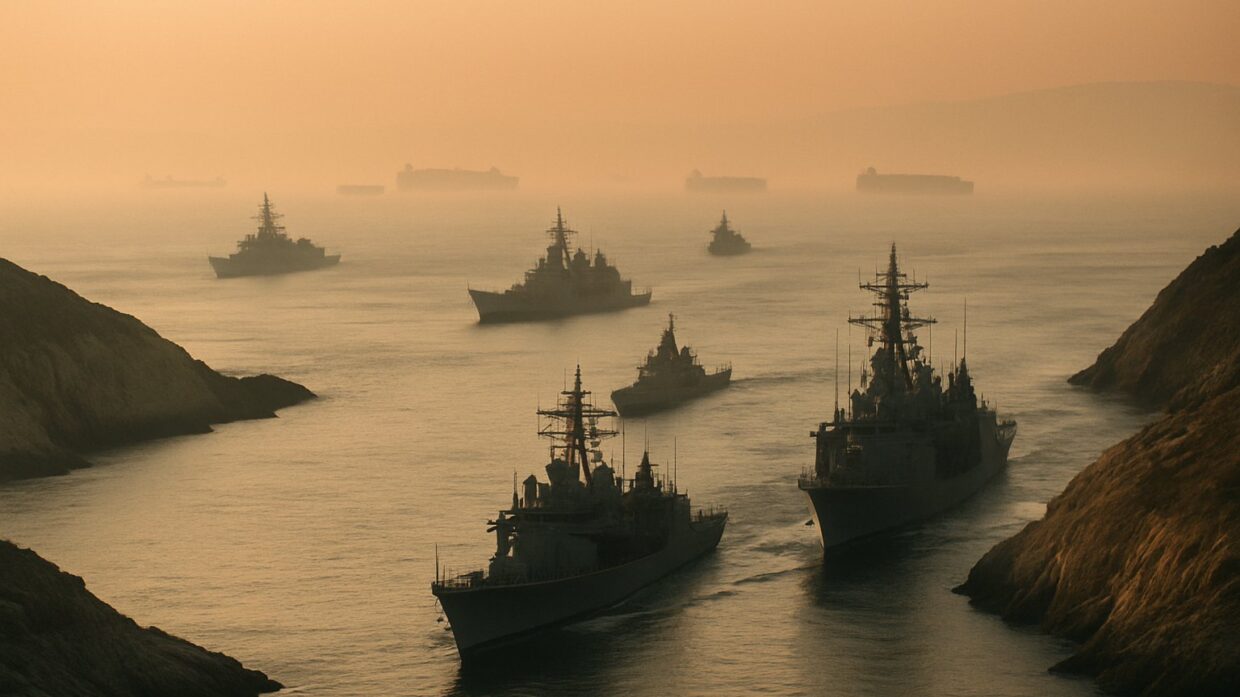
Photo: Well This Is News
Trump's military escalation risks wider conflict as US extends Iran blockade indefinitely
Trump signals strength against Iran as regional leverage increases amid regime infighting
Trump extends naval blockade in Iran standoff as strait of Hormuz tensions escalate
Key Takeaways
- Trump's decision to extend the blockade was triggered by Iran seizing two container ships, not initiated as unprovoked escalation, yet Trump's 2018 nuclear deal withdrawal and 2020 assassination of Soleimani created the conditions for Iran's response.
- Both sides avoid acknowledging that Trump's removal of experienced Iranian negotiators years ago means the Iranian regime may lack internal authority structures capable of accepting a diplomatic deal even if one were offered.
- The UK's deployment of RAF Typhoons as part of a 30-country coordination effort represents a parallel diplomatic track that neither left nor right sources emphasized, suggesting continued space for negotiation outside the military posturing.
The Analysis
The Trump administration's decision to extend the naval blockade of the strait of Hormuz after Iran seized two container ships has triggered a collision between how each side frames strategic strength—and both are being deliberately selective about what happened before this moment.
The verified facts are these: Iran seized two container ships in the strait. Trump announced the blockade would continue indefinitely, claiming the US has "total control" over the waterway. The Pentagon briefed that mine clearance could take six months. Oil prices rose above $106 per barrel. The UK proposed deploying RAF Typhoons as part of a 30-country diplomatic coordination effort. No ceasefire agreement is in place.
The left frames this as "military escalation poses even greater risk," using The Guardian's exact language that Trump's "decision to extend the naval blockade" is an "admission" that escalation backfires. This framing treats the blockade as Trump's initiative, as an aggressive choice he made. What this omits: Iran closed the strait first in response to the initial blockade. Iran seized the ships. The left's narrative inverts the sequence and removes Iran's agency, making the American response look like unprovoked escalation. The political convenience is obvious—it supports the argument that Trump is reckless and pushing toward wider war.
The right frames this through Trump's strength and Iranian weakness. The Daily Wire's coverage emphasizes "Iranian protests intensify as citizens demand end to Ayatollah rule," a headline that treats internal dissent as proof of regime failure. Trump's own language—"Tehran hobbled by infighting"—does the same work. This narrative suggests the blockade is working, that Iran is fracturing, that Trump has leverage. What this omits: The Guardian's own analysis directly contradicts this. Its piece titled "Trump may talk of regime infighting, but Iran seems united by strategy born of war" notes that Iran's strategy appears coordinated despite surface tensions. The right's omission is selective attention to which Iranian actors are visible versus which are making decisions.
Neither side names the actual history that explains how we arrived here. In January 2020, Trump ordered the assassination of Qasem Soleimani, Iran's most experienced military strategist and the figure who had negotiated with pragmatists. The Guardian's analysis specifically notes this was a "mistake of assassinating more pragmatic and experienced figures." That removal of negotiating partners from the Iranian side is not something Trump wants emphasized—it complicates the "strength" narrative. And the left doesn't want to emphasize it either, because it would require acknowledging that Trump's prior decision to withdraw from the JCPOA nuclear deal in 2018 and then kill Soleimani in 2020 set the conditions for the current standoff. Both sides prefer to pretend the conflict began last week.
The real headline neither side is saying: Trump is extending a blockade that Iran initiated in response to previous US actions, both sides are avoiding negotiation, oil markets are pricing in indefinite tension, and the removal of experienced Iranian negotiators years ago means the regime may literally lack the internal authority structure to accept a deal even if one were offered. This is not strength or weakness. It is a structural trap both sides helped build.
The blockade represents the predictable endpoint of years of escalation and the removal of negotiating partners on both sides, meaning neither nation may possess the internal authority to exit even if both wanted to