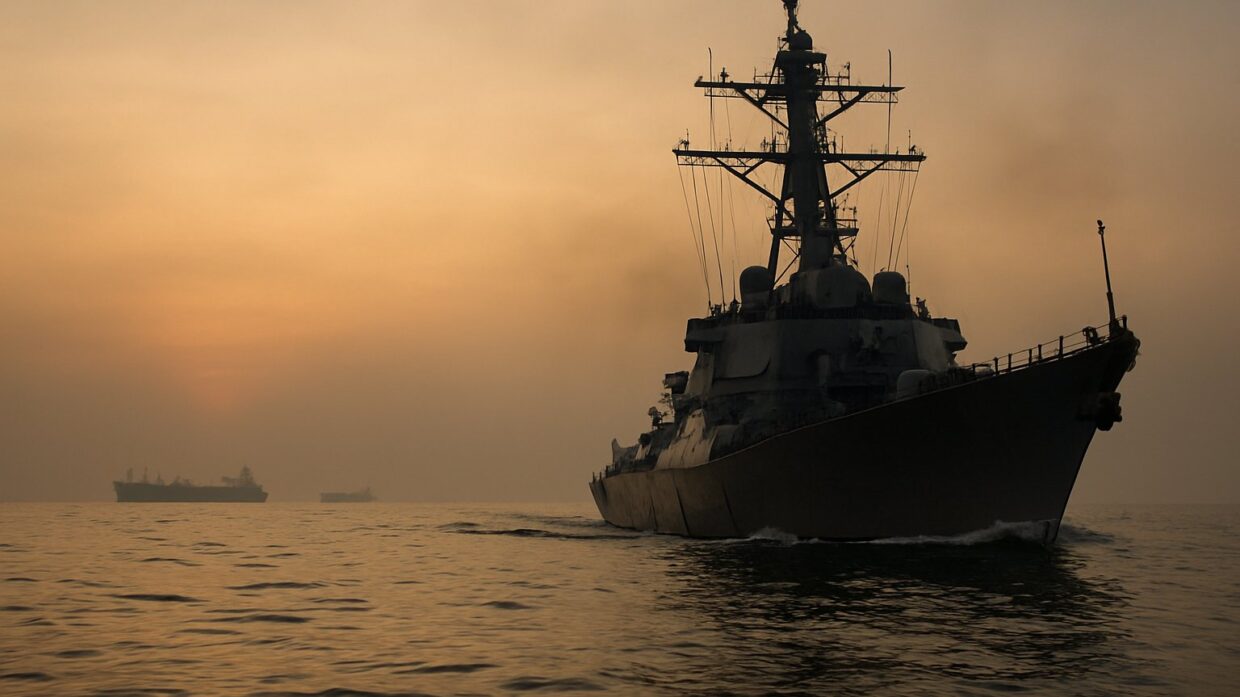
Photo: Well This Is News
We haven't found a left-leaning take on this story yet.
Breaking stories sometimes publish before every side has covered them. We'd rather show you that than invent a view.
CENTCOM: U.S. Blockade Inflicts 'Devastating Costs' on Iran, IRGC Unable to Pay Troops
CENTCOM Commander Reports U.S. Naval Blockade Cost Iran $25B in Oil Revenue
Key Takeaways
- Iran-backed militias have begun transferring money to the IRGC to offset blockade losses, suggesting either a squeeze on proxy military capacity or undisclosed alternate revenue sources the CENTCOM statement does not address.
- The blockade's sustainability remains unclear because neither Cooper's statement nor media reporting explains whether militia money transfers represent permanent resource reallocation or a temporary emergency measure while Iran seeks other revenue sources.
- The legal and diplomatic foundation authorizing this naval blockade has not been disclosed, leaving readers unable to determine whether this constitutes a de facto embargo or a recognized blockade under international law.
The Analysis
Adm. Brad Cooper, the CENTCOM commander, disclosed on Friday that a U.S. naval blockade has cost Iran approximately $25 billion in oil revenue over nine months and left the Islamic Revolutionary Guard Corps unable to meet payroll, yet the three outlets reporting this announcement emphasized fundamentally different implications of those same facts.
Cooper stated in Friday remarks that the blockade has inflicted what he characterized as 'devastating costs' on Iran's economy. He quantified the damage at $25 billion in denied oil exports. He also reported that Iran-backed militias operating across the region have begun transferring money back to the IRGC to compensate for revenue losses. The military's financial pressure campaign appears to have created a secondary effect: a redistribution of resources from proxy forces toward Tehran's elite military institution. These are the documented claims made by the CENTCOM commander on the record.
Breitbart's framing emphasizes the scale of regime financial distress. The headline leads with the word 'Devastating' in quotation marks, attributing Cooper's exact language to underline severity. It foregrounds the IRGC's inability to pay troops as the most consequential outcome. By opening with financial collapse effects rather than the blockade itself, Breitbart invites readers to interpret this as evidence that U.S. pressure is working as intended and that the Iranian military structure faces structural degradation. The word choice 'Devastating' and the emphasis on payroll failure constructs a narrative of mounting internal Iranian crisis.
Axios takes the same facts and reframes them around adaptation and resource flows. The headline highlights that militias are 'sending money back' to the IRGC, which shifts focus from regime distress to regime resourcefulness. By opening with the adjustment mechanism rather than the blockade's success, Axios's framing suggests Iran is finding workarounds. The phrase 'to relieve the economic pressure' acknowledges the blockade's impact but emphasizes Iran's capacity to distribute burdens across its proxy network. This framing leaves readers with an image of a pressure valve rather than a tightening noose.
What neither outlet adequately foregrounds is the time horizon embedded in Cooper's disclosure. A blockade that has produced $25 billion in denied revenue over nine months suggests an annualized impact approaching $33 billion, assuming consistent enforcement and assuming oil markets do not adjust pricing to compensate. But Cooper's statement about militia money transfers introduces an unstated problem: if proxy forces are financing the IRGC rather than funding their own operations, then either those proxy forces are drawing down their own operational capacity or they are finding alternate revenue sources that the CENTCOM statement does not address. The sustainability question remains opaque. Neither account explains whether the militia transfers represent a permanent shift in resource allocation or a temporary emergency measure while Iran seeks other revenue sources.
The institutional fact being omitted across all three accounts is the legal and diplomatic foundation of this blockade. No outlet specifies which maritime laws, U.N. resolutions, or bilateral agreements authorize this naval cordon or whether it has been formally declared. The absence of that context makes it difficult for readers to understand whether this is a de facto embargo or a recognized blockade under international law, or whether other nations have formally recognized or contested it. That distinction affects the precedent being set.
Cooper's disclosure appears designed to demonstrate that economic pressure is functioning as a coercive tool. What remains undisclosed is whether degrading IRGC payroll capacity serves U.S. strategic objectives or merely imposes costs that Iran absorbs through proxy redistribution. The difference between imposing costs and achieving leverage is material and not addressed in any of these framings.
Iran's ability to redirect militia resources toward the IRGC suggests the blockade creates temporary financial strain rather than structural collapse, which fundamentally alters assessments of coercive effectiveness. If proxy forces are funding Tehran's military institution instead of expanding their own operations, the U.S. has imposed costs without necessarily gaining leverage over Iranian decision-making. The sustainability of militia transfers remains unknown. More critically, no account examines the legal basis authorizing this naval cordon, leaving unclear whether it establishes precedent for similar economic warfare or faces diplomatic challenge from other maritime powers. The blockade's long-term strategic value depends on whether it forces Iranian policy concessions or simply redistributes financial burdens within an intact state apparatus.