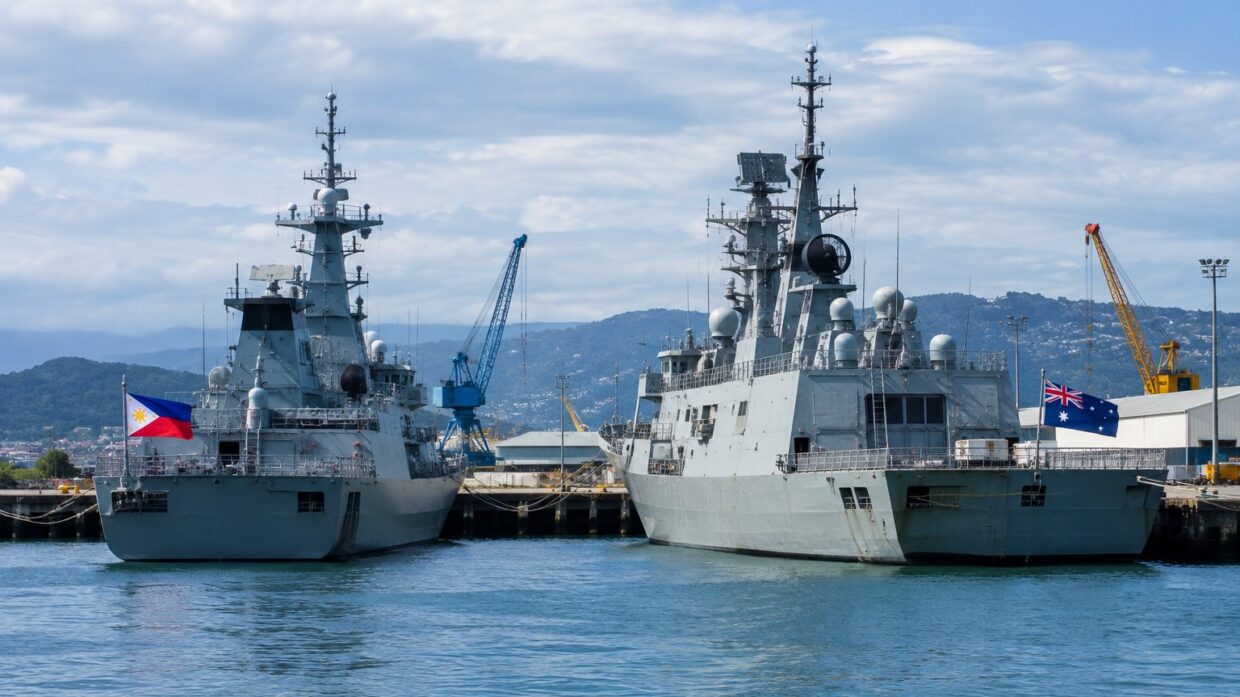
Photo: Well This Is News
We haven't found a left-leaning take on this story yet.
Breaking stories sometimes publish before every side has covered them. We'd rather show you that than invent a view.
Australia and Philippines Sign Updated Defense Pact Amid China Concerns
Read More... from Australia and Philippines Sign Updated Defense Pact Amid China Concerns
Australia and Philippines Sign Updated Defense Pact Amid China Concerns
Key Takeaways
- Neither government disclosed the actual text of the agreement or revealed what specific military capabilities, operational commitments, or implementation timelines it creates.
- The Philippines has experienced direct military confrontations with Chinese coast guard vessels at Second Thomas Shoal in the South China Sea, a critical context neither source emphasized when explaining why Manila sought this defense upgrade.
- This agreement updates a defense framework dating back to at least the early 2000s, but neither source explained what operational gaps in the previous agreement this update fills or whether it represents routine modernization or significant military escalation.
The Analysis
Australia and the Philippines signed a defense agreement on Sunday that both nations framed as a response to China's military posture in the region, though the agreement itself contains no explicit mention of Beijing and neither government has disclosed the specific operational commitments it creates.
The pact updates an existing defense framework between the two nations. Breitbart reported it aims at "fast-tracking military cooperation" and "bolstering deterrence." Bloomberg framed the same agreement as "boosting military cooperation" with a "focus on China." Neither source provided the text of the agreement, the specific military capabilities it enables, or the timeline for implementation. The public record does not establish which nation initiated the update or what operational gaps the previous framework left unaddressed.
The right-leaning framing emphasizes deterrence language and China's military presence as context for the agreement. That language serves a particular analytical function: it positions the pact as a defensive response to an external threat rather than as a proactive military expansion by Australia and the Philippines themselves. The framing leaves out context about what specific Chinese actions prompted the update or whether this agreement represents a material shift in the defense relationship or a routine refresh of existing protocols.
The center-left framing emphasizes that the two nations are US allies and that both face a "more assertive" China. That word choice, "assertive," leaves the evaluation of Chinese behavior to implication rather than specificity. Neither source defined what actions constitute assertiveness or distinguished between Chinese military activity in disputed waters versus undisputed territory. Bloomberg's emphasis on the US alliance angle suggests the agreement's significance lies partly in reinforcing the broader Western alignment in the region, though that implication remains unstated.
What neither framing addresses is the bilateral history this agreement updates. Australia and the Philippines have had a defense framework since at least the early 2000s. The new agreement appears to be a modernization of that relationship, but neither source provided the prior agreement's text, the specific operational constraints it contained, or how this update removes them. That omission matters because it determines whether this is a significant escalation in military ties or administrative alignment with existing commitments.
Also undisclosed: whether this agreement coordinates with the existing network of US-led regional security arrangements, including the Quad partnership and AUKUS (the Australia-UK-US pact). Readers cannot determine from the available reporting whether this agreement fills a gap in existing arrangements or duplicates commitments already made through other channels.
The Philippines' strategic position warrants particular attention because it sits in the contested South China Sea and has experienced direct military confrontations with Chinese coast guard vessels in recent years, most notably at Second Thomas Shoal. That specific history provides essential context for understanding why Manila would prioritize this defense upgrade, but neither source foregrounded it. Readers unfamiliar with that maritime dispute cannot assess whether the agreement responds to a specific recent incident or represents a longer-term strategic shift.
What the record establishes is that two US-aligned nations in the Asia-Pacific have formalized an updated defense relationship. What remains unclear is whether this signals a material change in military posture or reflects routine maintenance of existing commitments repackaged for public consumption during a period of heightened regional attention to China policy.
This agreement establishes a institutional precedent for bilateral defense formalization outside the traditional US-led alliance structure, potentially creating operational space for Australia and the Philippines to coordinate military responses without requiring explicit American authorization or input. If the pact creates autonomous command arrangements or intelligence-sharing protocols not linked to existing US frameworks like AUKUS, it fragments the regional alliance system that has depended on centralized American coordination. The Philippines gains leverage to respond more independently to maritime confrontations in the South China Sea, reducing its dependency on US intervention at Second Thomas Shoal and elsewhere. Australia simultaneously signals to regional partners that it can build security relationships apart from Washington, which reshapes how other Indo-Pacific nations calculate their alignment strategies. Without disclosed implementation details, the agreement's institutional weight remains hidden, but the act of updating the framework while China conducts military exercises nearby signals that bilateral defense pacts now serve as the operational currency of regional competition, setting a pattern other nations will replicate.