Trump's Military Blockade Contradicts Diplomatic Overtures as Iran Talks Resume
US Enforces Hormuz Blockade While Pursuing Iran Negotiations in Islamabad
US Blockade of Hormuz Begins as Iran Peace Talks Scheduled for Second Round
The Analysis
The Trump administration is simultaneously imposing a military blockade on the Strait of Hormuz—one of the world's most critical energy chokepoints, through which roughly 20 percent of global oil passes—while announcing it is "inclined" to resume peace talks with Iran in Islamabad within two days. This is not a contradiction. It is a deliberate strategy, and understanding which parts each side is emphasizing reveals what each believes will actually force a deal.
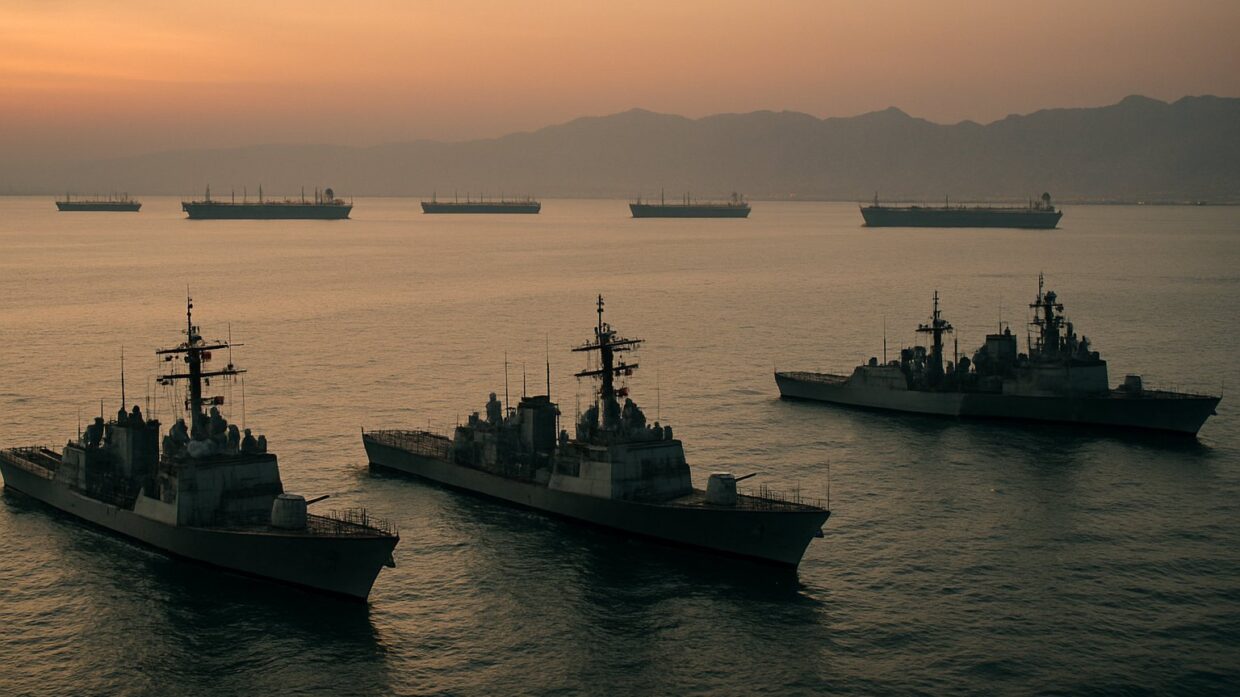
The verified facts: A US blockade of the Strait of Hormuz began in the week of April 14, 2026, following the failure of the first round of US-Iran peace talks in Islamabad. Trump stated talks "could resume in the next two days" and praised Pakistani Army Chief Asim Munir as "fantastic" for hosting. Bloomberg reported that Iran is considering pausing shipments through the strait to facilitate negotiations. Ship traffic through Hormuz has been "at a near-standstill for weeks," according to NBC's data tracking, sending oil and commodity prices upward. A two-week ceasefire window is expiring, creating a deadline.
The left frames this as coercive theater disguising escalation. The Guardian and MSNBC reporting emphasizes the word "blockade"—a term with historical weight, evoking the 1962 Cuban Missile Crisis and suggesting an act of war by another name. They highlight that Trump is speaking of talks while enforcing military pressure, characterizing it as inconsistent or manipulative. The Atlantic's framing—"Least Bad Option"—acknowledges Trump has shifted strategy but questions whether outcome will change. This framing leaves unstated why economic pressure during talks would be counterproductive if the goal is Iranian concessions. It also omits that Iran's previous nuclear program expansions occurred during negotiation phases, not in response to pressure.
The right would emphasize (though the provided sources don't strongly voice this) that the blockade is precisely why Iran will negotiate seriously now. Leverage is not negotiation's opposite—it is negotiation's prerequisite. Trump's statement that Pakistan will host talks is meant to signal: the door is open, but only if you move. The blockade is not a sign of bad faith; it is a sign that the US is no longer willing to negotiate from weakness. Right-leaning analysis would note that previous administrations negotiated with Iran while Iran advanced its nuclear program, and that Trump's approach inverts this: he is willing to talk, but only under conditions where Iran has immediate economic incentive to accept limits.
What neither side is stating clearly: The 2015 Iran nuclear deal (JCPOA) was abandoned by Trump in 2018, followed by "maximum pressure" sanctions that devastated Iran's economy. Iran responded by expanding uranium enrichment beyond JCPOA limits. Subsequent administrations attempted diplomacy without leverage, producing no binding agreements. Trump's return to the White House coincided with renewed military tensions, including reported strikes and blockade threats. The first Islamabad talks failed—neither source names why or what offer was rejected. A blockade during ceasefire negotiations is not new: it is a continuation of pressure, not a departure from it.
The real headline: Trump is executing a coercive negotiation strategy—leverage first, talks second—betting that Iran will accept limits only under economic duress. Whether Iran interprets this as serious negotiation or as performance art while the US prepares escalation depends entirely on what happens in the next two weeks. The blockade's success will be measured not by ships passing through but by whether it produces a binding agreement Iran actually honors, or whether it simply narrows the window before military action resumes.