Photo: Well This Is News
Trump denies offering Iran sanctions relief while secretly negotiating through Qatar and Pakistan
Trump: US will win Iran war 'very soon' as talks continue with mediators
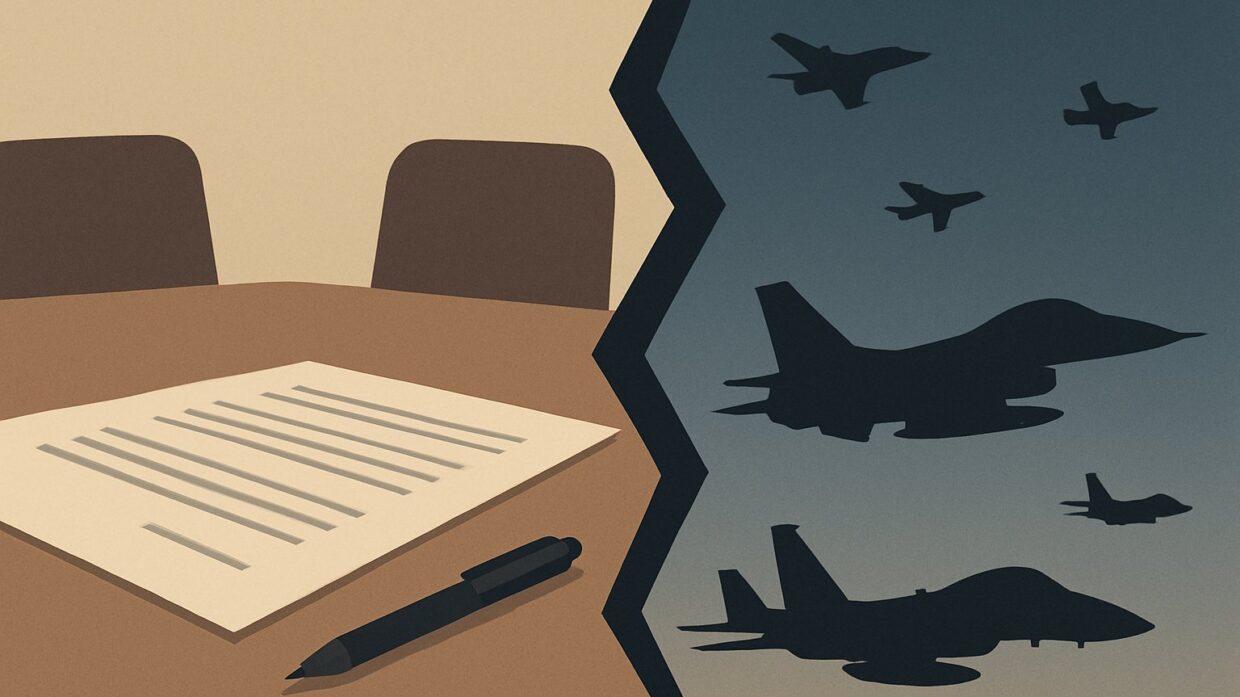
Trump simultaneously threatens Iran war victory and pursues nuclear negotiations through mediators
Key Takeaways
- Identifiable U.S. officials told Axios the administration would offer Iran sanctions relief for nuclear concessions, but Trump denied the report without clarifying whether talks are actually happening.
- Trump's simultaneous public threat of imminent military victory and private denial create ambiguity about whether he is negotiating seriously or signaling he prefers military action.
- The reporting establishes that mediated negotiations are occurring through Qatar and Pakistan, but neither Trump's denial nor his public statements reveal whether the proposed terms are more or less restrictive than the 2015 nuclear deal.
The Analysis
Trump issued two contradictory statements about Iran policy within hours on Monday: a public threat of imminent military victory and a private denial that he authorized sanctions negotiations. What the record actually shows is a gap between what Trump said publicly and what U.S. officials told Axios the administration was willing to offer.
According to Axios, U.S. officials stated Trump would provide Iran with sanctions relief and access to frozen funds in exchange for Iranian nuclear concessions. The reporting names specific mediators: Qatar and Pakistan. Axios attributes this information to "U.S. officials," not anonymous sources, meaning identifiable people in the administration made these statements to the publication. The same day, Trump posted on social media that the Axios story was false. His exact language: "Axios just released a story that 'Trump' offered Sanctions Relief and Frozen Funds to Iran." He placed his own name in quotation marks, suggesting skepticism about the attribution itself.
The left's framing emphasizes the contradiction as evidence of bad faith. The narrative holds that Trump campaigned against the Obama-era Iran nuclear deal, called it "the worst deal ever," and promised to tear it up. Offering Iran sanctions relief now appears as capitulation dressed in military rhetoric. The phrase "secret negotiations" appears in left-leaning coverage, though the reporting itself says mediators were involved, which is standard diplomatic practice, not inherently secretive. What this framing leaves out is whether the terms Trump was reportedly willing to offer were actually more restrictive than the 2015 deal, which is a factual question the available reporting does not answer.
The right's framing emphasizes Trump's public language of strength and his immediate denial. Breitbart's headline leads with "U.S. Will Win Iran War 'Very Soon'" and quotes Trump saying the outcome will be decided "one way or the other," language that suggests military readiness. The right interprets the denial of the Axios report as proof that the administration is not softening on Iran. What this framing leaves out is that the denial itself does not clarify what Trump's actual position is. Trump denied that he made an offer. He did not confirm or deny whether negotiations are occurring.
What neither frame fully captures is the structural problem created by Trump's simultaneous rhetorical positions. If mediated talks are genuinely occurring, the public threat of imminent military victory may weaken the U.S. negotiating position by signaling that Trump believes he can achieve more through force. If Trump is not seriously negotiating, then the Axios reporting reflects miscommunication within the administration about what U.S. officials are authorized to say. The available record does not establish which is true.
The real headline is simpler: Trump's public and private signals about Iran are sending contradictory messages that neither his supporters nor his critics can reliably interpret. The Axios report indicates active negotiations are occurring. Trump's denial suggests either those negotiations are not happening, or they are happening under terms he does not want publicly disclosed. Until Trump or his officials clarify which, the U.S. negotiating position with Iran remains ambiguous, and so does Trump's actual strategy.
Contradictory signals from a president conducting nuclear diplomacy create immediate operational risk. If mediators in Qatar and Pakistan are genuinely negotiating with Iran on Trump's behalf, public threats of imminent military victory telegraph weakness to Iranian counterparts by suggesting the administration doubts its own negotiating leverage. If those talks are not actually authorized, Trump's denial exposes fractures within his national security team about who speaks for U.S. policy, undermining credibility with both allies and adversaries who cannot determine what America actually intends. Either scenario degrades American leverage in a region where ambiguity about presidential intent has historically preceded miscalculation.