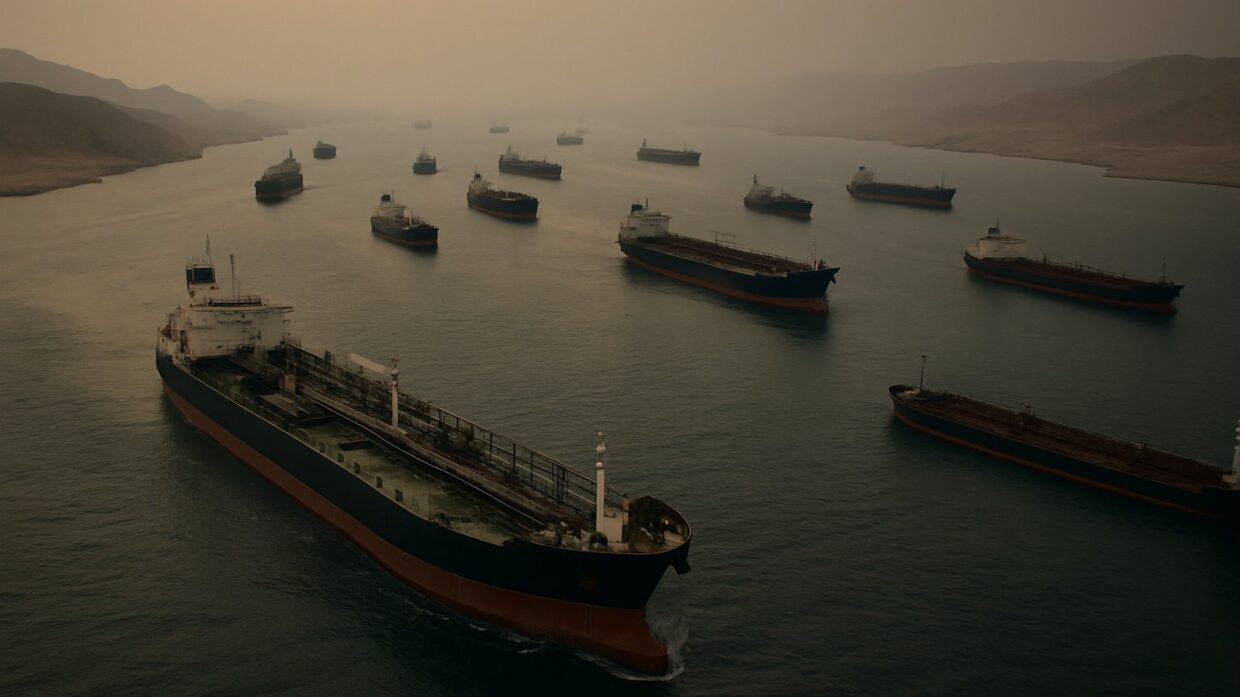
Photo: Well This Is News
Iran escalates maritime tensions after Trump extends ceasefire, complicating diplomatic path
Iran seizes ships in Hormuz as US diplomatic efforts collapse following ceasefire extension
Iran seizes ships in Strait of Hormuz as US ceasefire extension falters into renewed escalation
Key Takeaways
- Trump's ceasefire extension did not include removal of US sanctions or the naval blockade that has been in place since 2018, leaving the underlying economic pressure on Iran intact.
- Both the US and Iran have been running parallel blockade strategies in the Strait of Hormuz for months—the US through financial sanctions and naval assets, Iran through seizures and closure threats—making this incident part of a continuing cycle rather than a new escalation.
- Neither the ceasefire extension nor Iran's response changed the fundamental stalemate: the US blockade remains in place, Iran reasserted counter-pressure through ship seizures, and the corridor remains contested despite the diplomatic pause.
The Analysis
Iran seized multiple ships in the Strait of Hormuz within hours of President Trump extending an indefinite ceasefire, a move that both sides are framing as evidence of the other's bad faith—but the actual mechanics reveal a more deliberate escalation cycle driven by months of mutual blockade threats that preceded this week's headlines.
Here are the verified facts: Trump extended the ceasefire on April 22, 2026. Iran's Revolutionary Guard seized ships the same day. Scheduled diplomatic talks in Pakistan between US and Iranian representatives did not occur. The Guardian reported Iran's stated goal was to "maintain chokehold on the global economy." NPR noted Iran claimed storage capacity concerns, with one analysis suggesting Iran could run out of oil storage by April 24. Fox News and The Hill both confirmed the timing: seizures occurred less than 24 hours after the ceasefire extension announcement.
The left's framing—dominant in Guardian, NPR, and HuffPost coverage—uses the language "escalation" and "complicating diplomatic efforts." Notice the passive construction: the seizures "complicated" talks rather than Iran rejecting talks. The Guardian article specifically emphasizes Iran's "chokehold on the global economy," treating the seizure as a strategic move with economic consequences for the West. The omission here is the prior six months of US blockade measures that preceded Iran's response. These sources do not ask: what economic pressure was already in place when Trump extended the ceasefire? The answer—that the US had imposed extensive sanctions and a de facto naval blockade—gets buried or omitted entirely.
The right's framing—Fox News and conservative outlets—uses "seizes" as the active verb and "rejection" as the narrative frame. Trump "extended" the ceasefire; Iran responded with seizure. The structure implies American restraint meeting Iranian aggression. The exact language Fox deployed: "Iran's Revolutionary Guard seized two ships...escalating the U.S.-Iran maritime standoff." The omission here is equally deliberate: no mention of what ceasefire extension actually means operationally. Did the extension include easing the blockade? The sources do not answer this. Why would Iran seize ships in response to extended ceasefire unless the extension came without corresponding de-escalation? This question goes unasked.
What both sides are quietly leaving out: the Strait of Hormuz blockade did not begin on April 22. It began with Trump's 2018 withdrawal from the JCPOA nuclear accord and the reimposition of comprehensive sanctions. Iran then threatened to close the Strait—a chokepoint through which 21 percent of global oil transits—in response. The US, under Trump, deployed additional naval assets. Successive administrations have treated Iranian threats to the Strait as separate incidents rather than responses to sustained economic warfare. When Trump "extended" the ceasefire, he did not announce removal of sanctions or the naval blockade. He extended a temporary pause. From Iran's perspective, a ceasefire without sanction relief is not an agreement—it is a pause before the same pressure resumes. The seizure follows that logic: if the blockade remains, why not assert counter-blockade pressure?
The actual story neither outlet reported directly: both the US and Iran are running parallel blockade strategies in the same corridor. The US blockade operates through financial sanctions and naval positioning. Iran's operates through seizures and threat of closure. Calling one "escalation" in response to the other being "extended" requires pretending the first blockade either doesn't exist or is not a blockade. It is. Both are real. Both started before this week. The ceasefire extended nothing substantive—it simply paused active military operations while leaving the economic siege intact. That is why Iran responded. Not because the ceasefire was extended, but because nothing else changed.
The real headline: Ceasefire extended without sanctions relief; Iran responds with maritime seizures, proving blockade stalemate remains intact despite diplomatic pause.
Control of the Strait of Hormuz—through which one-fifth of global oil flows—will determine whether future US administrations can sustain any negotiated settlement with Iran, making this week's seizure less a diplomatic failure than a structural preview of decades of maritime conflict unless one side abandons blockade strategy entirely.