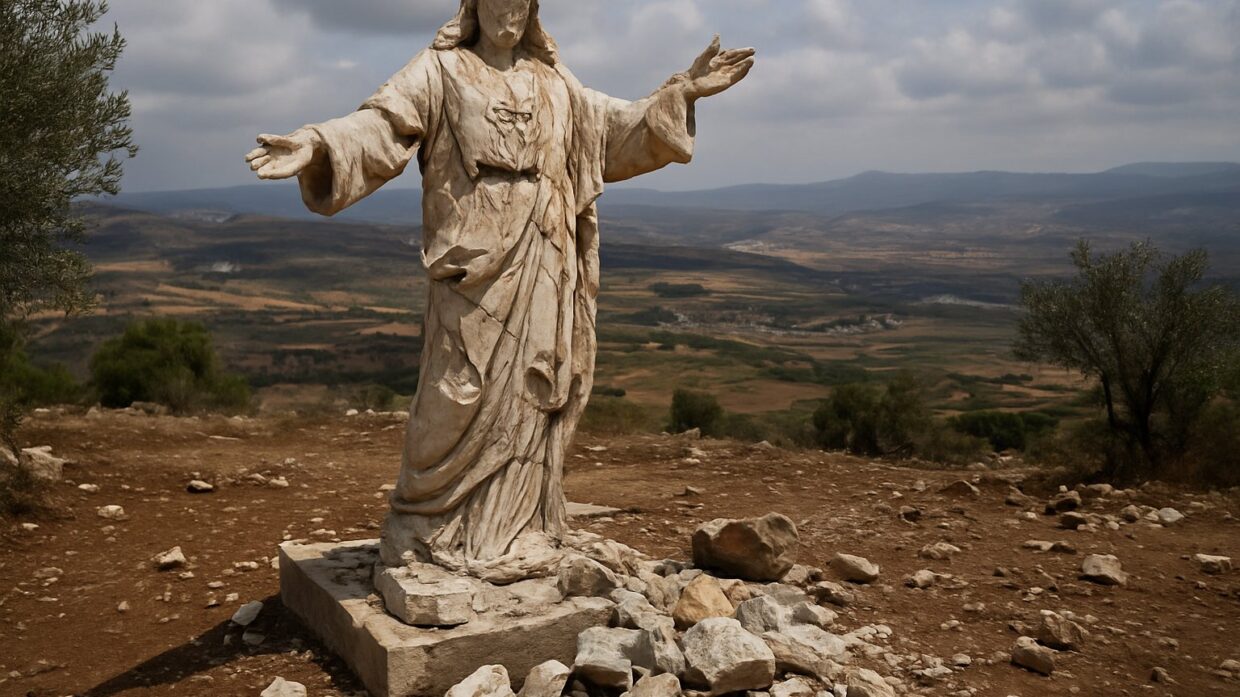
Photo: Well This Is News
Netanyahu condemns soldier's vandalism of Jesus statue as Israel faces backlash over occupation conduct
IDF swiftly investigates soldier's damage to Christian statue, Israeli leadership denounces desecration
Israeli soldier damages Jesus statue in Lebanon; IDF launches investigation as regional tensions escalate
Key Takeaways
- A soldier operating in Lebanon—territory not under Israeli sovereignty—felt emboldened enough to deliberately damage a religious statue on camera, suggesting underlying questions about what military culture and operational conditions in contested zones permit soldiers to believe is acceptable.
- Netanyahu's rapid denunciation proves the soldier's apparent assumption of tolerating consequences was wrong, but does not explain why that assumption existed in the first place.
- Both sides are framing the story through institutional accountability narratives rather than addressing the fundamental question of what conditions in military operations in contested territory enable soldiers to commit such acts.
The Analysis
An Israeli soldier photographed with a sledgehammer destroying a Jesus statue in southern Lebanon has triggered coordinated condemnation from Israeli leadership, but the actual facts reveal a story both sides are framing through their preferred narrative about military discipline rather than the harder question about what happens when soldiers operate in occupied or contested territory without restraint.
Here is what actually happened: The Israel Defense Forces confirmed that a photograph circulating online showed an IDF soldier deliberately damaging a statue of Jesus Christ located in southern Lebanon. Prime Minister Benjamin Netanyahu responded by stating that "harsh disciplinary action" would be taken and that the IDF would launch a criminal investigation into the incident. The military committed to "appropriate measures" against those involved. The photo went viral across multiple platforms, with outlets from The Guardian to MSNBC to Breitbart all covering the same core fact: an Israeli soldier, sledgehammer in hand, destroying a religious statue.
The left's framing emphasizes this as evidence of systemic conduct problems during military occupation. The Guardian's language — "occupation conduct," connection to broader IDF discipline concerns — positions the incident as part of a pattern. MSNBC's headline, "Israeli soldier seen striking Jesus statue in Lebanon, sparking condemnation," centers the international disapproval and the implication that such acts require external pressure to generate Israeli response. This framing serves a political purpose: it suggests that without viral photos and international outcry, such conduct would go unchecked. It leaves out any acknowledgment that Israel's own military and political leadership immediately and harshly condemned the act without waiting for external pressure.
The right's framing emphasizes swift institutional accountability. The Daily Wire's headline — "Netanyahu Doesn't Mince Words" — and Breitbart's language about the IDF "condemning" and committing to "appropriate measures" focuses on the speed and severity of Israel's internal response. This framing serves a different political purpose: it positions Israeli leadership as committed to discipline and rule of law. It leaves out the underlying question entirely: what conditions allow a soldier to believe that destroying a religious statue is an acceptable act in the first place?
What neither side is saying directly: The incident reveals the operational reality of military forces operating in contested territory without clear rules of engagement regarding cultural and religious sites. Lebanon is not Israeli territory. Southern Lebanon has been a zone of Israeli military operations, Hezbollah presence, and contested sovereignty for decades. A soldier felt emboldened enough to destroy a Christian religious statue on camera — not in secret, but documented. This suggests either genuine indifference to consequences, or a belief that such acts would be tolerated or minimized. Netanyahu's swift denunciation proves the latter assumption wrong, but it does not answer why the assumption existed.
The real headline: Israeli soldier damages Jesus statue in Lebanon; swift Israeli condemnation reveals institutional response works, but raises unanswered questions about what military culture and operational conditions in contested zones permit soldiers to believe.