Photo: Well This Is News
Trump claims ceasefire holds despite escalating US-Iran military clashes in contested waters
Iranian attackers completely destroyed after striking US destroyers, Trump says ceasefire remains intact
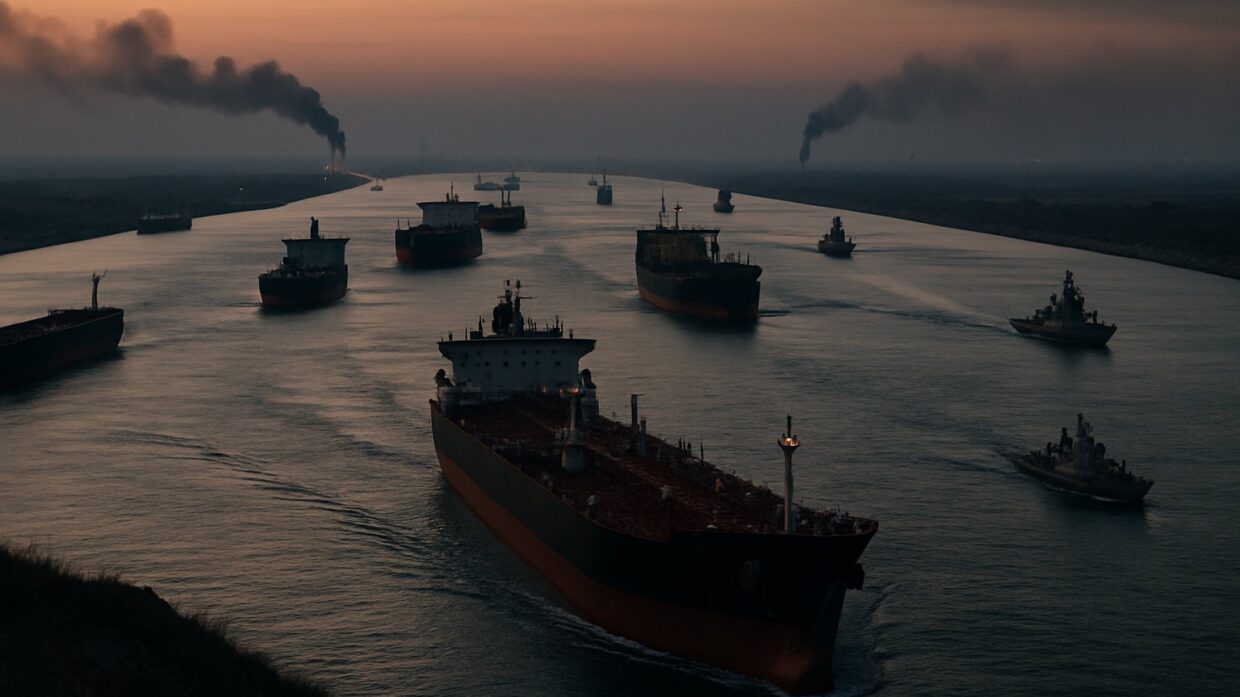
US and Iran exchange fire in Strait of Hormuz as month-old ceasefire faces first major test
Key Takeaways
- Both the US and Iran are fighting within the ceasefire framework rather than abandoning it, suggesting the agreement's real purpose is managing conflict rather than preventing it.
- The ceasefire was designed to require the US to withdraw its military posture from the region, but the Trump administration has kept naval destroyers in the Strait of Hormuz, indicating disagreement over what de-escalation actually means.
- Neither side can publicly admit what the exchange reveals: the US is testing whether Iran will tolerate continued American naval presence, while Iran is testing whether it can conduct limited strikes without triggering full-scale US retaliation.
The Analysis
The US and Iran exchanged fire in the Strait of Hormuz on May 7-8, the first serious breach of their month-long ceasefire, yet both sides immediately claimed the agreement remained intact, revealing what each is actually negotiating for. The real story is not whether this ceasefire survives the next 48 hours. It is that neither the Trump administration nor Iran can afford to say out loud what just happened.
Here are the verified facts. On May 7, Iran fired missiles, drones, and fast attack boats at three US Navy destroyers transiting the Strait of Hormuz. US Central Command called these strikes "unprovoked." The US responded with retaliatory "self-defense strikes." Iran then accused the US of targeting civilian infrastructure and commercial shipping. On May 8, the UAE reported additional Iranian drone and missile attacks on its territory. Trump stated publicly, without evidence, that Iranian attackers were "completely destroyed." Secretary of State Marco Rubio told reporters the US was "awaiting response from Iran" on ceasefire proposals and that "diplomatic efforts continue."
The Left is using the language "fragile ceasefire" and emphasizing Trump's insistence that it "remains in place." The Guardian's framing, repeated across MSNBC coverage, centers Iran's accusation that the US violated the agreement by targeting civilian areas. This language choice makes Trump look either delusional or willing to lie about obvious escalation. What the Left is not naming: the ceasefire was always conditional, the US has not withdrawn from the region, and Iranian missiles fired at commercial shipping suggest Tehran is testing whether the agreement has real teeth or is merely rhetorical.
The Right, led by Breitbart's coverage, uses the language "unprovoked attacks" and emphasizes the complete destruction of Iranian forces. This framing makes the US look like the responsible party enforcing red lines. Trump's claim that attackers were "completely destroyed" becomes evidence of successful deterrence. What the Right is not naming: the US struck first according to Iran, the ceasefire was supposed to prevent exactly this kind of tit-for-tat escalation, and calling Iranian missiles "completely destroyed" while they were clearly fired successfully contradicts observable reality.
Neither side is naming the actual negotiation happening. The ceasefire was brokered after Iran threatened to widen regional conflict following the Strait being militarized. The agreement required the US to de-escalate its military posture in the region, not maintain destroyers in contested waters. Trump's administration appears to be testing whether Iran will tolerate continued US naval presence in exchange for avoiding broader strikes on Iranian territory. Iran is testing whether it can conduct limited strikes without triggering full-scale US retaliation. The Strait of Hormuz is not neutral territory, and the ceasefire's survival depends on unstated compromises neither side wants examined in daylight.
The real headline: A month into negotiations, both Washington and Tehran are fighting within the ceasefire framework rather than exiting it, which means the agreement's real purpose is not preventing war but managing it. That is worth understanding separately from what either side's media is currently broadcasting.
Iran's test of US resolve in the Strait of Hormuz exposes the ceasefire's true function: not preventing conflict but creating a controlled arena for it. Both capitals fired weapons yet claimed the agreement survived because neither can publicly admit what they actually negotiated. Trump's administration tacitly accepted Iranian missiles in exchange for keeping destroyers in contested waters, while Iran accepted limited strikes in exchange for avoiding broader retaliation. This framework transforms the busiest shipping lane in global commerce into a managed conflict zone where escalation happens within agreed boundaries rather than beyond them. The consequence is institutional: the Strait of Hormuz becomes a space where regional powers conduct warfare through proxies and limited strikes, establishing precedent that military exchange need not collapse diplomatic channels. Future crises will follow this template, creating a new normal where global trade routes remain open while military forces test each other's tolerance for violence.