Photo: Well This Is News
Trump's reckless brinkmanship with Iran risks catastrophic war over contested shipping lanes
Trump takes decisive action to break Iranian blockade and restore freedom of navigation
Trump launches Strait of Hormuz operation as Iran tensions escalate into direct military confrontation
Key Takeaways
- Trump withdrew from the 2015 nuclear deal in 2018, and Iran has since abandoned it in response, leaving no diplomatic framework or negotiating channel for either side to de-escalate from the current military standoff.
- Iran's threats to close the Strait of Hormuz are economically self-destructive since Iran depends on strait access for its own oil exports, suggesting desperation rather than strategic confidence driving its provocations.
- The U.S. Navy released the captured Iranian crew to Pakistan rather than detaining them, signaling a measured response that contradicts the narrative of total escalation being presented by either side.
The Analysis
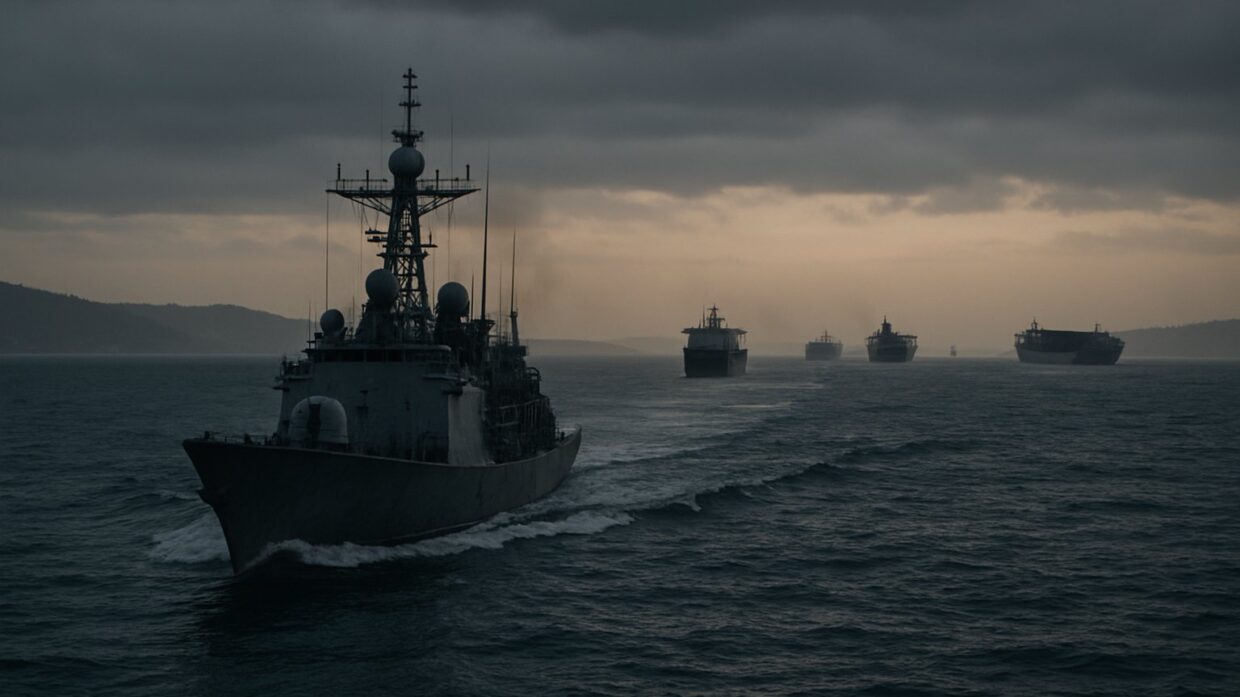
Trump has ordered U.S. warships into the Strait of Hormuz under the name 'Project Freedom' after Iran allegedly attacked a South Korean cargo vessel, and both the left and right are now describing the identical military operation through completely opposite narratives, each omitting the specific history that explains how we arrived at this moment.
The facts: The U.S. Navy announced escort operations for commercial shipping. Trump used the phrase 'blown off the face of the Earth' when discussing Iranian forces. Treasury Secretary Scott Bessent stated the U.S. has 'absolute control of the strait.' The UAE reported receiving missile fire from Iran. A South Korean ship called HMM Namu experienced an explosion near Hormuz. The U.S. Navy seized an Iranian container ship and released its 22-member crew to Pakistan. Iran simultaneously executed three men in connection with January anti-regime protests. Axios reported Trump was frustrated with a 'no deal, no war' stalemate and sought to 'change that dynamic.'
The left frames this as reckless escalation and personal aggression. The Guardian's language choices are revealing: 'warns,' 'echoes threat,' 'dramatic,' 'dramatically raises stakes.' The framing presents Trump's military action as optional, chosen from a range of alternatives he rejected. The left emphasizes the rhetoric, treating Trump's threats as the story itself rather than the announcement of operational policy. Notably absent: any mention of what Iran has actually done in the Strait of Hormuz in the preceding weeks or months that provoked this response. The left's omission of Iranian action allows readers to believe the U.S. acted unprovoked.
The right frames this as necessary deterrence against Iranian aggression. Breitbart's language choices: 'decisive action,' 'restore freedom of navigation,' 'Iranian extortion.' The framing presents Trump as finally responding to provocations that had been tolerated too long. Bessent's quote about 'absolute control' is meant to signal strength and reassurance. The right emphasizes the operational success and the ship seizure as evidence of Iranian lawlessness. Notably absent: any acknowledgment that the Strait of Hormuz is international waters where Iran has legal claims to regional security interests, or that U.S. military operations in the strait have their own contested history. The right's omission of context allows readers to see only Iranian transgression.
Neither side names what both are quietly avoiding: the 2015 nuclear deal that Trump withdrew from in 2018, which Iran has since abandoned in response, leaving no negotiating framework. Neither mentions that Iran depends on strait access for its own oil exports, meaning its threats to close it are economically self-harming brinkmanship born from desperation. Neither names the actual legal status of the Strait of Hormuz as international waters where Iran has claimed the right to 'inspect' vessels, a demand no country has accepted. Neither acknowledges that 'Project Freedom' is a name chosen to evoke previous successful naval operations, specifically designed to make military action sound like liberation rather than blockade-enforcement. Neither discusses that the U.S. release of the Iranian crew to Pakistan rather than detention suggests a signal, not total escalation.
The real headline: Trump, frustrated with diplomatic stalemate following his own 2018 nuclear deal withdrawal, has ordered military escort operations in disputed waters where Iran's economic desperation and lack of negotiating options are driving increasingly dangerous provocations, with neither side willing to admit that this cycle began with specific treaty decisions made years ago.
If military escalation in the Strait of Hormuz continues without diplomatic channels reopening, global oil prices will spike within weeks, forcing the Federal Reserve to recalibrate inflation policy and potentially triggering recession conditions across developed economies. More immediately, the absence of any negotiating framework since Trump's 2018 nuclear deal withdrawal means there is no off-ramp once military incidents occur. Iran's economic desperation and blocked export routes create structural incentives for provocations that cannot be deterred away by naval escorts alone. This operation normalizes permanent military occupation of commercial shipping lanes under the guise of freedom of navigation, establishing precedent that other regional powers will cite when they militarize their own waters. The institutional consequence is the collapse of rule-based maritime commerce itself, replaced by great-power naval policing that rotates with election cycles and executive temperament.