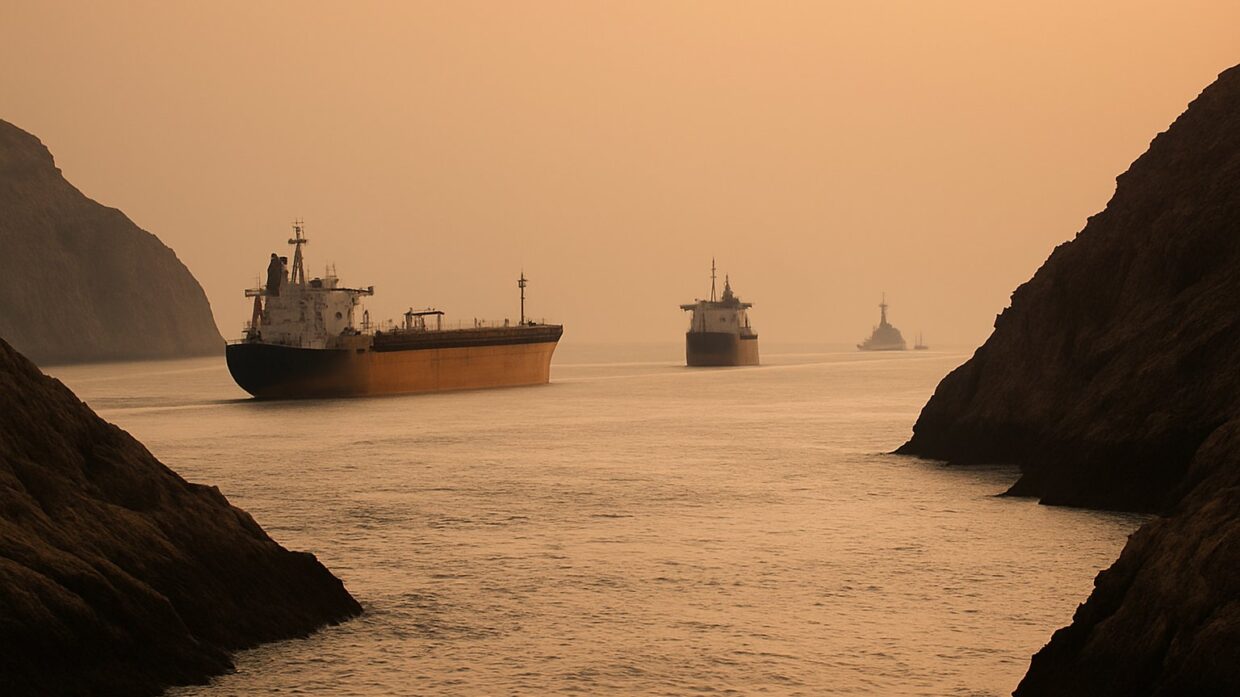
Photo: Well This Is News
Trump's Military Plan Collapsed When Saudis Refused to Help Contain Iran
Saudi Arabia Blocks Trump Administration's Project Freedom Initiative
Saudi Arabia Denied U.S. Access to Bases for Strait of Hormuz Escort Operation
Key Takeaways
- The U.S. already possessed carrier strike groups and naval assets capable of conducting escort operations, meaning Project Freedom was designed to create visible international coalition participation rather than fill a logistics gap.
- Saudi Arabia deliberately chose denial rather than negotiation or counter-offers, signaling a strategic decision to maintain plausible deniability in its Iran posture while avoiding visible military escalation.
- Saudi Arabia's refusal reflects its own regional calculation to preserve strategic independence from U.S. operational demands while continuing to invest in private military and infrastructure capabilities against Iranian threats.
The Analysis
President Trump's 'Project Freedom' lasted less than 48 hours before Saudi Arabia refused to provide airbases and airspace, collapsing a plan to escort commercial vessels through the Strait of Hormuz. Two unnamed U.S. officials told NBC News the operation was 'paused' after Riyadh's denial, a word choice that masks permanent abandonment as temporary delay.
The specific facts: Trump administration officials designed an operation centered on U.S. military tankers providing escort services through waters where Iran has threatened shipping. The plan required Saudi bases as logistics hubs. Saudi Arabia, a decades-long U.S. military partner, simply said no. No public statement, no negotiation, no counter-offer. The denial was complete.
The Guardian frames this as Trump shelving an operation because Saudis refused, emphasizing the collapse of Trump's initiative and Riyadh's unwillingness to be pulled into visible confrontation with Iran. This framing omits why Saudi Arabia might refuse: the kingdom had just absorbed devastating attacks on its oil infrastructure in previous years, paid enormous costs for previous military adventures, and faces domestic pressure to avoid unnecessary escalation. The Guardian's language suggests Trump had a viable plan that external actors killed, leaving readers without context for why a supposed U.S. ally would refuse.
Breitbart describes it as Saudi Arabia 'blocking' the initiative, emphasizing Saudi agency and refusal as a constraint on American power. The right-leaning outlet treats the Saudis as passive obstruction rather than as decision-makers executing their own interests. Breitbart's sourcing matches the Guardian's, but the framing pivots from Trump's failed diplomacy to Saudi intransigence. Neither outlet explains what Saudi Arabia gains from refusing.
What both sides avoid: the U.S. already has carrier strike groups and naval assets capable of escort operations. Trump's 'Project Freedom' was not about logistics necessity but about creating a visible coalition operation to internationalize confrontation with Iran. Saudi Arabia's refusal signals it will not formally participate in military operations against Iran despite U.S. pressure, even as it absorbs costs from Iranian regional activities. This reflects a deliberate Saudi calculation to maintain plausible deniability in its Iran posture while privately investing heavily in regional logistics and infrastructure, exactly as Bloomberg reports.
The actual story: The Trump administration assumed it could activate a client relationship for military purposes without Saudi agreement. Saudi Arabia, having learned from previous costs of direct military escalation and facing domestic constraints, chose to deny access rather than provide symbolic cover for U.S. operations. Neither the left's framing of Trump's failed initiative nor the right's framing of Saudi obstruction captures the core dynamic. Saudi Arabia is executing its own regional strategy, one that includes hedging against U.S. commitment while avoiding visible confrontation with Iran. Project Freedom failed not because Trump's plan was unsound but because the Saudi government will not subordinate its strategic independence to American operational needs, regardless of historical alliance. That distinction explains the future of both U.S.-Saudi relations and Middle Eastern military dynamics far better than either side's current narrative.
Saudi Arabia's refusal exposes the erosion of American leverage in the Middle East and signals a fundamental shift in how regional powers calculate their interests. The kingdom's flat denial without negotiation or counter-offer reveals that decades of military partnership and arms sales no longer guarantee compliance on Iran policy. Trump administration officials designed Project Freedom around an assumed Saudi willingness to provide symbolic participation in anti-Iran operations, but Riyadh prioritized its own strategic hedging over alliance obligations. This collapse matters because it demonstrates that U.S. regional military planning cannot rely on automatic Saudi cooperation for Iran containment, forcing a recalibration of American force posture in the Persian Gulf and broader Middle East. Future administrations cannot assume client states will subordinate domestic constraints and regional survival calculations to American operational requirements, regardless of historical ties.