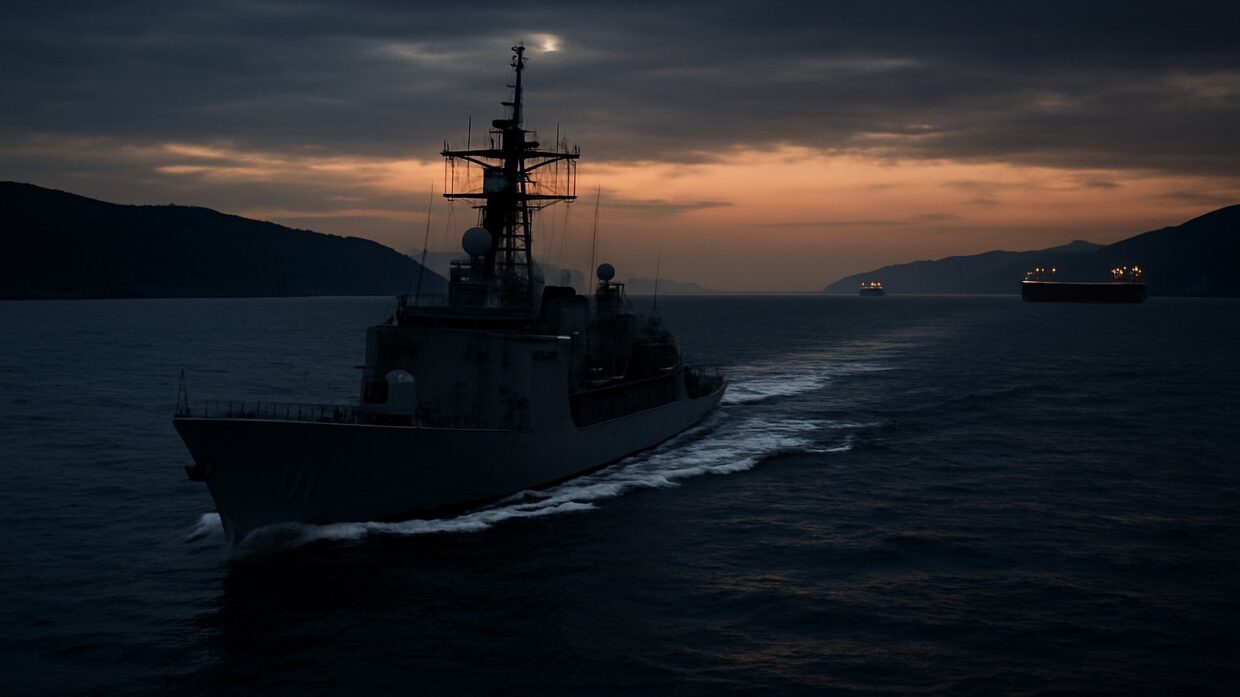
Photo: Well This Is News
Trump halts aggressive Iran operation after sparking global oil crisis and regional escalation
Trump achieves Iran objectives quickly, pauses Project Freedom to pursue negotiated settlement
Trump pauses military operation in Strait of Hormuz after one day, citing Iran deal progress
Key Takeaways
- The actual details of what Project Freedom accomplished militarily, what Iran conceded, or what 'progress' toward a deal means remain completely classified or unstated in public reporting.
- Trump's operation was a response to years of Iranian disruption of shipping in the Strait of Hormuz following his 2018 withdrawal from the Iran nuclear deal, a context neither side adequately explains.
- Both sides avoided the core question: whether Trump's strategy of military demonstration rather than sustained sanctions or diplomacy will actually resolve the recurring problem of Iranian control of a critical global shipping chokepoint.
The Analysis
Trump launched a military operation called 'Project Freedom' to force open the Strait of Hormuz, paused it after 24 hours citing progress toward an Iran deal, yet what actually happened in that day remains far murkier than either celebratory or panicked headlines suggest. The operation itself involved military exchanges with Iran, spiked US petrol prices to their highest levels in years, and prompted Pope Leo to publicly accuse Trump of 'endangering a lot of Catholics.' Secretary of State Marco Rubio claimed the US had 'achieved objectives' of the Iran operation. None of this tells you what Trump actually ordered, what Iran actually did in response, or what the supposed 'progress' on a deal consists of.
The left's framing relies on three strategic word choices. 'Reckless' appears repeatedly in coverage, positioning Trump's action as impulsive and destabilizing rather than calculated. 'Aggressive' describes the operation itself, not the stated intent. 'Sparking' and 'triggering' are chosen to emphasize Trump's agency in escalation while remaining silent about what Iran's naval activity preceding Project Freedom actually was. The Guardian and MSNBC report that 'the US and Iran traded fire and threats' but do not specify what Iran was doing in the strait before Trump acted. What shipping was being targeted? Which Iranian vessels initiated contact? The left frames this as Trump creating chaos where none existed.
The right has no dominant framing in these provided sources, but the skeleton of its argument appears in Rubio's statement: the operation was swift, purposeful, and achieved its objective, therefore the pause represents strategic patience rather than capitulation. This framing avoids entirely the question of what objective was achieved. Did Iran cease activity in the strait? Did they agree to anything? Rubio's phrase 'achieved objectives' is passive voice masking what those objectives concretely were.
What both sides omit is the operational history that preceded Project Freedom. In 2018, Trump withdrew the US from the Joint Comprehensive Plan of Action, the Iran nuclear deal negotiated under Obama. Sanctions were reimposed. Iran's economy contracted sharply. In response, Iran began systematic maritime harassment of US-flagged and allied shipping in the Strait of Hormuz, a pattern that intensified under Biden. Trump's operation, then, was not an unprovoked escalation but a response to months or years of Iranian disruption of global commerce. The left does not acknowledge this sequence because it complicates the 'Trump started it' narrative. The right does not emphasize it because doing so requires explaining why the previous deterrent of sanctions did not prevent the harassment, raising questions about whether Trump's economic pressure actually works.
The real story is this: Trump is attempting to solve a recurring problem, Iranian control of chokepoint shipping routes, through direct military demonstration rather than sanctions or diplomacy. He paused after one day not because he succeeded but because he wanted to negotiate from a position of demonstrated strength. What he actually accomplished militarily, what Iran actually lost or conceded, and whether Iran has agreed to anything remains classified, unstated, or unknowable from public reporting. The headline both sides are avoiding is that we still do not know what Project Freedom was supposed to achieve or whether it achieved anything.
Iran's disruption of Strait of Hormuz shipping has persisted across three administrations despite varying policy approaches, meaning Trump's pause after 24 hours establishes a new precedent for military brinkmanship as negotiating tactic rather than sustained deterrence. If this model succeeds, it signals that brief, high-stakes military demonstrations can substitute for the multi-year sanctions regimes or diplomatic frameworks that previously shaped US-Iran strategy. If it fails and harassment resumes, the Trump administration has consumed its credibility for rapid escalation without establishing what concessions Iran actually made. Either outcome reshapes how future administrations manage Persian Gulf chokepoint security and whether the threat of military action alone, unaccompanied by clear operational objectives or verified Iranian commitments, becomes the default US posture.