Photo: Well This Is News
Trump's 'Project Freedom' risks full regional war as Iran retaliates against US warships
US forces Iranian blockade open as Tehran escalates attacks on regional allies
US-Iran military escalation spreads to UAE as Trump launches Hormuz shipping operation
Key Takeaways
- Both the US and Iran have climbed a deliberate escalation ladder over months or years before this shooting began, but neither side publicly acknowledges the prior decisions that made military conflict feel inevitable.
- The Strait of Hormuz blockade was not Iran's first move but a response to earlier US actions related to sanctions, regional conflicts, or military threats, yet neither major media outlet fully explains what triggered Iran's initial closure.
- The US chose a military response among other possible options including negotiation, while framing it as humanitarian necessity rather than acknowledging it as a deliberate strategy to reverse Iranian regional influence.
The Analysis
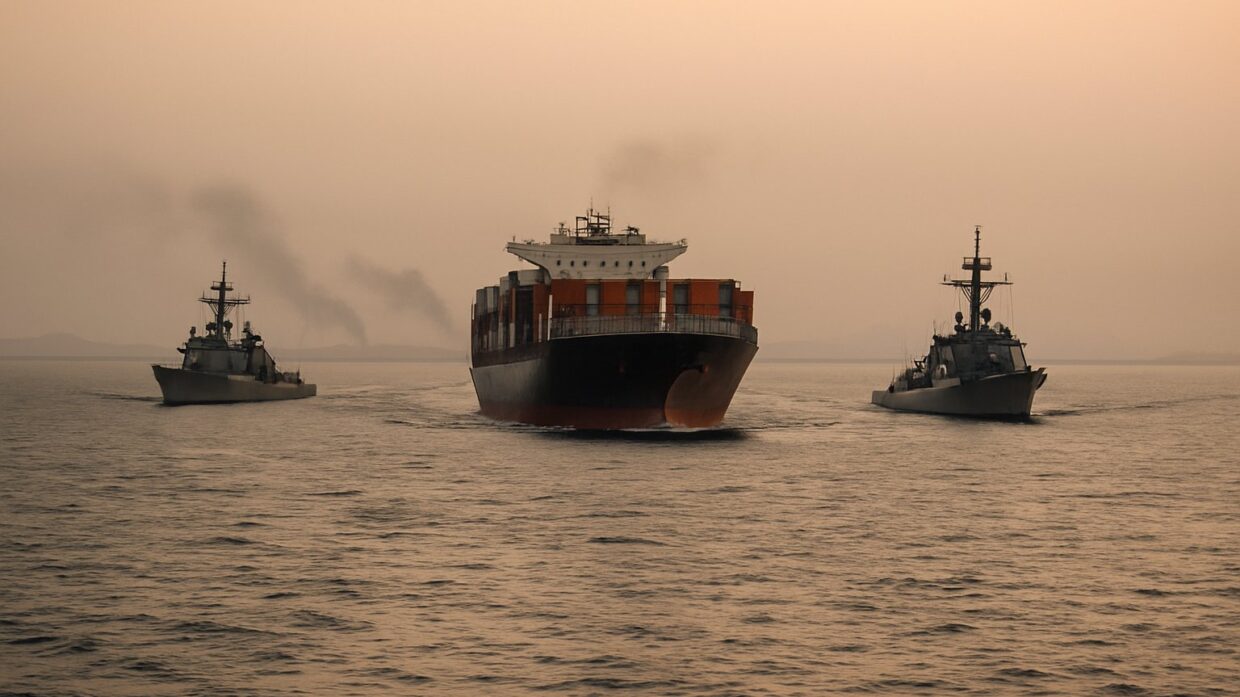
The Strait of Hormuz is now a shooting war between the United States and Iran, but neither side is calling it that, and both are hiding the decisions that led here. The Trump administration launched 'Project Freedom' to escort commercial vessels through Iranian blockade, claiming humanitarian necessity. Iran responded by firing missiles at the UAE. What neither side discusses is the treaty both abandoned and the escalation ladder each carefully climbed before pulling the trigger.
The Guardian frames this as Trump recklessness dressed in Nobel Prize rhetoric. The phrase 'grand humanitarian gesture, or a fast track to more war' appears in the Guardian's analysis, which is honest about the tension but leans hard on the Trump-creates-chaos narrative. The language choices reveal the framing: 'dramatically raised the stakes,' 'battle drum,' 'reality series that the rest of the world does not just have to watch, but live through.' These are accurate descriptions of Trump's rhetorical style, but they avoid naming what triggered Iran's blockade in the first place. The Guardian does not explain why Iran closed the strait, what it was responding to, or what negotiations preceded this military operation. The omission is convenient because answering those questions would require acknowledging prior US actions that Iran could reasonably claim prompted retaliation.
Axios reports the facts with less editorial judgment: 'US and Iran exchange fire,' 'using force in the Strait of Hormuz and diplomacy in New York.' The right-leaning interpretation of this would emphasize that Iran initiated the blockade, that the US responded to an illegitimate chokehold on global commerce, and that Iranian missile fire on the UAE proves Tehran operates without restraint. This framing is also incomplete. It does not address what prompted Iran to blockade the strait, what prior agreements or threats may have escalated tensions, or why military escorting is the chosen response rather than negotiation. The right's silence on these questions is equally calculated.
Neither side names the actual history. The Strait of Hormuz blockade did not begin in May 2026. Iran closed it in response to actions taken months or years earlier, likely related to sanctions, regional proxy conflicts, or prior military threats. Those prior actions shaped everything that followed. The US did not wake up one morning and decide to escort ships for humanitarian reasons. That decision came after Iran made transit impossible. But Trump's operation was also not an inevitable response to Iranian aggression. It was a choice, made among other possible choices, and the Trump administration chose the military option while claiming humanitarian intent. That contradiction, stated plainly in the Guardian's headline, deserves explanation neither outlet provides.
The real headline is this: A US president committed to reversing Iranian regional influence responded to a blockade with military force, framed as mercy. Iran, facing military encirclement and economic pressure, struck back not at US forces but at a regional partner, widening the war beyond bilateral confrontation. Both sides claim necessity and legality. Neither acknowledges how many previous decisions created the conditions where this moment felt inevitable to both parties.
Global oil markets will remain volatile for years because the Strait of Hormuz is now a contested zone where commercial shipping operates under military protection and Iranian retaliation targets regional allies instead of US forces directly. This structural shift means insurance costs for tankers will stay elevated, alternative pipeline investments will accelerate through Central Asia, and UAE ports will require permanent US military presence to function as commercial hubs. Iran's decision to strike the UAE rather than American vessels suggests a calculated strategy to avoid direct US-Iran warfare while imposing costs on the regional order the US supports, forcing every Gulf state to choose between hosting US military infrastructure and risking Iranian missiles. The precedent is set: future blockades or military operations in the strait will assume this is now how commerce functions there.