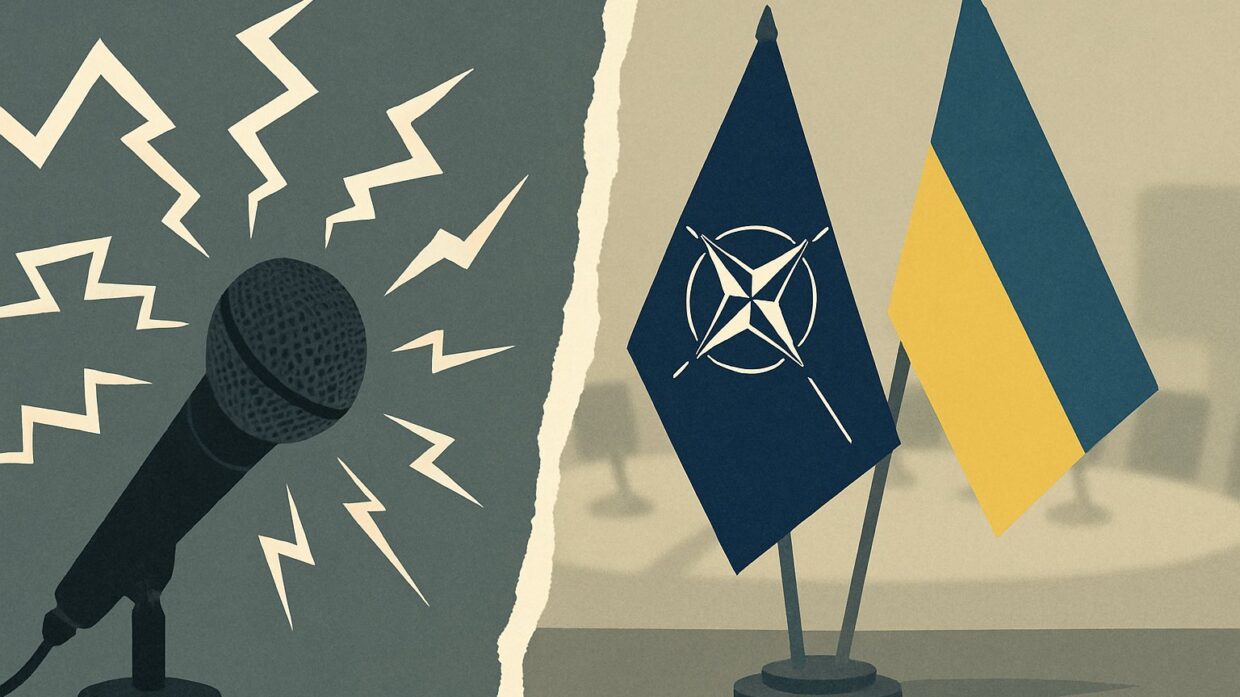
Photo: Well This Is News
Trump Echoes Putin Talking Points at NATO While Mocking Allies
NATO Survives Trump Summit; Alliance Refocuses on Defense Spending
Trump's NATO Summit Statements on Putin, Ukraine Draw Competing Interpretations
Key Takeaways
- Trump has simultaneously approved significant military aid to Ukraine while publicly suggesting Ukraine should settle with Russia, creating a genuine contradiction that neither side adequately explains.
- The documented verbal errors are established facts, but the available reporting does not establish whether Trump's confusion reflects genuine cognitive lapses, intentional messaging, or compartmentalized policy-making separate from his rhetoric.
- Neither side addresses whether Trump's public skepticism about NATO spending represents a coherent strategic position backed by his administration's actual defense spending decisions or reactive opposition to allied criticism.
The Analysis
Trump's NATO summit statements have triggered fundamentally different interpretations of the same documented moments, each framing built to exclude what the other side sees as central.
The specific incidents are established: Trump referred to Ukraine's Zelenskyy as 'President Putin' during a press briefing in Ankara; he called Japan the 'Islamic Republic of Japan'; he made comments about NATO burden-sharing that were critical of allied spending levels. These are verifiable gaffes. The dispute is not about whether they occurred, but about what they signify.
The left frame, as presented in HuffPost, emphasizes a pattern: these errors are interpreted not as simple confusion but as linguistic evidence of alignment with Russian interests. The argument is that conflating Zelenskyy with Putin is not an honest mistake but a window into Trump's underlying sympathy for Moscow's geopolitical position. The language choice matters. HuffPost uses the verb 'disparages' for Trump's NATO criticism and characterizes the summit as 'disruption,' framing these moments as intentional and coordinated rather than incidental. What this framing leaves out is any acknowledgment that Trump has approved significant military aid to Ukraine or that his administration's NATO policy, separate from his rhetoric, has included increased military presence in Europe. The left frame focuses exclusively on words and impressions.
The right frame, articulated in National Review's headline 'NATO Survived Trump,' treats the verbal errors as separable from substantive outcomes. The argument is that Trump's rhetorical pattern, while embarrassing, has not prevented NATO allies from coordinating on defense spending commitments or operational planning. National Review's framing emphasizes resilience over disruption. What this framing underplays is the documented pattern of Trump's Ukraine commentary, which includes public skepticism about aid levels and public skepticism about NATO's collective defense commitment to smaller members. The right frame brackets rhetoric as secondary to institutional outcomes.
What neither frame adequately addresses is the specific sequence of Trump's NATO positioning relative to his prior statements about Ukraine. Trump has simultaneously stated that Ukraine should 'settle' with Russia while approving military assistance packages. The cognitive tension between these positions is real and neither side accounts for it directly. The left interprets it as proof of secret pro-Putin alignment; the right treats it as compartmentalization between rhetoric and policy execution. The public record does not establish which interpretation is correct.
A more complete reading requires distinguishing between three separate claims: one, whether Trump's verbal errors reflect genuine confusion or intentional messaging; two, whether his public skepticism about NATO commitments represents a coherent strategic position or reactive opposition to allied criticism; and three, whether his Ukraine policy, measured in actual resource allocation and military support, differs materially from the prior administration's approach. The available reporting establishes the verbal record. It does not establish Trump's internal reasoning or strategic intent.
Trump's conflation of Zelenskyy with Putin, whether accidental or deliberate, has concrete consequences for NATO's operational planning and allied confidence in intelligence-sharing protocols. When a US president creates ambiguity about which leader he is discussing in a security context, allied defense ministers must now recalibrate assumptions about how classified information flows through US command channels and whether Ukrainian targeting data shared with Washington will remain protected from Kremlin interference. This is not rhetorical damage; it reshapes the technical architecture of alliance coordination. NATO's European members are already conducting separate threat assessments independent of US intelligence briefings and establishing parallel communication channels with Kyiv, fragmenting the unified command structure that has defined the alliance's post-Cold War operational model. The institutional cost is measurable: redundant defense planning, slower response times, and the erosion of the intelligence-sharing agreements that made NATO militarily coherent.