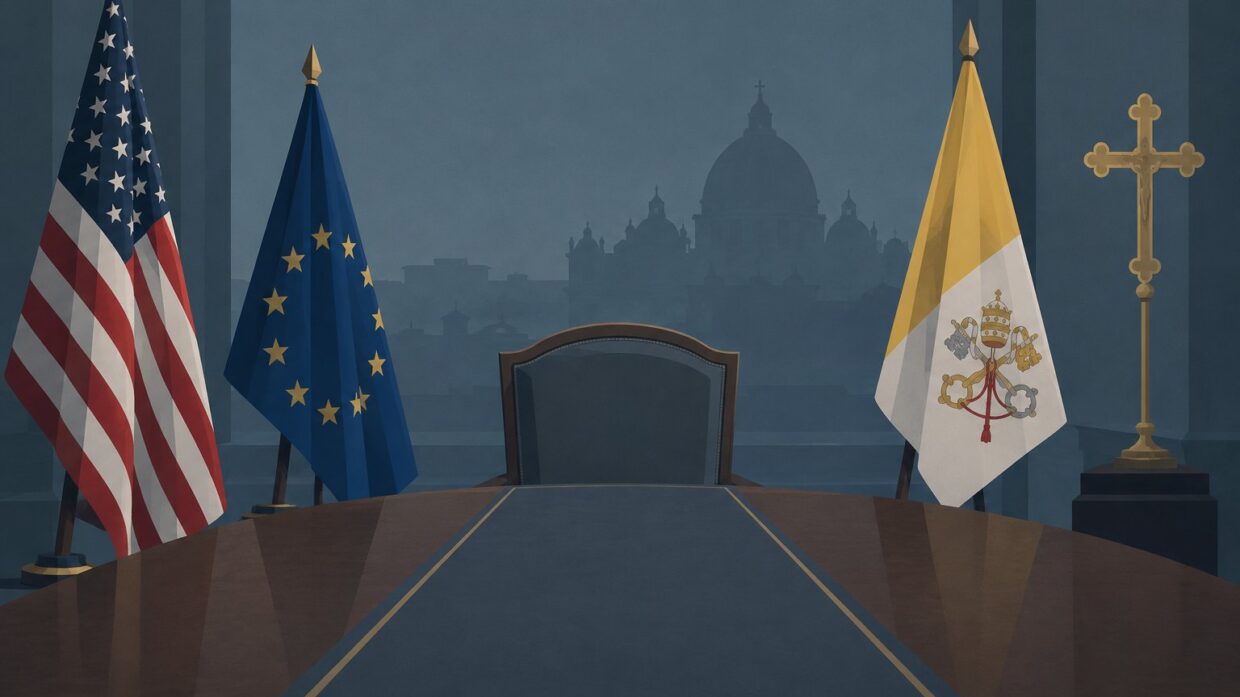
Photo: Well This Is News
Zelenskyy Warns Trump Against 'Historic Mistake' as Putin Shapes Peace Talks Without Ukraine
Putin Proposes Trump-Xi Summit to Negotiate Ukraine End; Diplomatic Process Accelerates
Trump, Zelenskyy, Putin Discuss Ukraine Peace Framework as Pope, China Enter Diplomatic Picture
Key Takeaways
- No transcripts or direct quotes from any of these diplomatic calls have been released, meaning the public knows only characterizations and summaries of what was actually proposed.
- Past attempts to negotiate Ukraine's future without Ukrainian participation, including the Budapest Memorandum and Minsk agreements, both collapsed, yet this historical pattern is missing from current coverage.
- Trump has not publicly disclosed whether he views the three-way summit as preliminary to Ukraine's involvement or as the definitive negotiating forum, which is the core disagreement between the left and right frames.
The Analysis
Three diplomatic tracks are now running simultaneously on Ukraine, and what each side chooses to emphasize reveals fundamentally different answers to a single question: who decides Ukraine's future? The evidence establishes that Putin has begun shaping the terms of negotiations directly with Trump, that Zelenskyy has objected to being excluded from those terms, and that multiple diplomatic actors are now attempting parallel interventions.
What actually happened: On October 9, according to The Wall Street Journal reporting cited by the Daily Wire, Putin pitched Trump a three-way summit including Chinese leader Xi Jinping to establish the framework for ending the Ukraine war. Zelenskyy, according to HuffPost, then stated that Trump was making a historic mistake and rejected Trump's framing, which the Ukrainian leader characterized as comparable to taking Putin's side. Pope Leo XIV, according to Bloomberg, called Zelenskyy on Monday after recently speaking with Putin, suggesting the Vatican is attempting its own negotiation track. None of these actors have released transcripts or direct quotes of what was actually said in these calls. The public record contains characterizations and summaries, not the original language.
The left frame, represented by HuffPost, emphasizes that Trump is being positioned to negotiate Ukraine's fate in a forum where Ukraine has no seat at the table. The headline uses Zelenskyy's own language: historic mistake. The framing highlights that Putin is designing the negotiation structure and that Trump appears willing to participate in that design. This narrative leaves out what Trump's actual position is on Ukraine's participation in talks, whether Trump views the three-way summit as preliminary or definitive, or what guarantees Trump may have demanded regarding Ukraine's involvement. The emphasis shifts attention toward Trump's alignment with Putin rather than toward the substantive terms being discussed.
The right frame, represented by the Daily Wire, emphasizes that Putin's proposal represents a diplomatic opening and that Trump is positioned to broker an end to the war through direct engagement with major powers. The framing treats the three-way summit proposal as evidence that diplomatic momentum exists and that traditional adversaries are now willing to negotiate. This coverage leaves out Zelenskyy's objection entirely. It does not explain why Ukraine would not be present at a summit ostensibly about ending the war in Ukraine, or what the absence of Ukraine from such talks might mean for any agreement reached. The emphasis shifts attention toward the possibility of resolution rather than toward the question of who holds power in that resolution.
What neither side fully captures is the structural implication: peace agreements imposed on a party tend to create conditions for renewed conflict. The documented record shows that prior negotiations over Ukraine, including the 1994 Budapest Memorandum and the 2014-2015 Minsk agreements, both excluded Ukraine's interests or lacked enforcement mechanisms, and both collapsed. A more complete reading requires acknowledging that Zelenskyy's objection is rooted in the history of negotiated settlements in Eastern Europe that did not survive implementation. The underlying question is whether any agreement reached without Ukraine's direct participation would be durable or enforceable, and neither the left nor the right frame addresses that historical pattern.
The real headline is this: diplomatic activity is accelerating, but the parties disagree fundamentally on who has decision-making power in the outcome, and the public record does not yet disclose what Trump's actual position is on that question.
Zelenskyy's exclusion from Trump-Putin-Xi negotiations sets a precedent that could reshape how the U.S. handles allied input in future conflict resolutions. The Budapest Memorandum and Minsk agreements both failed because Ukraine was sidelined from core decisions, yet this framework replicates that pattern. If Trump accepts a settlement structure that bypasses Ukrainian leadership, the institutional lesson spreads immediately: major powers can negotiate allies' futures without their participation. The State Department's role as guarantor of Ukrainian interests collapses, and the precedent invites similar exclusionary frameworks for Taiwan, Japan, and South Korea. The immediate consequence is not peace but delegitimization of any agreement reached, making enforcement impossible and conflict resumption likely.