Photo: Well This Is News
We haven't found a left-leaning take on this story yet.
Breaking stories sometimes publish before every side has covered them. We'd rather show you that than invent a view.
Saudi Arabia forced to cancel investment summit as Houthi attacks escalate security threats
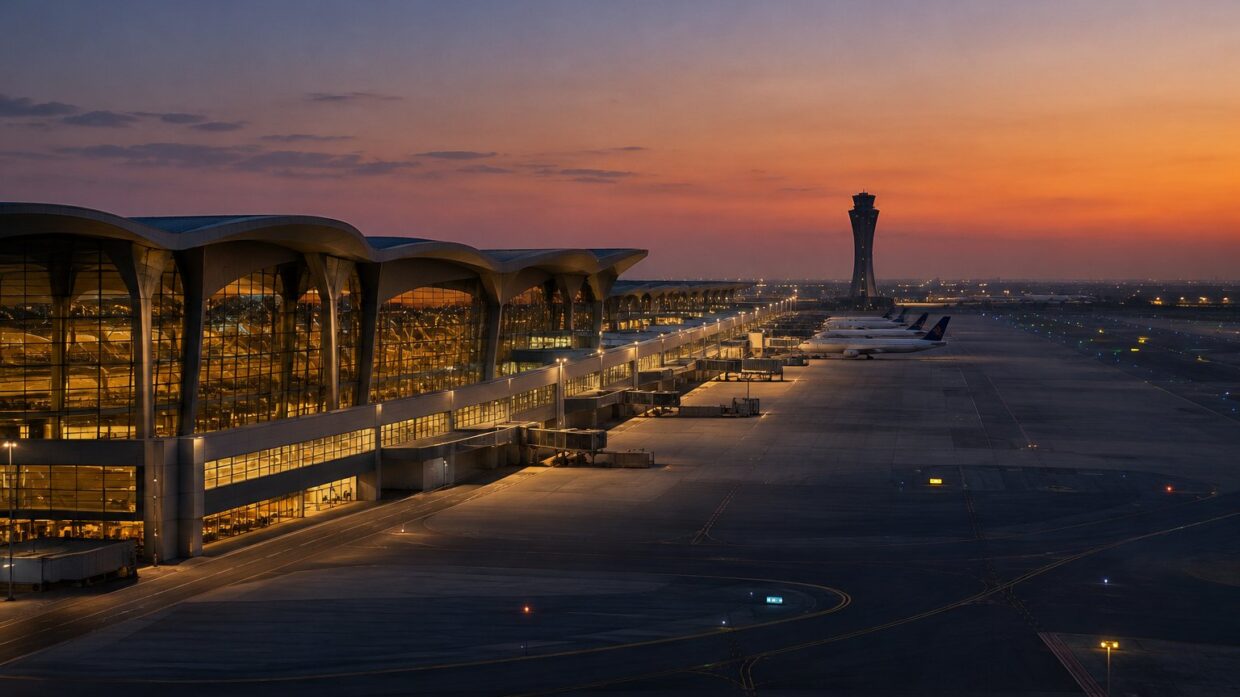
Saudi Arabia postpones Future Investment Initiative conference after Houthi attacks disrupt airport operations
Key Takeaways
- Saudi Arabia has led a military coalition in Yemen since 2015 that the UN says has contributed to the world's worst humanitarian crisis, context absent from most coverage of the Houthi attacks.
- The decision to postpone the conference rather than implement heightened security protocols raises unanswered questions about whether the threat is genuinely severe or reflects Saudi Arabia's reputational concerns.
- Houthi attacks on Saudi infrastructure are part of a documented pattern of response to coalition military operations, not spontaneous threats, but reporting has not explained what triggered the recent escalation.
The Analysis
Saudi Arabia's postponement of the Future Investment Initiative conference to 2027 and restriction of air traffic at Riyadh Airport represent concrete operational consequences of Houthi military capability, not merely symbolic threats. The available reporting establishes that these are not precautionary measures but responses to a documented pattern of attacks that have forced measurable changes to the kingdom's economic calendar and infrastructure operations.
The Washington Examiner frames this as a security crisis requiring postponement, emphasizing the Future Investment Initiative's status as "one of the world's preeminent" conferences. That framing is accurate but incomplete. It does not establish how many attacks preceded the decision, what the Houthis' stated objectives are, or whether the postponement reflects a temporary caution or a longer-term reassessment of Saudi Arabia's security environment. The right-leaning framing emphasizes the disruption to Saudi Arabia's plans without contextualizing what triggered the Houthi escalation or whether this represents a shift in their operational reach.
The Bloomberg reporting takes a different emphasis. It foregrounds the economic consequence: the postponement is "a significant blow to the kingdom's ambitions" and a disruption to "a multitrillion-dollar economic rejig." That language captures the stakes for Saudi Arabia's Vision 2030 diversification strategy, which depends on sustained foreign investment and the kingdom's ability to market itself as a stable destination. But the reporting does not explain why Houthi attacks have intensified or whether they are responding to specific Saudi actions.
What neither framing addresses is the prior context that shapes this escalation. The Houthis are Iranian-backed fighters engaged in Yemen's ongoing civil war. Saudi Arabia has led a military coalition in Yemen since 2015, conducting air campaigns that have contributed to a humanitarian crisis the United Nations has described as the world's worst. The Houthi attacks on Riyadh are consistent with their pattern of targeting Saudi infrastructure in response to the coalition's military operations. That context does not justify the attacks, but it establishes that this is not a spontaneous security threat but rather a predictable escalation within an ongoing regional conflict.
The reporting also does not establish whether the conference postponement reflects genuine security vulnerability or a political calculation. Saudi Arabia has security protocols for major events; the decision to postpone rather than implement heightened protection raises questions about either the severity of the threat or the reputational calculus involved. The public record does not clarify which.
What the record does establish is that Houthi military capability has now moved from abstract threat to operational reality capable of forcing changes to Saudi Arabia's investment calendar and airport infrastructure. That is materially different from previous characterizations and has immediate implications for the kingdom's economic agenda.
The most accurate headline captures both the action and its consequence: Saudi Arabia has postponed its flagship investment conference due to sustained Houthi attacks that have also restricted operations at the nation's primary airport. What remains undisclosed is whether this represents a temporary tactical adjustment or signals a longer-term reassessment of Saudi Arabia's vulnerability to Iranian-backed proxy forces in the region.
Houthi attacks have moved from theoretical threat to operational constraint on Saudi Arabia's economic strategy, forcing postponement of a conference designed to attract the foreign capital essential to Vision 2030. The kingdom's inability to guarantee security at its flagship investment event and primary airport reveals that Yemen's civil war has created a sustained vulnerability that directly undermines Saudi Arabia's diversification agenda. This is not a temporary disruption but evidence that Iranian-backed forces can now impose material costs on the kingdom's core economic objectives, with consequences extending beyond 2027 if the underlying conflict remains unresolved. Any investor assessing Saudi Arabia's stability must now factor in demonstrated capacity for infrastructure disruption as a permanent variable in their risk calculus.