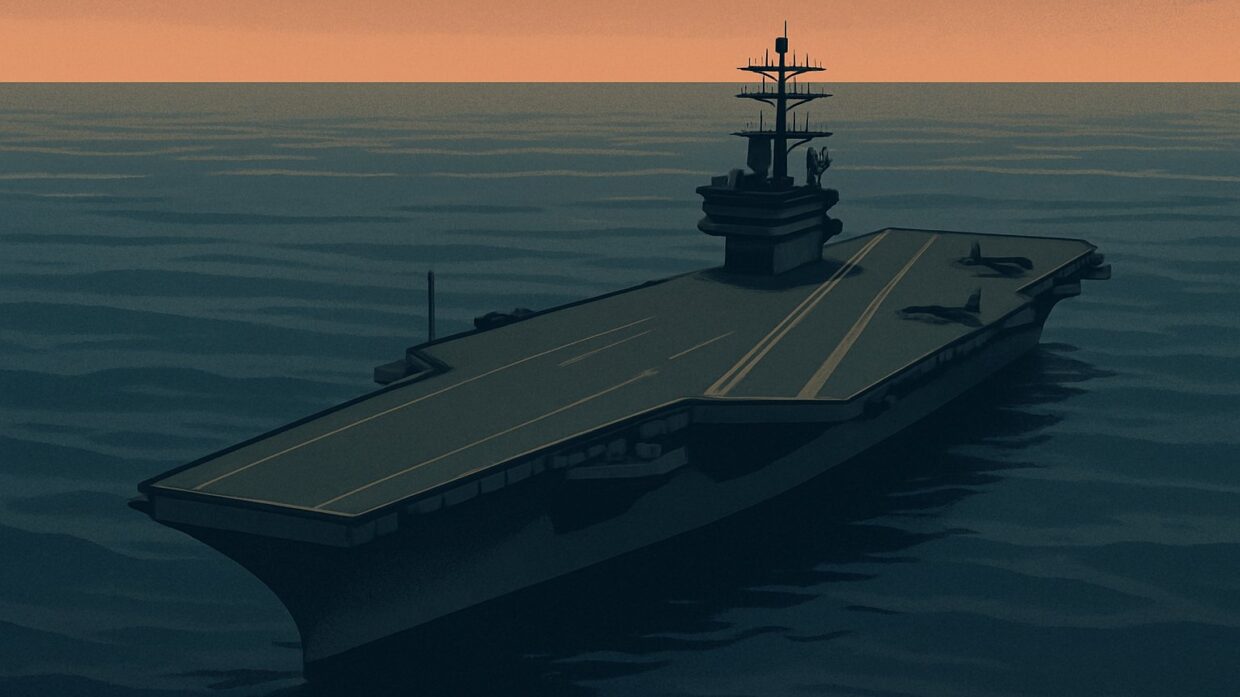
Photo: Well This Is News
Eight Service Members Attempted Suicide on Iran War Ship During 300-Day Deployment
Navy Addresses Crew Welfare During Extended Carrier Operations in Strategic Region
Eight Navy Service Members Attempted Suicide During Extended USS Lincoln Deployment
Key Takeaways
- Extended carrier deployments lasting 9-10 months have been standard Navy practice for decades across multiple administrations, making it unclear whether this deployment's length was unusual or policy-driven.
- The Navy has not publicly released data comparing suicide attempt rates on this carrier to other carriers during similar deployment lengths, leaving the causal relationship between duration and mental health crises unestablished.
- No available reporting addresses whether the Navy has deployment guidelines based on mental health data or what justifications existed for any deviation from those guidelines in this case.
The Analysis
Eight sailors attempting suicide aboard a single carrier during a 300-day deployment without port call is documented fact. What follows in the reporting is not.
The USS Lincoln was at sea for nearly 300 days without a port call while supporting U.S. military operations in the Middle East. That is the verifiable foundation. The Navy has confirmed the suicide attempts occurred. Those are the facts that both sides of this story then interpret in opposite directions.
The left framing, represented in the NBC and HuffPost coverage, connects the deployment duration and the suicide attempts directly to Trump administration military policy toward Iran. The language chosen here matters: "the ship, which supported the U.S. war with Iran" and "U.S. service members die" frame the deployment as part of a specific conflict rather than routine operational tempo. The narrative suggests extended deployments caused by sustained Iran confrontation are producing measurable human cost in crew welfare. What this framing leaves out is that extended carrier deployments lasting 9-10 months have been standard U.S. Navy practice for decades, predating Trump by multiple administrations. The coverage does not establish whether the 300-day duration was unusual or within normal operational parameters. It does not provide data on suicide attempt rates aboard other carriers during similar deployment lengths, which would be necessary to support the causal claim being implied.
The right framing, shown in the Daily Wire material, emphasizes the strategic necessity of sustained presence in a region where Iranian threats are escalating. The emphasis shifts away from crew welfare metrics toward geopolitical requirement. The narrative treats extended deployment as an operational cost of necessary military posture, not as a policy choice with welfare consequences. What this framing underplays is the specific fact that this crew experienced eight suicide attempts during this particular deployment, and why that specific number on this specific ship warrants explanation beyond operational necessity.
What neither side is saying requires attention to history. Carrier deployments averaging 9-10 months have produced documented mental health consequences for decades. Crew welfare concerns emerged after the 2000 USS Cole bombing, after the 2016-2017 collision season, and continuously in Navy mental health reporting. A 2019 Navy Times survey found suicide and mental health crisis as top crew concerns across the fleet. The data does not establish that Iran policy specifically caused this spike. It does establish that extended deployments, regardless of their geopolitical rationale, produce measurable crew stress. Neither framing addresses the institutional question: does the Navy have deployment length guidelines based on mental health data, and if so, what were the justifications for exceeding them in this case?
The underlying question is whether the suicide attempts resulted from deployment duration, operational tempo, staffing, family separation, regional tensions, or some combination,and what data the Navy actually collected to distinguish among these causes. The left reporting infers policy choice. The right reporting assumes policy necessity. The public record does not establish which is true.
Extended carrier deployments exceeding standard operational tempos have produced documented mental health crises across the Navy fleet for two decades, yet neither military leadership nor civilian policymakers have established transparent guidelines linking deployment length to crew suicide risk or implemented enforcement mechanisms to prevent recurrence. Eight suicide attempts aboard USS Lincoln represent not an aberration but evidence of an institutional failure to measure, report, and act upon a predictable pattern of harm that emerges whenever operational necessity collides with human physiology. The Navy's inability or unwillingness to distinguish between deployments required by genuine threat and deployments extended by policy choice means crew members bear unmeasured human costs that remain invisible in strategic justifications until crises force them into public view. This deployment produced a specific number: eight attempts on one ship during one voyage. The Navy must explain whether it collected baseline mental health data beforehand, whether mental health deterioration was monitored in real time, and what threshold of crew psychiatric crisis would have triggered deployment