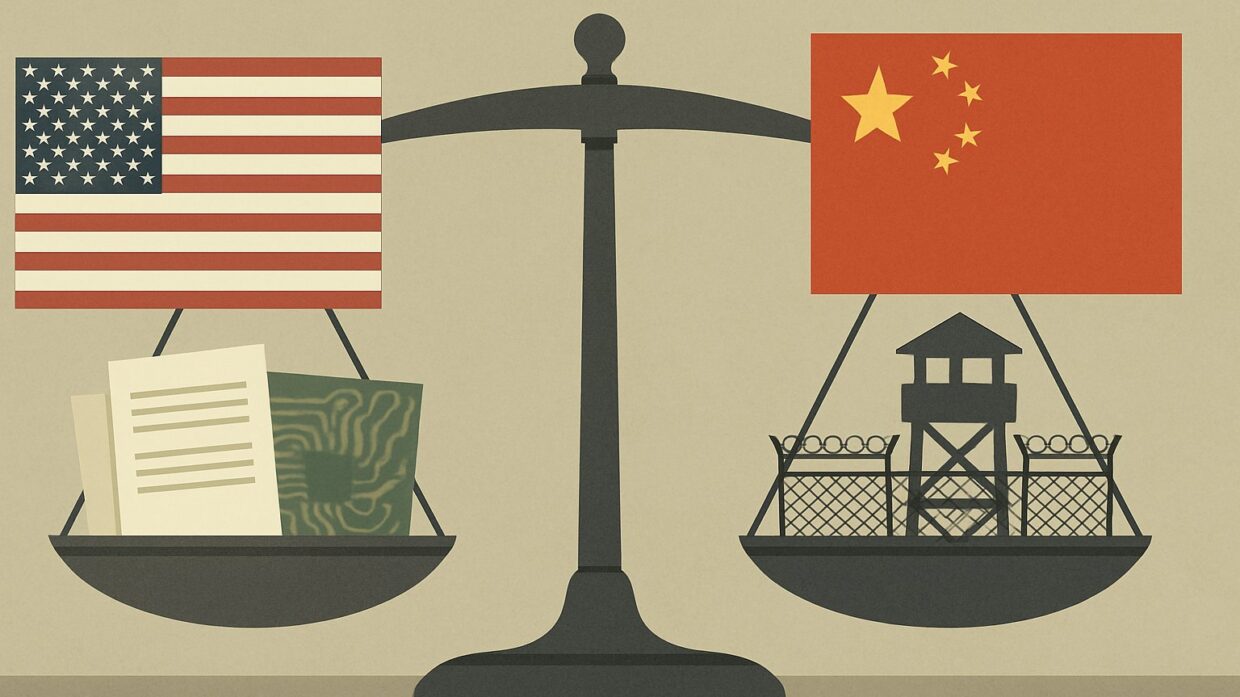
Photo: Well This Is News
Xi Is Getting What He Wants From Trump
Trump to Confront Xi on Detained Americans, Chinese 'Atrocities'
Trump Prepares Xi Summit as Congress Raises Human Rights and Trade Concerns
Key Takeaways
- The Atlantic claims Xi has already neutralized Trump's leverage but provides no specific evidence of what concessions were granted, when they occurred, or what neutralization actually means.
- Trump's stated priority is securing Dr. Chen's release and confronting Chinese abuses, but neither Trump nor his coverage has clarified whether he will condition trade deals on human rights commitments or treat these issues separately.
- Congress is actively trying to constrain Trump's negotiating room by pre-emptively warning against auto industry concessions and flagging AI infrastructure threats, creating a direct tension between legislative and executive priorities that reporting has not fully examined.
The Analysis
Trump is preparing a summit with Xi Jinping while facing simultaneous pressure from Congress to prioritize human rights concerns and avoid trade concessions that benefit Beijing, a structural tension that neither the left nor right framing fully captures. The Atlantic claims Xi has already won by neutralizing Trump, but provides no specific evidence of what concessions have been granted or what neutralization entails. Fox News coverage emphasizes Trump's commitment to securing detained American citizens and confronting Chinese abuses, but largely omits what Trump might be offering in return or whether these human rights demands will shape or constrain his negotiating position.
The verified facts: Trump intends to request the release of Dr. Youlin Chen, a US citizen detained since 2024 on espionage charges. Senators James Lankford (R-OK) and Angus King (I-ME) have publicly called on Congress and Trump to foreground China's documented history, citing 105 years of Chinese Communist Party actions including mass killings and the detention of Uyghur Muslims. Senator Elissa Slotkin (D-MI) has introduced bipartisan legislation to block Chinese connected vehicles from the US market and is warning Trump against any summit agreement that would grant Chinese automakers greater access. Lawmakers are also alleging Chinese exploitation of US tax-exempt nonprofits and an influence campaign targeting American AI development.
The Atlantic's framing emphasizes Trump's diplomatic disadvantage, using the word neutralized to suggest Xi has preemptively undercut Trump's leverage. This narrative leaves unspecified what outcomes would constitute Trump getting something versus Xi getting something, and it does not establish when or how this alleged neutralization occurred. The framing serves a function: it suggests Trump's diplomatic approach is already compromised before negotiations formally begin, making any agreement appear as a capitulation rather than a negotiated outcome.
Fox News coverage emphasizes Trump's stated intention to raise human rights cases and confront Chinese behavior, framing the summit as an opportunity for Trump to extract concessions on detained Americans and push back on Chinese abuses. This framing centers Trump's agency and stated priorities. What it underplays is whether raising these issues will come at a cost to other US negotiating objectives, or whether Trump will condition trade agreements on human rights commitments, a standard earlier administrations have sometimes invoked.
What neither side fully engages: the gap between congressional priorities and executive negotiating strategy. Congress is warning against trade concessions that benefit Chinese automakers and flagging AI infrastructure concerns. Trump's public messaging prioritizes detained Americans. Neither reporting clarifies whether Trump will link these demands together, use human rights as a precondition for trade talks, or treat them as separate conversations. The evidence does not establish whether Trump views the Uyghur detention camps and the Chen case as negotiating leverage or as non-negotiable demands.
The most honest headline would acknowledge that this summit represents a collision between congressional constraints and executive discretion: Trump is preparing engagement with Xi while Congress is attempting to narrow his maneuvering room by pre-emptively raising human rights and economic concerns. Whether Trump leverages those concerns or sets them aside will determine whether Xi or Trump gets what they want.
Any summit agreement will immediately trigger congressional scrutiny under Slotkin's pending legislation blocking Chinese-connected vehicles and Lankford's human rights framework, forcing Trump to either publicly defend concessions or quietly abandon campaign promises. The gap between Trump's stated priority on detained Americans like Dr. Youlin Chen and Congress's demand for linkage between human rights protections and trade access creates enforceable constraints that will shape what Trump can actually deliver to Xi. If Trump grants market access to Chinese automakers without simultaneous breakthroughs on detention camps or the Chen case, he hands Congress grounds for legislative retaliation that could unwind any agreement. The structural fact is this: Trump cannot negotiate as though Congress doesn't exist. His leverage with Xi depends on whether he's willing to spend it on human rights or trade deals, and Congress has already signaled it will block any agreement that treats these as separate conversations.