Photo: Well This Is News
Xi Gets What He Wants as Trump Summit Hands Beijing Strategic Win
Trump Confronts Xi on Detained American, Atrocities While Lawmakers Sound Alarm
Trump Meets Xi as Congress Flags China Concerns on Detainees, Tech, Trade
Key Takeaways
- Trump has received congressional pressure on three completely separate issues,detained Americans, historical atrocities, and AI/automotive competition,but the public record does not show which one he intends to prioritize or how he plans to sequence them.
- Neither left nor right coverage has addressed whether raising human rights demands in a summit context actually produces prisoner releases or whether coupling human rights pressure with trade demands creates strategic complications that undermine both objectives.
- The core unresolved question is whether Trump views detained Americans, technology security, and trade gains as aligned interests he can pursue simultaneously or as competing priorities requiring deliberate tradeoffs.
The Analysis
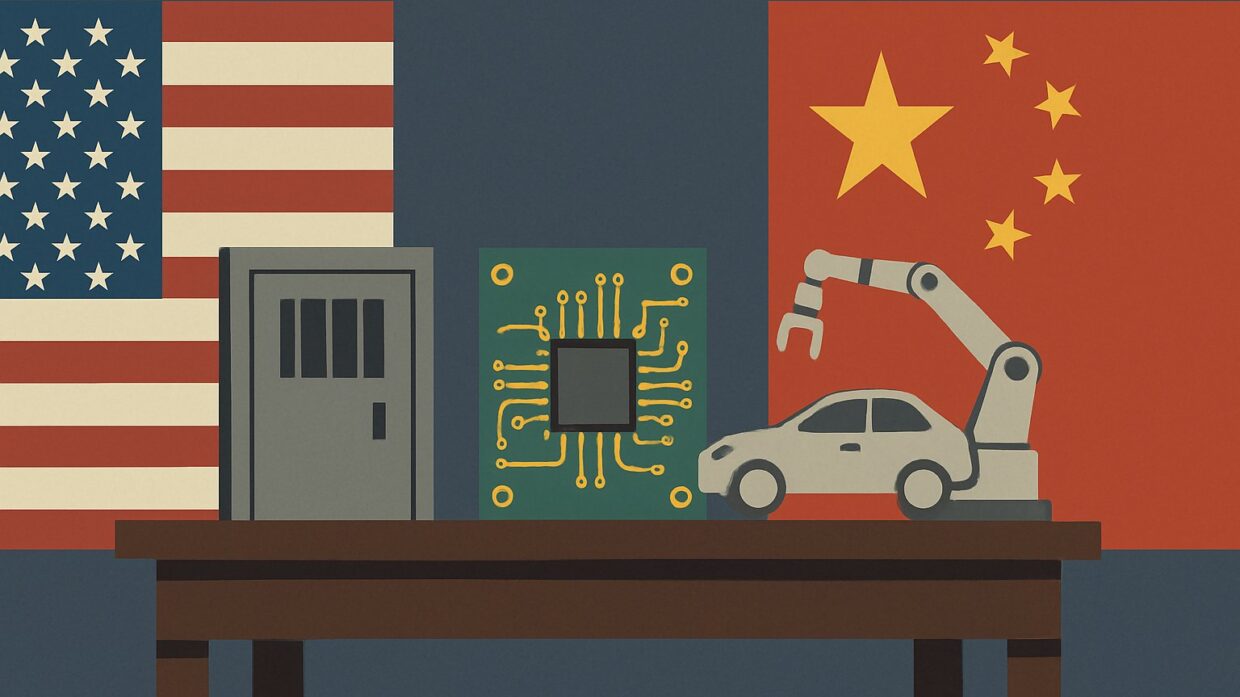
Trump's scheduled summit with Chinese President Xi Jinping has triggered competing warnings from across the American political spectrum, each side framing the negotiation through a different lens about who holds advantage and what should be prioritized. The documented record shows specific congressional pressure on three separate fronts: human rights cases involving detained Americans, alleged Chinese atrocities, and competitive concerns in artificial intelligence and automotive sectors. What remains unclear is which of these concerns Trump intends to prioritize and whether the summit will produce binding agreements or commitments.
The Atlantic's framing, summarized as "Xi is getting what he wants," does not disclose what specific concessions the article believes Trump is poised to make. The headline establishes a judgment about outcome before the summit occurs, which means the analysis likely rests on patterns from prior Trump-Xi negotiations or on assumed asymmetries in bargaining position. The framing emphasizes that Xi has "neutralized" Trump, language suggesting Trump's hands are tied by prior commitments or structural constraints. What this framing leaves out is the specific agenda items, Chinese asks, or American red lines that would allow readers to evaluate whether neutralization is occurring or whether the two leaders are trading off priorities deliberately.
The right-leaning coverage, concentrated in Fox News reporting, takes a different approach by naming specific leverage points Trump can deploy. The reporting on Dr. Youlin Chen, a U.S. citizen detained in China on espionage charges after two years, provides a concrete case that Trump has publicly committed to raising. Senators James Lankford and Angus King are documented as planning to detail 105 years of Chinese Communist Party conduct, from mass killings to Uyghur Muslim detention camps. This framing emphasizes moral and human rights grounds for pressure while also highlighting competitive concerns around AI data centers and automotive access. The limitation of this framing is that it does not address whether raising human rights concerns in a summit context typically produces releases or concessions, or whether coupling human rights demands with trade demands creates strategic complications.
What neither side fully captures is whether Trump's approach to this summit reflects a deliberate tradeoff between human rights pressure and trade gains, or whether the administration views these as aligned interests. Senator Elissa Slotkin's warning about Chinese automotive access suggests at least one member of Congress perceives a risk that trade negotiations could yield outcomes she views as strategically harmful. The public record does not establish whether Trump has signaled he will accept Chinese car imports in exchange for other concessions, or whether he intends to use automotive access as leverage on human rights issues.
The underlying structural question is whether a summit format constrains or enables pressure on human rights. If Trump's goal is securing the release of Dr. Chen and other detained Americans, direct confrontation in the summit could complicate that objective. If his goal is securing trade or technology concessions, centering human rights may reduce bargaining flexibility. The available reporting does not establish which priority Trump views as primary or whether he sees them as compatible.
What the record establishes is that Trump enters this summit with specific congressional demands on three separate issues: detained Americans, historical atrocities, and competitive technology/trade concerns. Whether he can simultaneously advance all three remains the core unresolved question the headlines are implicitly debating.
Trump's summit with Xi will determine whether the U.S. can simultaneously extract concessions on detained Americans, technology competition, and trade access, or whether prioritizing one front necessarily surrenders leverage on another. Congress has documented 105 years of alleged Chinese Communist Party abuses and identified specific detained U.S. citizens like Dr. Youlin Chen as immediate priorities, yet the public record shows no clarity on Trump's sequencing strategy. If he couples human rights demands with aggressive trade negotiating, he risks alienating Xi on both fronts. If he separates them, he implicitly signals which issue matters less. The summit's outcome will reshape how future administrations calibrate pressure across human rights, national security, and economic competition, establishing either a template for bundled demands or a precedent for compartmentalized negotiations that leaves one category consistently underprioritized.