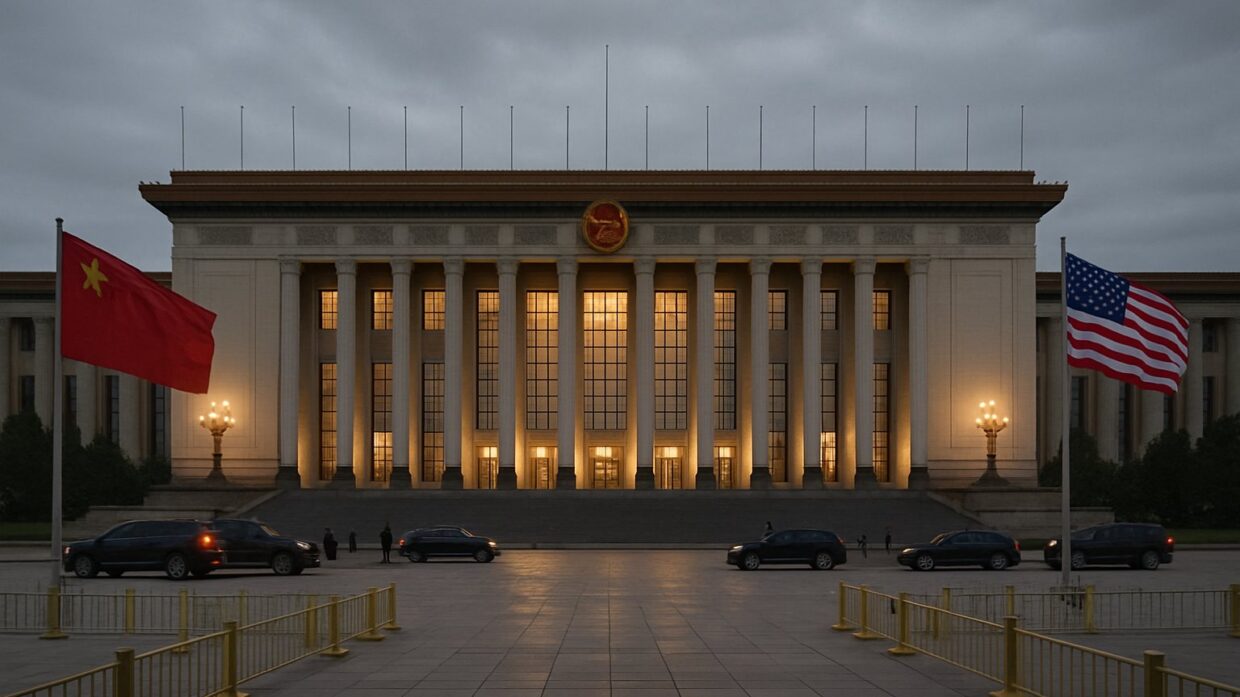
Photo: Well This Is News
Trump heads to China summit as tensions simmer over Taiwan and trade
Trump meets Xi amid Taiwan tensions and Iran war, unlikely to shift US policy
Trump in Beijing for talks with Xi on trade, Taiwan, and Iran conflict
Key Takeaways
- Trump previously considered restricting Taiwan arms sales before this visit, suggesting Xi may have more leverage to shift US policy than public statements of firmness indicate.
- China has substantially strengthened its regional position since Trump's last term through new trade agreements that exclude the US and consolidated domestic power, while the US position is weakened by the Iran conflict requiring potential Chinese cooperation.
- The real negotiation appears to be whether Trump will trade concessions on trade sanctions or other policies to secure Chinese cooperation on Iran, a deal structure neither US media outlet is explicitly discussing.
The Analysis
Trump arrives in Beijing for a summit both sides are calling high-stakes, but neither the left nor the right is directly naming what actually changed in the balance of power between these two countries since the last such meeting, or what explicit agreements were broken that led to this moment of acute tension.
The facts: Trump is in Beijing for direct talks with Xi Jinping. Treasury Secretary Scott Bessent held pre-summit trade negotiations with China's Vice Premier He Lifeng in Seoul. Senior administration officials told the Washington Examiner that Trump will not alter existing US policy on Taiwan, meaning no new arms sales restrictions and continued commitment to the Taiwan Relations Act. The agenda includes trade disputes, Taiwan's status, China's support for Russian operations in Ukraine, and Iran's regional activities. Bloomberg reports that Xi arrives in a position of relative strength while Trump's hand is "constrained by the conflict in Iran."
The left frames this through NBC and PBS as a complex diplomatic challenge requiring careful navigation of "economic and security postures." This language obscures a specific fact: the US previously sanctioned Chinese entities for human rights violations and military development, and those sanctions remain in place. By speaking only of "tensions" and "complex relations," the left avoids naming the concrete policy disputes and treats the meeting as diplomatic theater rather than a clash over specific broken agreements and unmet demands.
The right, particularly the Washington Examiner and Daily Wire, frames this as a test of American strength and resolve. Fox News headlines lead with "Taiwan tensions" and "trade disputes test US strength," while the Examiner quotes officials saying Xi "has no shot" at changing Trump's Taiwan policy. This framing is technically accurate about Trump's stated position but omits a critical recent history: Trump previously considered restricting Taiwan arms sales before this visit, according to those same sources. By emphasizing Trump's firmness now, the right avoids the question of whether he was ever seriously tempted to move on Taiwan, which would suggest Xi's leverage is greater than the "no shot" language implies.
Neither side names the actual structural shift: In 2020, the Trump administration withdrew from the Open Skies Treaty and began systematic sanctions on Chinese technology companies. In 2022, Biden continued and expanded those sanctions. China has responded with its own sanctions and restrictions on rare earth exports. The US also restored the Taiwan Travel Act, allowing high-level visits. By 2025, when Trump returns to office, China has strengthened its position in Southeast Asia through the Regional Comprehensive Economic Partnership trade agreement, which excludes the US. Xi has consolidated domestic power. Trump faces an Iran conflict that requires potential Chinese cooperation to prevent regional escalation.
Bloomberg comes closest to naming this: "Trump faces an emboldened Xi Jinping, just as his own hand is constrained by the conflict in Iran." This is the sentence both other outlets avoid. The real headline is not whether Trump will hold firm on Taiwan, but whether the balance of leverage has shifted enough that Trump must trade something significant on trade or sanctions to get Chinese cooperation on Iran. Neither side wants to frame it that way because it requires admitting the structural decline in American leverage and the explicit cost Trump may have to pay.
China's integration into competing regional trade blocs while the US remains excluded has fundamentally altered the negotiating calculus, and Trump's need for Chinese cooperation on Iran to prevent regional escalation now creates explicit leverage Xi lacked in previous administrations. The real question facing this summit is not whether Trump maintains his Taiwan rhetoric, but what sanctions relief or trade concessions he must grant to secure Chinese restraint on Iranian proxy activities. Previous administrations treated these issues as separable policy tracks; Trump's constrained position collapses that separation and forces a direct exchange rate between Taiwan access and Iran containment. This structural shift, where the US can no longer compartmentalize leverage across multiple theaters, represents a lasting reordering of great power diplomacy that will constrain American options regardless of who occupies the White House next.