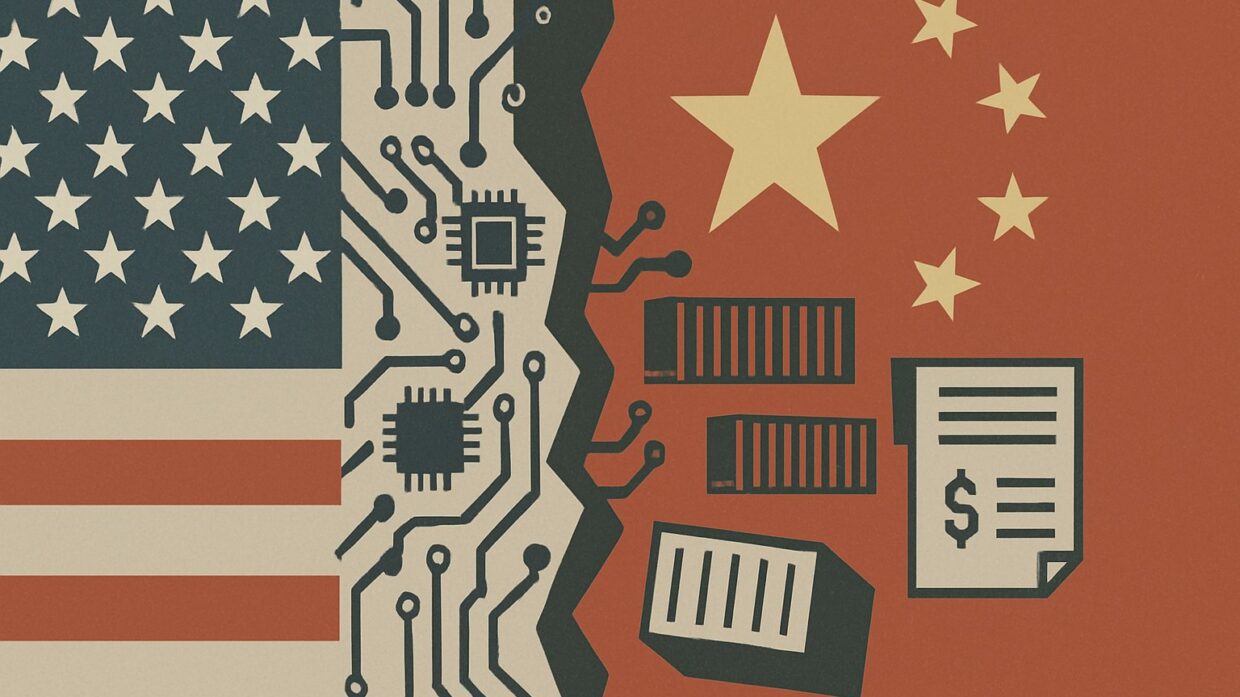
Photo: Well This Is News
China arrests Myanmar scholar Min Zin on espionage charges amid escalating US-China tensions
Trump administration cracks down on Chinese products in federal marketplace while China detains US researcher
China arrests US academic at conference as US tightens restrictions on Chinese tech and commerce
Key Takeaways
- Neither side has disclosed the specific espionage charges against Min Zin, the evidence China claims to possess, or whether the US received formal diplomatic notification, leaving the actual basis for detention unclear.
- China's pattern of detaining foreign nationals long predates recent Trump administration actions, yet reporting treats the arrest and US commerce restrictions as causally linked without confirming either government officially connected them.
- The sequence of events does not establish whether this reflects a predictable cycle of measured retaliation or signals a structural shift toward more aggressive positioning by both governments, a distinction that shapes the outlook for further escalation.
The Analysis
China's arrest of Min Zin, a US-based academic who writes about Myanmar and Chinese foreign policy, coincides with the Trump administration's removal of Chinese products from federal procurement and Pentagon restrictions on Chinese technology firms, creating a pattern that both sides are framing through opposing lenses while omitting crucial context about escalation triggers.
The documented facts establish a specific sequence. Min Zin, whose research focuses on Myanmar politics and Chinese regional influence, was detained on espionage suspicion. The timing follows President Trump's recent Beijing visit and occurs as the Trump administration moved to purge Chinese-origin products from Small Business Administration procurement systems and the Pentagon imposed restrictions on major Chinese technology firms, with Beijing responding that it is "strongly dissatisfied" with those moves. The left-leaning framing, evident in Guardian coverage, emphasizes Beijing's intolerance for academic scrutiny and independent research, positioning the arrest as political retaliation against an intellectual threat. That framing highlights the targeting of researchers as a pattern of suppression.
The right-leaning framing, represented in Fox News coverage, presents the arrest as retaliation for US security and commerce measures, positioning it within a broader Trump-era decoupling strategy. That framing emphasizes the administration's action as necessary protection of US supply chains and intelligence infrastructure. Both frames are accurate in their specific claims but diverge sharply on causal direction. The left attributes Chinese aggression to intolerance of scrutiny. The right attributes it to US policy tightening that Beijing finds threatening.
What neither framing fully addresses is the prior agreement structure that both sides have been testing. The US has restricted Chinese technology under national security rationales dating to the Obama administration, with Trump-era tariffs and tech sanctions expanding those constraints. China's pattern of detaining foreign nationals, including academics and business people, predates this recent escalation and reflects longstanding counterintelligence practices. The arrest timing relative to Trump's Beijing visit raises a specific question the reporting does not clarify: whether the detention reflects Chinese decision-making that preceded the visit or was prompted by post-visit policy announcements.
Neither side discloses the specific charges against Zin, the evidence China claims to possess, or whether US diplomatic channels have received formal notification. The reporting treats the arrest and the US commerce restrictions as linked phenomena without establishing whether either side has officially connected them in diplomatic communications. That gap matters because it obscures whether this is tit-for-tat escalation or parallel independent actions.
The underlying question is whether the US-China relationship is entering a predictable pattern of measured retaliation, where each side responds to perceived economic or security threats with targeted actions the other side treats as political retaliation, or whether recent moves signal a structural shift toward more aggressive positioning by both capitals. The available reporting does not yet establish which interpretation the actual sequence of decisions supports.
China's detention of a US academic researcher creates immediate consequences for scholarly exchange and intelligence cooperation frameworks that both governments have maintained since the 1970s. US universities will face pressure to restrict student recruitment from China and curtail collaborative research projects, forcing departments to restructure programs that depend on Chinese funding or enrollment. The State Department will likely invoke the incident in visa reviews for Chinese scholars seeking US entry, creating reciprocal barriers. More consequentially, the arrest signals that Beijing treats academic analysis of its foreign policy as a prosecutable offense, which will deter future research on Chinese regional influence and Myanmar policy specifically. This reshapes what American institutions can study about China without exposing researchers to detention risk, narrowing the legitimate knowledge base available to policymakers precisely when US-China technological decoupling requires sophisticated understanding of Chinese strategic intentions. The practical result: reduced transparency on both sides and institutional knowledge gaps that increase miscalculation risk during commercial and security disputes.