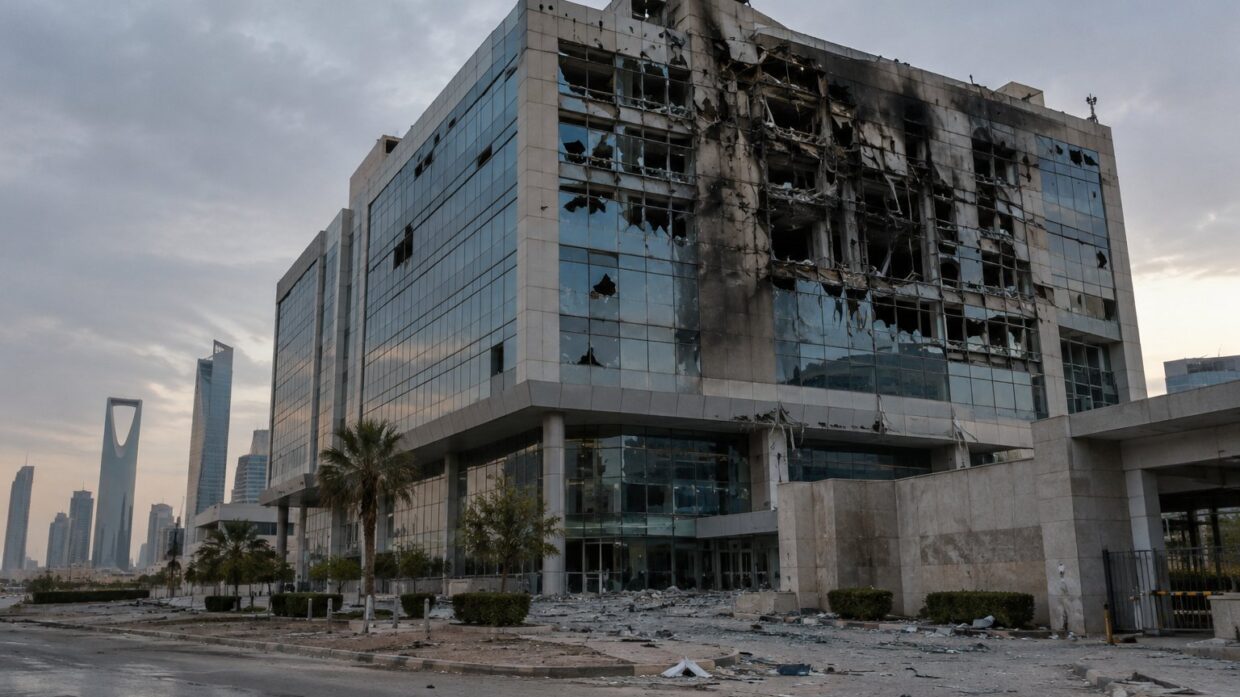
Photo: Well This Is News
Houthi missiles strike Saudi Aramco headquarters as Iran-backed group escalates regional campaign
Saudi defenses repel Houthi attack on Aramco; building sustains minor damage from debris
We haven't found a neutral take on this story yet.
Breaking stories sometimes publish before every side has covered them. We'd rather show you that than invent a view.
The Analysis
A Houthi missile attack on Saudi Aramco's Riyadh office occurred, with the Saudi energy ministry characterizing the damage as resulting from falling debris after an attempted interception, but the available reporting does not establish the precise date, casualty count, or structural severity. The two Investing.com reports use strikingly different framing for what appears to be the same incident, revealing how language choices shape interpretation of ambiguous damage claims.
The first report uses the phrase "hit as Houthi missiles target kingdom," which foregrounds the attack as direct contact with the facility. The second report quotes the ministry statement that damage came from "falling debris after attempted attack," which emphasizes interception and secondary effects rather than penetration. Both versions come from the same news outlet but describe the outcome differently without reconciling the discrepancy. The Saudi energy ministry's official framing leaves unaddressed whether the missiles were intercepted before reaching the building, whether fragments caused the damage, or whether the building sustained direct impact that is being characterized as debris-related for narrative purposes.
The left frame emphasizes the Houthi movement's capability and intent, naming them as the active agent and linking their actions to Iranian backing. This framing treats the attack as part of a documented escalation pattern against Saudi oil infrastructure, which the public record does support through multiple prior Houthi operations. What this framing does not foreground is the scale of Saudi air defense capability or the frequency with which such attacks are interdicted without significant damage. The language "escalation" and "vulnerable" implies a trend toward Houthi dominance in the conflict that the available reporting does not fully establish.
The right frame emphasizes Saudi defensive success, quoting the ministry characterization of "minor damage" and framing the air defense as effective. This framing treats the incident as a failed attempt rather than a successful penetration. The language choice of "repelled" and "minor damage" serves a reassurance function. What this framing underplays is that any direct missile strike reaching the capital represents a security penetration, regardless of interception success, and that repeated attacks on infrastructure indicate sustained capability rather than isolated incidents.
What neither side fully addresses is the question of what "falling debris" actually means in this context. If the missiles were interdicted at altitude, debris would fall from interception sites, potentially at considerable distance from the building. If missiles penetrated air defenses and were damaged near the target, debris would originate from impact proximity. The ministry's statement does not clarify which scenario occurred. The reporting also does not establish whether this attack represents a change in Houthi targeting strategy, whether it was coordinated with other regional actors, or whether it signals escalation beyond the patterns of prior years. The date of the incident is absent from both reports, making it impossible to assess timeliness of coverage or connection to other regional developments.
The underlying question is whether this incident represents tactical success for the Houthis in penetrating Saudi defenses, tactical success for Saudi defenses in limiting damage, or simply routine escalation in an ongoing conflict where both interceptions and occasional penetrations are routine occurrences. The available reporting does not establish that foundation.
Aramco's Riyadh office strike reveals how official damage assessments shape investor confidence in Saudi energy security. The ministry's "falling debris" characterization, versus reports of direct targeting, determines whether markets interpret this as proof of Houthi penetration capability or successful air defense. If missiles are reaching the capital with increasing frequency, insurance costs for regional oil infrastructure rise, supply chain partners reassess operations, and Saudi Arabia's ability to attract energy investment faces credibility questions independent of actual structural damage. The absence of casualty figures and attack timing in official statements suggests intentional information control, which investors use to estimate real vulnerability levels. Whether debris fell from interception altitude or impact proximity becomes the unstated variable determining whether Aramco's operational resilience remains credible to financial markets.