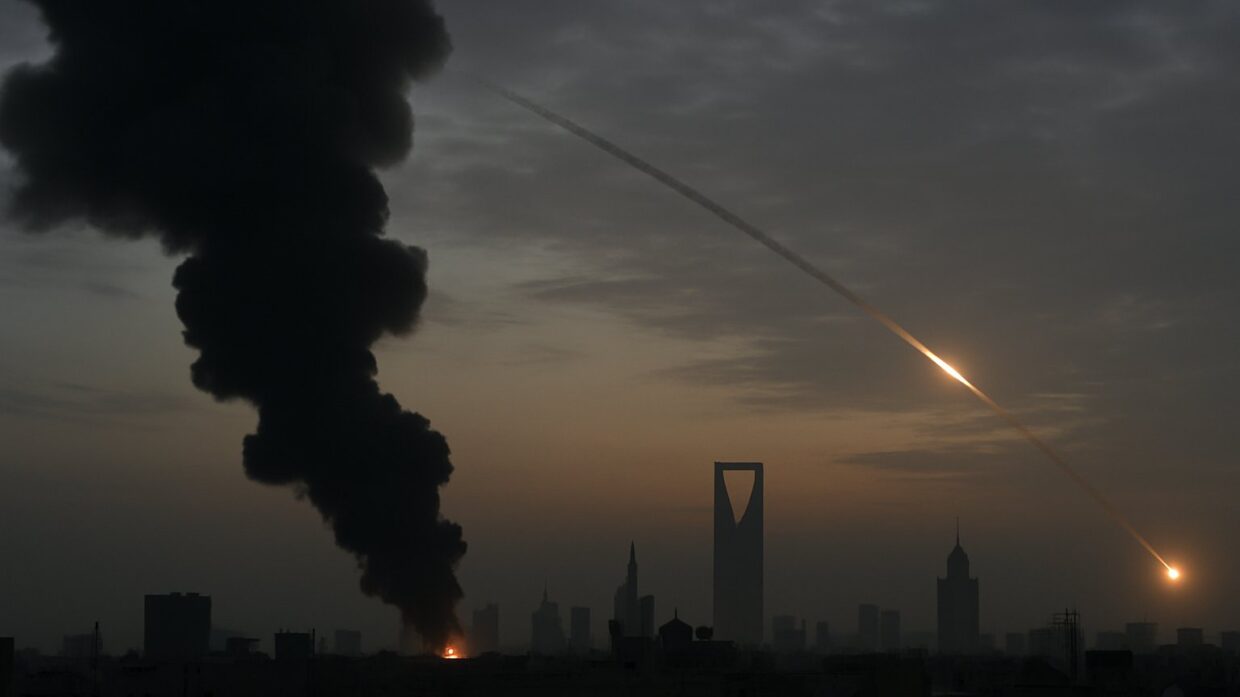
Photo: Well This Is News
Iran-Backed Houthis Strike Riyadh in First Attack on Saudi Capital as Regional Tensions Soar
Houthis Launch Dangerous New Phase of Iran Proxy War With Strike on Saudi Arabia's Heart
Houthis Attack Saudi Capital for First Time Since July Escalation; Turkey Signals Military Support
Key Takeaways
- The Houthis' stated motivations for attacking Saudi targets include retaliation for Saudi operations in Yemen and solidarity with Palestinian issues, but mainstream coverage treats these claims as irrelevant rather than examining them.
- Neither side discloses whether Saturday's attack represents newly developed Houthi capability or the first deployment of existing capability against the capital, a distinction that fundamentally changes what the escalation means.
- Turkey's Mecca Defense Alliance was formally established in August before Saturday's strike, meaning regional military coordination was already underway rather than being a response triggered solely by this attack.
The Analysis
The Houthis' first confirmed attack on Riyadh since July represents a documented expansion of their operational reach, but what each side emphasizes and omits reveals the competing narratives about responsibility, capability, and regional alignment.
The verified facts establish a clear sequence: early Saturday, the Iranian-backed Houthi movement launched missiles and drones at Riyadh. Saudi officials confirmed their air defenses intercepted a ballistic missile. Witnesses reported thick black smoke near the airport. The group claimed responsibility for targeting sensitive sites. Hours later, Turkish Foreign Minister Hakan Fidan announced technical military support for Saudi Arabia, framed as part of the Mecca Defense Alliance established the previous month.
The Guardian's framing emphasizes escalation and citizen impact. The headline foregrounds that this is the first attack on the capital since July, and the coverage stresses the authorities' decision to issue air raid warnings, which it notes are rare for Riyadh residents. The language leaves unexamined why Houthi capability has expanded and what the longer strategic trajectory of the conflict is. The left-leaning coverage notes the Iran-backed nature of the group but does not deeply explore the regional proxy dynamics or how Saudi actions may have shaped Houthi targeting decisions over the past months.
The Daily Wire's framing uses the phrase "dangerous new phase in Iran proxy war" in its headline and calls the attack a marker of escalating capability. That framing centers the Iranian dimension and places the conflict squarely in a proxy war context, which emphasizes adversarial alignment over local grievance or conflict history. The coverage foregrounds the interception success as evidence of Saudi defense strength, but does not examine whether interception claims are independently verified or what proportion of incoming fire was actually stopped.
What neither framing fully addresses is the documented history preceding this attack. The Saudi-led coalition has conducted sustained airstrikes in Yemen since 2015, killing documented thousands of civilians. In July, fighting between Saudi forces and Houthis escalated sharply, but the reporting available does not explain what triggered that escalation or what specific Saudi actions preceded the July uptick. The Houthis have repeatedly tied their attacks to Saudi operations in Yemen and Palestinian issues, but neither the left nor right framing engages with those stated motivations. Additionally, Turkey's announcement of military support is presented as a response to the attack, but the Mecca Defense Alliance was established in August, suggesting broader regional realignment discussions preceded Saturday's strike. The coverage does not establish whether this alliance was already in negotiation or whether the attack accelerated Turkish commitment.
The underlying question the reporting leaves unresolved is whether Saturday's attack represents a genuine escalation in Houthi capability or a demonstration of capability that already existed but had not been deployed against the capital previously. That distinction matters because it shapes what countermeasures and diplomatic moves follow. The record establishes that the attack occurred and was intercepted, but does not establish whether the interception was complete, partial, or whether damage occurred outside official acknowledgment.
The most honest version of this headline requires naming what each side emphasizes: Iran-backed Houthis conduct first confirmed strike on Saudi capital, marking operational expansion; Saudi air defenses claim successful interception; regional powers signal military coordination in response. The fuller picture requires acknowledging the years of conflict preceding this moment and the gap between what each side claims happened and what independent verification has established.
Houthi strikes on Riyadh threaten to lock the Saudi-led coalition into a reactive military posture that has produced diminishing returns for eight years in Yemen. Turkey's entry into active defense coordination signals that regional powers now calculate Iran-backed operations as a sufficient threat to formalize military partnerships, shifting Middle Eastern alignments away from bilateral relationships toward coordinated blocs. This transforms the Yemen conflict from a contained insurgency into infrastructure of a broader regional competition, making diplomatic off-ramps harder to construct and civilian casualties in Yemen more likely to continue accumulating as collateral cost. The question of whether Saturday proved new capability or merely new targeting decisions will determine whether this attack represents tactical escalation or signals structural instability in Saudi security guarantees that attracts deeper Turkish, Emirati, and potentially Israeli coordination.