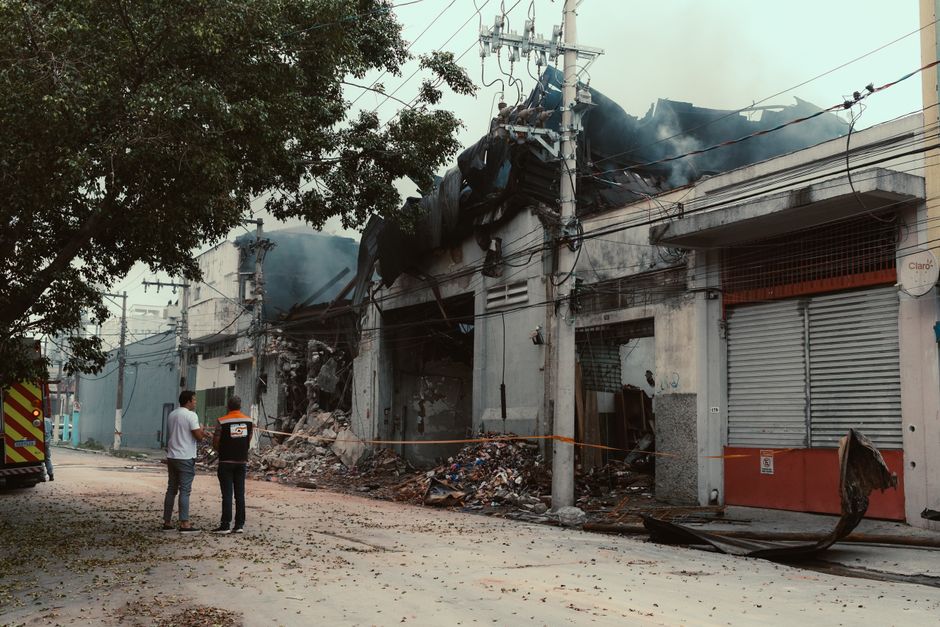
Photo: Th2city Santana
Russian strike kills 37 in densely populated area; Ukraine probes why explosives stored near homes
Russian strike near Kyiv kills 37 in one of year's deadliest attacks amid ongoing drone campaign
Russian drone strike on Kyiv warehouse kills at least 37 as Ukraine investigates munitions storage
Key Takeaways
- Death toll estimates vary across sources, with some reporting 27 deaths and others 37, but the discrepancy is not explained or prominently reported.
- Ukrainian President Zelenskyy announced an investigation into why munitions were stored in a densely populated area, raising questions about whether Ukraine had viable alternative storage locations given Russian control of surrounding territory.
- Neither Russian nor Ukrainian authorities have publicly explained their targeting or storage rationale, and independent verification of the warehouse's military designation and contents remains absent from reporting.
The Analysis
A Russian drone strike on a warehouse west of Kyiv killed at least 37 people, though one source reported 27 deaths, and Ukrainian authorities opened an investigation into why munitions were stored in a densely populated civilian area. The verified facts are narrow: the strike occurred in the Bucha district, ignited a fire that spread to residential buildings, damaged approximately 50 homes, and occurred during a sustained 72-hour period of Russian drone attacks across Ukraine.
The Guardian and NPR frame this as evidence of Russian targeting strategy and civilian cost. The Guardian's specific language describes the warehouse as storing "explosive objects" and emphasizes that "Ukrainian prosecutors open investigation into why munitions were stored so close to residential buildings." This framing places the analytical weight on Ukrainian decision-making rather than Russian targeting choice. The NPR summary emphasizes the attack as "one of the year's deadliest attacks" and contextualizes it within a broader 72-hour campaign of "near constant drone strikes." Both left-leaning sources foreground the intensity and pattern of the Russian campaign.
The Washington Examiner uses nearly identical language to NPR, describing it as "one of the deadliest attacks to hit Ukraine this year" and noting the fire spread through the Bucha district. The right-leaning framing does not substantially differ from the left in this case. Both sources emphasize Russian strike frequency and lethality without distinguishing their analytical emphasis.
What both framings leave out matters. Neither source explicitly answers whether the warehouse was a legitimate military target, whether it was marked as a munitions storage facility, or what Ukrainian military or civilian authorities knew about the risk. The Guardian reports that Zelenskyy "vowed an investigation" but does not report what that investigation's preliminary findings might be. Bloomberg reports the same fact without additional context. A source reporting 27 deaths rather than 37 suggests uncertainty about the final count, but none of the sources foreground this discrepancy or explain why the death toll varies across reporting.
The underlying question is whether this was a strike on a legitimate military supply line located in an area Ukraine chose to use for storage, or whether Russia targeted the warehouse specifically because it sat near residential buildings. The available reporting does not establish which interpretation the evidence supports. Zelenskyy's decision to announce an investigation into Ukrainian storage decisions suggests internal Ukrainian concern about the placement, but the sources do not report whether Ukrainian military planners considered relocation or whether civilian evacuation was possible.
Neither the left nor right framing addresses the strategic calculus: if Ukraine needed to store munitions, and Russia occupies or contests much of the territory surrounding Kyiv, the viable storage locations may have been limited. That constraint does not justify proximity to civilians, but it contextualizes the tradeoff. Similarly, none of the sources report whether Russia announced a targeting rationale or whether independent verification of the strike location exists.
The most honest headline reflects what the record establishes: a Russian strike on a Kyiv-area warehouse killed at least 37 people and prompted Ukrainian authorities to investigate their own munitions storage practices. The death toll is verified. The civilian damage is verified. The storage decision and its justification remain unexplained.
Ukraine's decision to store munitions in a densely populated civilian area near Kyiv will force a reckoning with military logistics practices that may persist throughout the war. The investigation announced by Ukrainian prosecutors signals internal acknowledgment that the warehouse placement created unnecessary civilian risk, regardless of whether Russia deliberately targeted that proximity. This sets a precedent that Ukrainian military commanders cannot indefinitely claim civilian areas are unavoidable storage locations without demonstrating they exhausted alternative options. The 37 deaths will anchor future accountability discussions about where Ukraine positions its supply lines, potentially constraining operational flexibility in a conflict where territorial options are already limited. The incident also reveals the gap between wartime military necessity and peacetime standards for civilian protection, a gap that investigations may narrow as the conflict persists and casualty totals accumulate.