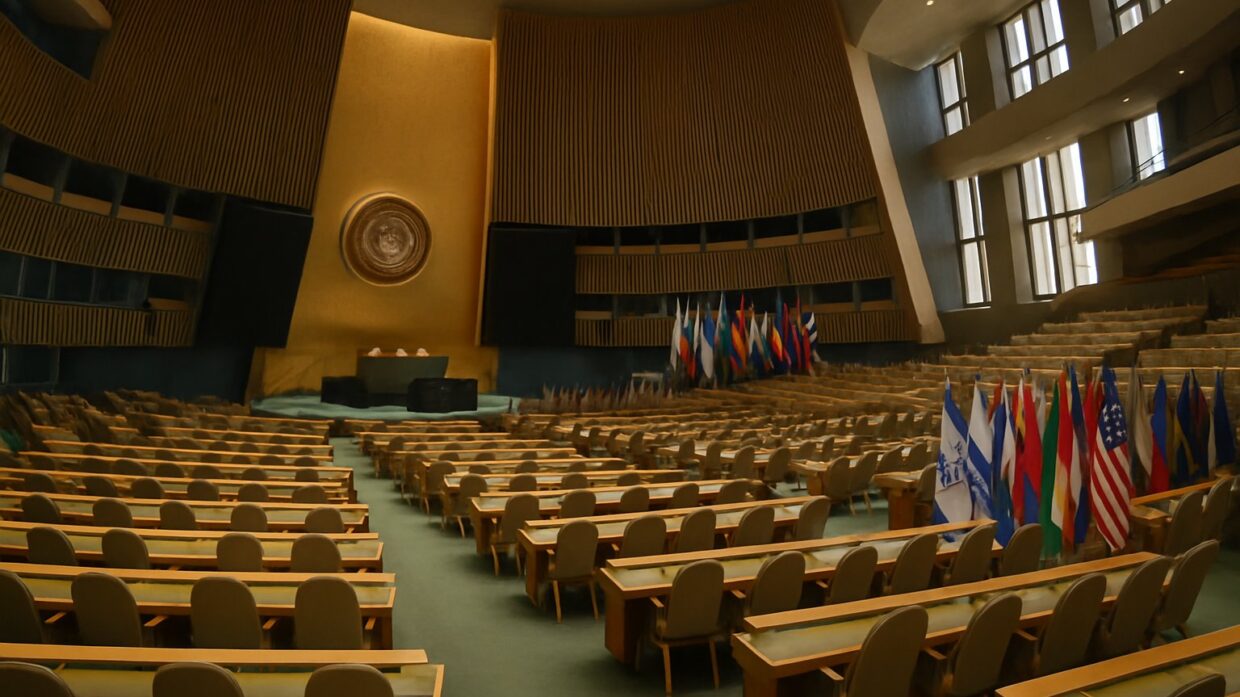
Photo: Well This Is News
Netanyahu delivers defiant UN speech while facing global isolation and re-election fight
Netanyahu speaks at UN as New York protests despite his role defending democracy
Netanyahu addresses UN amid domestic political pressure and international protest
Key Takeaways
- Netanyahu's UN speech is primarily designed to influence Israeli voters in his re-election campaign rather than conduct traditional diplomatic engagement with the international community.
- Neither widespread international protest nor statements of support clarify whether Netanyahu faces operational diplomatic constraints or is simply performing political theater at an elevated scale.
- Coverage of Netanyahu's visit does not establish what specific domestic Israeli political developments made this UN appearance strategically necessary or how his visit compares historically to previous Israeli prime ministers' addresses.
The Analysis
Netanyahu's UN General Assembly appearance this week presents a case where the framing from both left and right reveals what each side emphasizes and what each deliberately underplays. The left describes a leader in "growing political isolation" facing "his toughest re-election challenge," while the right argues he deserves recognition for defending democratic values. What neither framing addresses is the specific domestic Israeli political math that makes this speech necessary in the first place.
The factual baseline: Netanyahu is addressing the UN while facing a domestic re-election campaign. The Guardian reports he will "highlight Israel's achievements" despite "protests and international condemnation." NBC News frames his audience more precisely, noting that "his target audience will likely be Israeli voters," not the international community gathered at the General Assembly. This distinction matters because it suggests his speech functions as a domestic political tool deployed on an international stage, not primarily as diplomatic engagement.
The left framing emphasizes isolation and protest. The Guardian uses the phrase "growing political isolation," and MSNBC reports "global isolation and a fight for his political future." The language choice here is revealing. Isolation is a state imposed on you; the word carries implications of international rejection. This framing leaves out the domestic Israeli political context entirely, nor does it specify which international actors are isolating him versus which maintain security relationships with Israel. The reporting does not establish whether this isolation is actually constraining his political options or whether the speech is precisely calibrated to appear defiant within that constraint.
The right framing inverts the moral valence. The Washington Examiner's opinion piece argues New York should throw Netanyahu "a parade" because he is defending democracy, not protesting his presence. The framing here uses the language of support for democratic principles rather than security concerns. What this framing leaves out is any acknowledgment of international legal concerns or regional security dynamics that might explain why some nations distance themselves from Israeli policy without questioning Israel's right to exist.
What neither side addresses directly is the sequence of events that brought Netanyahu to this specific position. The reporting does not establish what domestic Israeli political developments made this UN appearance strategically necessary for his re-election prospects. Neither frame examines whether similar UN addresses by previous Israeli prime ministers generated comparable levels of protest, which would contextualize whether this reflects unprecedented opposition or standard political theater at elevated stakes. The coverage also does not establish what specific policy reversals or agreements Netanyahu is defending against, which would clarify what "isolation" actually means in operational terms.
The sewer incident NBC reported, in which "mystery men" emerged near Netanyahu's hotel, appears designed to underscore security concerns and international instability around his visit. The NYPD's statement that there is "no threat" undercuts the implied narrative without establishing what actually occurred.
The underlying question here is whether Netanyahu's UN appearance addresses domestic Israeli political needs or international diplomatic requirements. If it is primarily the former, then international condemnation may be less consequential than it appears. If it is the latter, then the framing of his speech matters more than its reception.
Netanyahu's UN address reveals a critical shift in how Israeli leaders navigate power: domestic political survival now competes directly with international diplomacy for the same platform. His transformation of the General Assembly into a campaign stage for Israeli voters sets a precedent that weakens the separation between UN proceedings and electoral contests. Future Israeli prime ministers facing re-election will have institutional permission to use international forums as domestic messaging tools, eroding the UN's function as a space for genuine multilateral negotiation. This precedent matters because it invites other leaders facing electoral pressure to similarly weaponize global stages, fundamentally degrading the body's capacity to address actual regional conflicts requiring sustained diplomatic engagement rather than performed strength for home audiences.