Photo: Well This Is News
IMF warns global economy nearing resilience limits as oil shocks, low reserves threaten recovery
IMF raises 2026 growth forecast to 3.1% as AI offsets Middle East oil shock and budget stress
IMF raises 2026 growth forecast to 3.1% as AI offsets Middle East oil shock and budget stress
Key Takeaways
- The IMF upgraded its growth forecast while simultaneously documenting that strategic oil reserves are depleted and government budgets cannot cushion future energy shocks, suggesting the organization now views AI growth as more reliable than previously modeled.
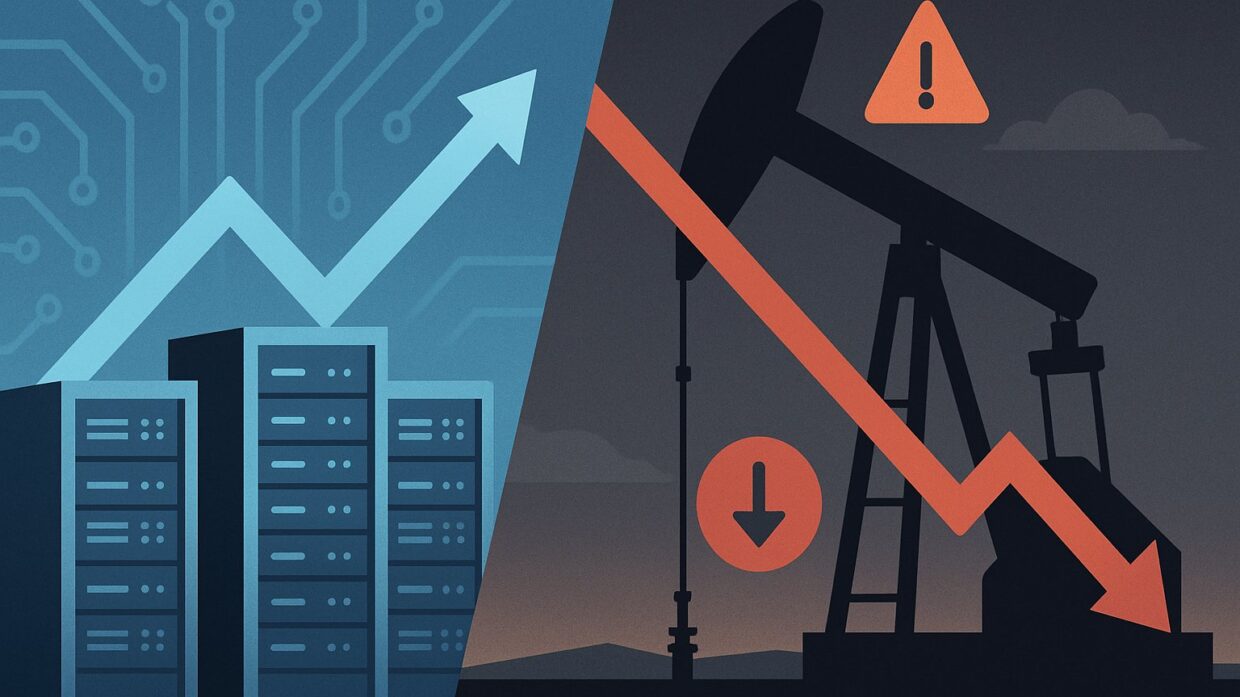
- The global economy is splitting into two tracks: AI-dependent advanced nations benefiting from technology investment, and oil-dependent developing nations facing energy, fiscal, and debt pressures with no policy buffers remaining.
- The IMF report does not explain whether depleted emergency oil reserves reflect past policy choices or structural depletion, leaving unclear whether current vulnerability is temporary or permanent.
The Analysis
The International Monetary Fund's latest World Economic Outlook contains two contradictory facts that explain why both left and right are interpreting the same data as proof of opposing warnings. The IMF raised its 2026 global growth forecast to 3.1%, but it also documented that emergency oil reserves are running low, government budgets are overstretched, and a scenario involving oil at $130 per barrel could add 30 cents per litre to Australian petrol prices. Both things are true. Both tell a story. But they tell different stories.
What actually happened: The IMF released its October 2026 World Economic Outlook at the organization's annual meetings in Bangkok. The forecast projects 3.1% global growth for 2026, a figure higher than previous expectations. The report identifies two offsetting pressures. First, investment in artificial intelligence is driving growth in advanced economies and some emerging markets, providing upward momentum. Second, Middle East tensions are disrupting oil supplies and raising energy costs globally. The report explicitly models a scenario where crude oil reaches $130 per barrel, which would translate to roughly 30 cents per litre in additional Australian petrol prices. The IMF also documents that government emergency oil reserves are depleted, limiting the policy tools available to cushion price shocks, and that state budgets in many nations are already stretched thin by existing debt obligations.
The left frame emphasizes the warning. Guardian coverage foregrounds the IMF's language about the global economy testing 'the limits of resilience' and singles out the threat to developing nations facing a 'triple shock' of energy costs, depleted emergency reserves, and constrained government budgets. This framing highlights specific vulnerability: when oil spikes, countries with thin budgets cannot simply release strategic reserves or subsidize fuel to protect their populations. The omission this framing contains is the countervailing force: AI investment is actively preventing the recession that would normally accompany such an energy shock. The left coverage does not lead with the upgraded growth forecast or explain why it was upgraded.
The center frame, found in MarketWatch and CNBC reporting, foregrounds the divergence. These outlets describe a 'K-shaped' economy where technology-advantaged nations pull ahead while energy-dependent developing economies fall behind. This framing is analytically useful because it captures the actual structure of the IMF data: growth is not uniform, and the benefits of AI concentration in certain countries are decoupling from the costs of energy shocks falling on others. What this framing underplays is the temporal urgency the IMF itself embedded in the report: the concern is not just that outcomes will differ, but that fiscal space to absorb shocks is already gone in many countries.
What neither side fully addresses is the history of strategic reserves and why they are depleted. The IMF does not specify whether current low reserve levels reflect deliberate drawdowns during prior energy shocks, policy choices to reduce stockpiles, or simply normal depletion. This matters because it tells the story of whether current vulnerability is structural or temporary. Similarly, neither framing engages with the IMF's decision to raise its growth forecast despite documenting these risks. The decision to upgrade suggests the organization views AI as a more reliable counterweight than previous models assumed, a judgment that itself may be untested.
The underlying question is whether the global economy is actually resilient or just temporarily supported by one narrow source of growth that masks accumulating vulnerabilities in energy, debt, and fiscal capacity. The IMF's answer appears to be: both.
The IMF's upgraded forecast rests on artificial intelligence offsetting an energy crisis it cannot prevent, creating a precarious growth model where technological gains in wealthy nations mask hollowed fiscal capacity in developing countries to absorb oil shocks. If Middle East tensions escalate beyond current modeling, or if AI investment disappoints relative to expectations, governments already depleted of emergency reserves and budgetary flexibility will lack the policy tools to stabilize their economies, potentially triggering debt crises in emerging markets that would cascade through global supply chains and financial systems dependent on their stability and purchasing power.