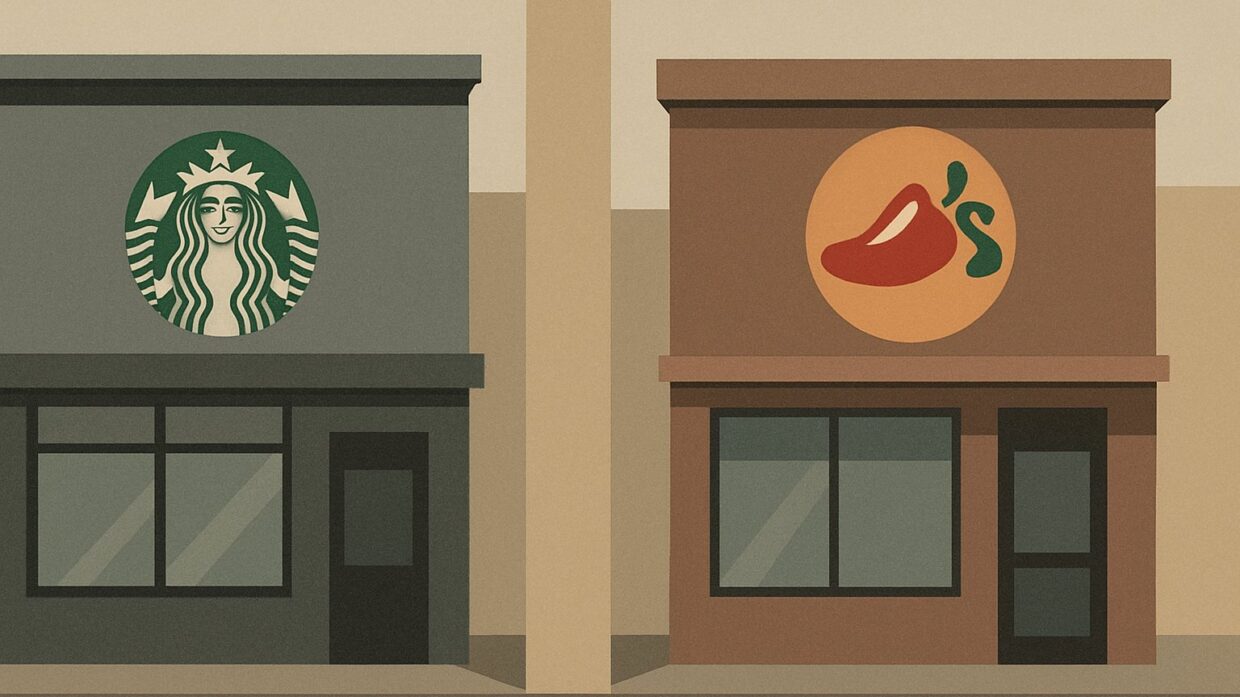
Photo: Well This Is News
Starbucks denies merger bid for Chipotle following exploratory talks
Starbucks rules out Chipotle acquisition after exploring potential deal
Read More... from Starbucks rules out Chipotle acquisition after exploring potential deal
Starbucks rules out Chipotle acquisition after exploring potential deal
Key Takeaways
- Starbucks never clarified whether it had conducted early evaluation of Chipotle before rejecting the deal, leaving a meaningful gap between 'we looked and walked away' and 'we never looked.'
- Someone leaked information about initial exploratory work on a potential Chipotle acquisition, triggering stock movement that suggests the market treats internal due diligence as nearly done deals.
- The real business question,whether Starbucks rejected Chipotle because of operational concerns or because it is confident in its own growth strategy,remains completely unaddressed in public statements and coverage.
The Analysis
Starbucks flatly denied reports that it had explored acquiring Chipotle Mexican Grill, but what the denial actually clarifies is how speculative the original reporting was and what both the market and media are reading into consolidation patterns across the restaurant sector.
The sequence was straightforward: news outlets reported that Starbucks had evaluated a Chipotle deal. Days later, Starbucks issued a statement saying it was not pursuing such an acquisition. The statement did not elaborate on whether there had been preliminary discussions, which makes the distinction between "explored" and "ruled out" less clear than the headlines suggest. Chipotle's stock price and Starbucks' own valuation moved on the initial report, then stabilized on the denial, meaning investors briefly acted on information that turned out to be incomplete or unfounded.
The left-leaning framing, represented by NBC News, emphasizes the denial as closure to speculation and frames it as confirmation that Starbucks intends to remain narrowly focused on coffee and branded beverages. That language serves a narrative: major acquisitions are risky, dilute identity, and often fail. By denying ambition outside its core category, Starbucks appears disciplined and strategic. But this framing leaves out the possibility that Starbucks had done exactly what it said it did: evaluate and reject. The denial does not establish that evaluation never happened, only that Starbucks chose not to proceed. The coverage does not distinguish between "we never considered it" and "we looked and walked away."
What the reporting obscures is the actual business logic behind why Starbucks might have considered such a deal in the first place. Chipotle operates a fast-casual model with high per-location unit economics; Starbucks has struggled to grow same-store sales and faces margin pressure. A complementary food-service model could theoretically address that gap. But the available coverage does not explore whether Starbucks' denial signals confidence in its existing growth strategy or recognition that integrating Chipotle would be operationally complex and unlikely to succeed.
The real headline here is not that Starbucks denied pursuing Chipotle, but that the market treated exploratory due diligence as fait accompli. Someone leaked or reported initial evaluation work, the stock market reacted, and Starbucks felt compelled to issue a categorical denial rather than simply let the story fade. That pattern suggests either aggressive investor speculation built on thin sourcing, or Starbucks' own concern that markets had overinterpreted preliminary work. Neither interpretation is flattering.
What remains undisclosed is whether preliminary conversations occurred, at what level, and whether the denial is procedural (we looked and rejected) or substantive (we never looked). The public record does not establish this distinction, leaving readers with a statement of current intention rather than clarity about past evaluation.
Restaurant sector consolidation rumors now move markets faster than actual deal fundamentals, a dynamic that will force both companies and regulators to respond more aggressively to speculative reporting. When Starbucks felt compelled to issue a categorical denial over preliminary exploration that may or may not have occurred, it revealed how thin the line between strategic evaluation and binding commitment has become in investor perception. Stock price movements on unconfirmed due diligence work signal that market participants are pricing in merger activity that never reaches formal announcement stages, which distorts capital allocation across the restaurant industry and creates pressure on executives to preemptively kill stories rather than allow natural deal cycles to conclude. This pattern will likely prompt corporate legal teams to either eliminate exploratory work or document denials more aggressively, both outcomes that reduce transparency about how strategic decisions actually form.