Photo: Well This Is News
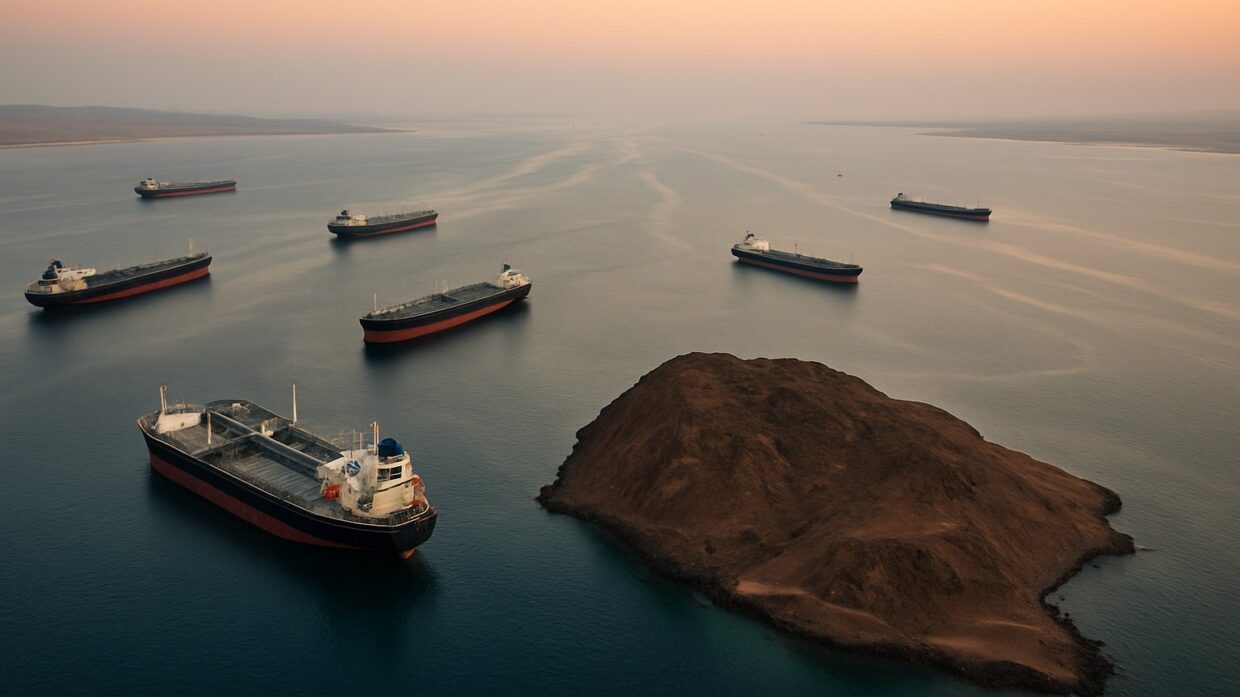
Iran-backed Houthis capture strategic strait island, threatening global oil supplies
Houthis consolidate Yemen gains while Trump avoids confrontation with militant group
Houthis seize Red Sea island as Saudi pipeline shuts; Trump signals restraint
Key Takeaways
- The Houthis' improved military position enabling them to seize the island suggests their capabilities have grown since the 2024 ceasefire collapse, but reporting has not explained what changed in the military balance to make this advance possible now.
- Trump's stated unwillingness to target the Houthis is framed as either a negotiated arrangement or a casual statement, but no reporting has clarified whether the US has made formal concessions in exchange for Red Sea shipping safety or whether this reflects ad hoc policy.
- Both left and right coverage skip the prior context that the Yemen civil war has killed approximately 377,000 people and that Houthi gains appear to reflect their own improved battlefield position rather than a new Iranian strategic directive.
The Analysis
The Houthis' capture of an island controlling the Bab al-Mandab Strait represents a shift in Yemen's civil war from territorial stalemate into direct threats against global energy infrastructure, but the three narratives of this event obscure what actually triggered it and why the US response remains undefined.
The documented facts establish the following sequence: Houthi forces consolidated control over multiple positions along Yemen's western coast, including an island at the Bab al-Mandab Strait, a waterway through which approximately 5 percent of global oil shipments transit daily according to multiple sources. Saudi Arabia operates the East-West pipeline, which it shut down after reporting drone strikes on the infrastructure. NPR and MSNBC both reported the pipeline closure as a precautionary measure following attack. President Trump stated publicly that Houthi representatives have requested the US not target them and that he does not intend to enter conflict with the group, according to reporting in the Washington Examiner and Bloomberg.
The left-leaning coverage, particularly from The Guardian and NPR, emphasizes Iranian backing of the Houthis and frames their advance as expansion of Tehran's regional influence. The Guardian's headline explicitly names the Iranian connection in the lead. This framing leaves out the sequence of events that prompted Houthi escalation, which is central to understanding why the group is advancing now. The coverage also does not foreground what triggered the drone strikes on the Saudi pipeline or how long the Houthis have held positions in this region prior to this week's military moves. The emphasis on Iranian backing creates an Iran-versus-Saudi frame without addressing whether this represents new Iranian strategy or an expansion of existing Houthi capabilities.
The right-leaning coverage, particularly the Washington Examiner, emphasizes Trump's stated position that he will not engage the Houthis militarily and notes that the group has directly communicated with the US requesting restraint. This framing addresses the policy question immediately before the White House. It underplays the material threat the island capture poses to global energy markets and Saudi Arabia's strategic position. The coverage does not explain why the Houthis would be communicating with the Trump administration about targeting requests or what concessions or agreements might underpin such communications. It also does not address whether Trump's restraint reflects a deliberate shift in US Yemen policy or a tactical pause.
What neither framing fully addresses is the prior context that makes this moment possible. The Houthis have fought a civil war against a Saudi-backed government since 2014. The war has produced approximately 377,000 deaths according to UN estimates cited in some reporting. A ceasefire collapsed in late 2024 and fighting resumed. The Houthis' military position has improved materially since the resumption of fighting, and their move to seize the island appears to reflect that improved capability rather than a new Iranian directive. Neither the left frame nor the right frame explains what changed in the military balance that allowed the Houthis to advance now. The available reporting also does not establish whether Trump's stated openness to not targeting the Houthis reflects a pre-existing negotiation channel, a strategic recalculation, or simply an ad hoc statement.
The underlying question is whether the US has effectively conceded influence over Yemen's civil war outcome in exchange for Houthi commitments regarding Red Sea shipping and US targets. The reporting does not establish whether that is the case or whether Trump's statements reflect something narrower. What the record does establish is that Houthi military gains are real, Saudi vulnerabilities are immediate, and US policy toward Yemen is in stated flux.
Houthi control of the Bab al-Mandab Strait creates a permanent chokepoint for 5 percent of global daily oil transit that can now be leveraged by a non-state actor independent of Saudi or Iranian decisions. Trump's restraint signals potential US withdrawal from Yemen's civil war for the first time since 2014, fundamentally altering the military balance that has defined the conflict. If this reflects a negotiated arrangement rather than tactical pause, the US has ceded its ability to influence whether Yemen stabilizes under Saudi pressure or falls to Iranian-aligned forces. The immediate consequence is that global energy markets now price in permanent Houthi disruption capacity, shifting risk calculations for shipping and oil producers for years regardless of which administration holds power.