Photo: Well This Is News
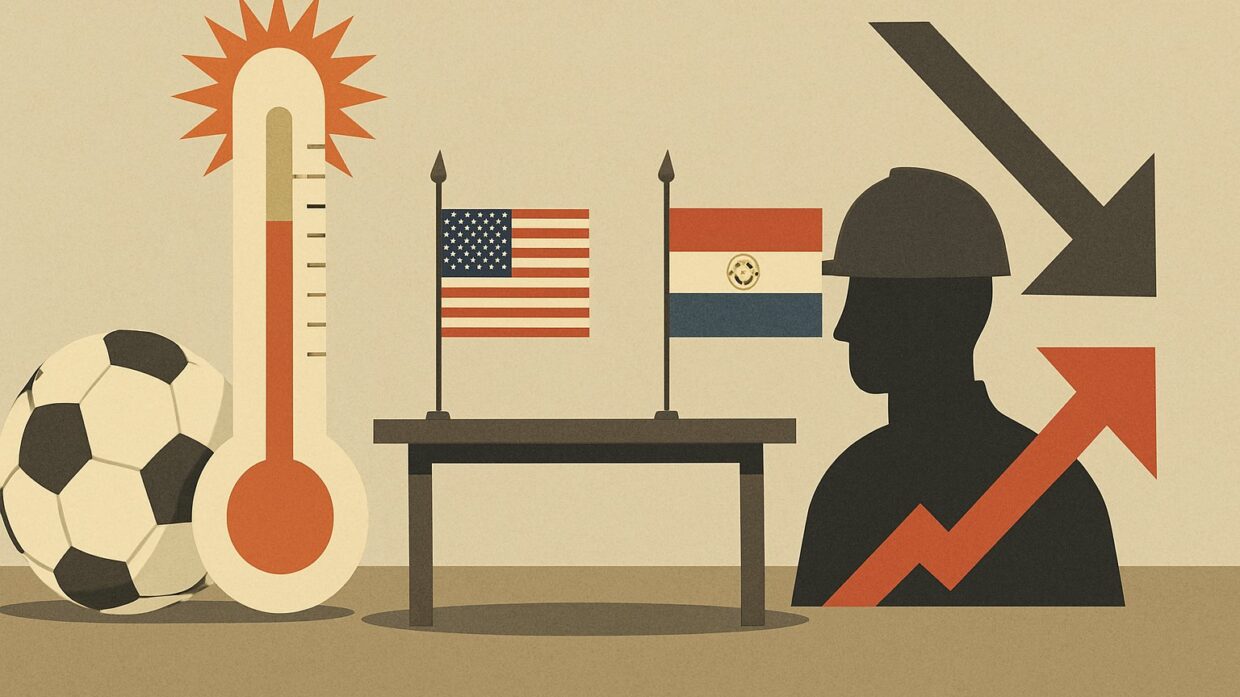
World Cup workers face dangerous heat as US hosts tournament while Rubio advances diplomacy agenda
Rubio, Newsom leverage World Cup spotlight for diplomatic meetings during US tournament debut
Rubio attends World Cup opener as US hosts tournament amid labor, diplomatic tensions
Key Takeaways
- While Rubio conducted diplomatic meetings at the World Cup, he simultaneously defended US military strikes in the Strait of Hormuz that killed Indian mariners, meaning he was managing contradictory diplomatic and military positions at the same event.
- The World Cup functions as a diplomatic reset moment for US officials to advance positive relationship-building at the precise time when US military actions are facing documented international criticism and formal protests from other nations.
- Neither the diplomatic value of the tournament nor worker safety concerns exist in isolation, but the structural question of how the US manages multiple competing military and diplomatic commitments while maintaining accountability remains unexamined by either side's framing.
The Analysis
The US World Cup opener reveals a stark gap between what gets framed as a sporting achievement and what remains structurally unaddressed beneath it. Secretary of State Marco Rubio used the match to conduct bilateral diplomacy with Paraguay's leadership, a diplomatic function that fits the traditional role of high-level US officials at international events. But that framing misses two competing stories neither the right nor the left fully reconciles.
The documented facts: Rubio met with Paraguayan President Santiago Peña during the US opening match, using the global spotlight as a venue for what officials call bilateral engagement. The Guardian's reporting on World Cup worker safety cites labor advocates and scholars warning that temperatures could exceed 90 degrees Fahrenheit in several host cities, creating measurable health risks for the estimated thousands of workers managing tournament operations. Separately, Bloomberg reports that Rubio has been defending US military actions in the Strait of Hormuz after India formally protested strikes that killed three Indian mariners, establishing that even as Rubio advances diplomatic relationships at the World Cup, he is managing fallout from recent military operations elsewhere.
The right frame, evident in Fox News' coverage, emphasizes the diplomatic and political value of the World Cup moment. The language chosen is strategic: Rubio 'shares the spotlight,' suggesting an opportunity for profile elevation and relationship-building with foreign leaders. The framing treats the World Cup as a legitimate diplomatic venue, which it functionally is. What this framing does not address is whether conducting high-level state business during a sporting event signals priority misalignment or simply efficient scheduling. It also does not reckon with the fact that Rubio is simultaneously defending controversial military strikes while building diplomatic relationships, creating a potential contradiction the right-aligned reporting leaves unexamined.
The left frame, represented in The Guardian's coverage, emphasizes worker vulnerability and the structural invisibility of labor concerns in how major sporting events are covered. The language is direct: workers are 'imperiled,' temperatures 'extremely hot,' health risks specific and quantified. This framing correctly identifies a documented hazard. What it does not adequately address is how typical this is of international sporting events, how the US government's specific role in worker protections differs from host country obligations, or what plausible interventions exist beyond moral condemnation. It treats worker safety as a US diplomatic failure rather than as a systemic feature of how major tournaments operate.
What neither side fully captures is the underlying structural question: the same diplomatic apparatus that uses the World Cup to advance bilateral relationships with Paraguay operates the military posture that created the Hormuz tensions Rubio is now defending. The World Cup functions as a reset moment for Rubio's public-facing diplomacy at precisely the moment when US military actions are facing documented international criticism. This is not unusual, but it is worth naming. The real headline is not about presidential speculation or worker safety in isolation, but about how the US manages multiple competing diplomatic and military commitments simultaneously, and what visibility or accountability mechanisms exist when those commitments create contradictions.
Rubio's World Cup diplomacy masks a structural reality: the same US military posture generating international fallout over Indian mariners' deaths in the Strait of Hormuz now operates alongside high-profile bilateral engagement with Paraguay. The World Cup provides Rubio a diplomatic reset moment, allowing relationship cultivation while documented military tensions simmer elsewhere. This simultaneity reveals how major sporting events function as visibility management tools for governments juggling contradictory commitments. Without mechanisms linking diplomatic advancement to accountability for concurrent military actions, the tournament becomes a venue where states can compartmentalize competing interests. The US hosting ability to frame worker safety concerns and military strikes as separate problems from diplomatic achievement obscures whether these policies cohere or conflict, leaving no institutional pressure to resolve the contradiction.