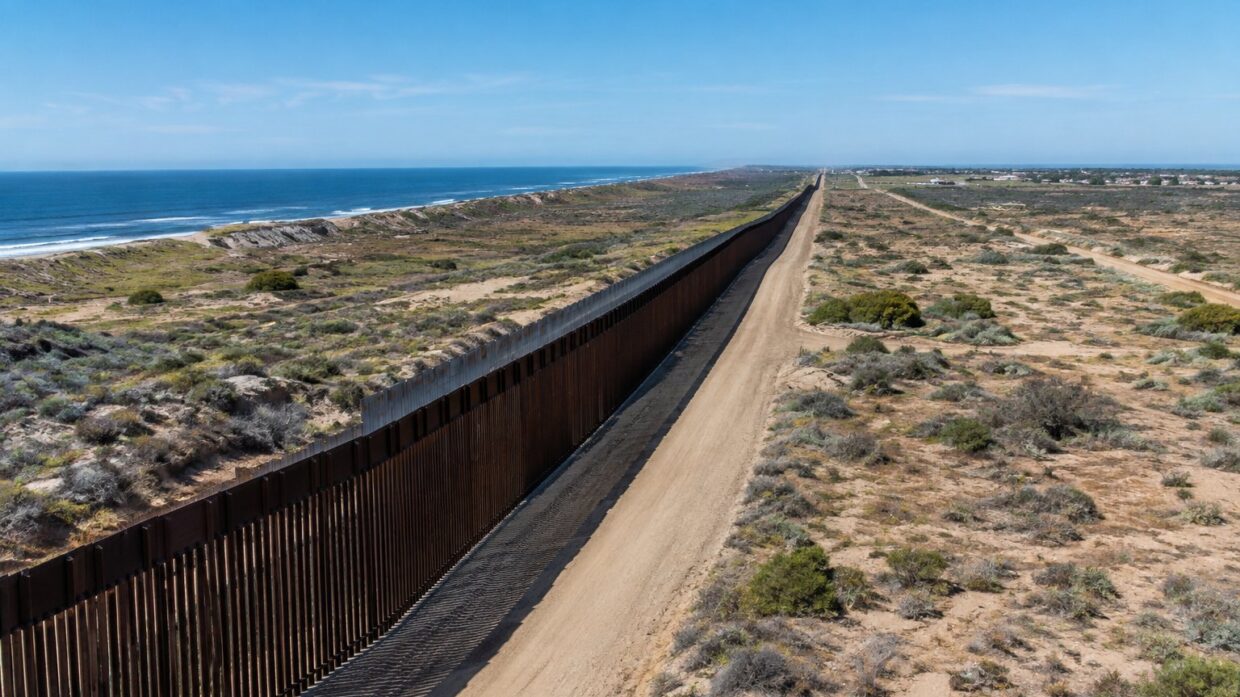
Photo: Well This Is News
Blue Wave Reaches Border: Democrats Sweep House Seats, Threaten Wall Expansion in Texas
Texas Border About to Fall Under Democrat Control; Open-Border Leadership Replaces Enforcement Focus
We haven't found a neutral take on this story yet.
Breaking stories sometimes publish before every side has covered them. We'd rather show you that than invent a view.
The Analysis
For the first time in three decades, every U.S. House member representing the U.S.-Mexico border from San Diego to Brownsville will be a Democrat. That fact is not in dispute. What is contested is what it means for border enforcement policy when the new Congress convenes in January.
The election results are specific and documented. Inside Climate News reports border communities voted in overwhelming numbers for Democratic candidates in the midterm elections, ending what the reporting describes as a 30-year Republican hold on the region's House seats. Breitbart's framing is different but not contradictory on the basic outcome: it acknowledges the electoral shift and emphasizes what it characterizes as Texas's prior role as an enforcement actor against cartels and undocumented immigration.
The left frame, represented by Inside Climate News, emphasizes voter agency and policy choice. The headline poses a question: Can the blue wave turn the tide against border wall construction? The framing assumes wall construction is something to be turned against, not something voters requested. The reporting does not establish what percentage of border voters opposed wall construction specifically, or whether their voting choice was primarily motivated by immigration policy versus other issues like the economy, healthcare, or local representation. The climate focus in the outlet's name suggests environmental concerns about wall construction may be embedded in the coverage, though the source summary alone does not confirm this.
The right frame, represented by Breitbart, casts the election result as a loss for enforcement. It emphasizes Breitbart's historical reporting from the region and frames Texas as having been a unilateral actor against cartels and open borders for a decade. The language is suggestive rather than evidenced: the opinion piece warns of what happens under Democrat leadership but the source summary does not detail specific policy proposals Democrats have announced. Breitbart names the outcome as a crisis waiting to happen, not a shift voters chose for other reasons.
What neither side fully establishes is why border voters shifted. Breitbart does not explain what caused the region to abandon Republicans after 30 years. Inside Climate News does not establish whether wall construction was the primary factor or whether economic conditions, demographic change, or local candidate quality drove the results. The reporting leaves undisclosed the specific platforms border House Democrats campaigned on regarding border security, enforcement, or wall construction.
The institutional implication is real: Democratic control of border House seats affects appropriations for wall construction and regional input on federal border policy. But the specifics matter. Democrats holding House seats does not automatically block executive branch border enforcement or Defense Department spending. It does mean regional representatives can oppose specific wall projects and direct federal investment elsewhere.
What remains unresolved is whether the election signals ideological shift in border communities or regional frustration with Republican representation on non-border issues. The voting data exists. The interpretation requires caution.
Democratic control of border House seats gives the party direct power over appropriations and siting decisions for wall construction in the region where it matters most operationally. When Congress reconvenes, these representatives can block funding for specific border barrier projects, redirect resources to technology or personnel instead, and provide political cover for the Biden administration if it halts wall expansion. The shift ends Republican ability to demand wall spending through their border delegation and eliminates a unified regional voice that previously pushed enforcement priorities. This institutional change persists regardless of what motivated individual voters, affecting border policy for the next two years and establishing a new coalition balance on the single most contested infrastructure project in contemporary immigration politics.