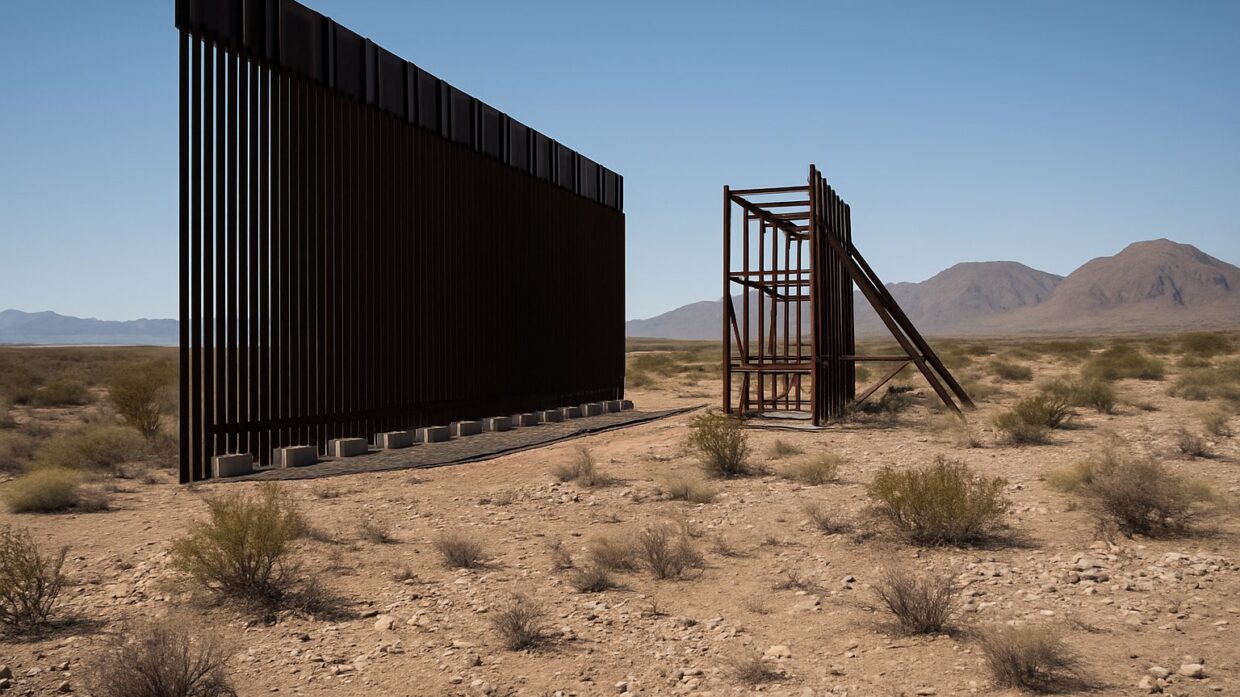
Photo: Well This Is News
Trump Pushes Controversial 30-Foot Border Wall Through Protected Texas Landscape Despite Bipartisan Backlash
Trump Administration Advances $46 Billion Border Security Plan with Big Bend Wall Construction
Trump Administration Resumes Border Wall Construction in Big Bend Region Amid Local Opposition
Key Takeaways
- Courts previously blocked border wall construction in Big Bend National Park and surrounding areas on environmental and legal grounds, but the available reporting does not explain what changed to allow construction to resume now.
- The reporting lacks specifics on which environmental reviews were conducted, what federal law exceptions were invoked, or whether the legal obstacles that previously stalled this project were resolved through legislative action, executive waiver, or court settlement.
- Neither side identifies specific contractors, project timelines, completion percentages, or how many miles of wall the Big Bend project represents, making it impossible to assess the actual scale or durability of this construction effort.
The Analysis
The Trump administration's decision to begin constructing a border wall in Big Bend, Texas represents the resumption of a project halted during the Biden presidency, but the available reporting leaves out the specific mechanisms used to overcome the legal and environmental objections that previously stalled construction in this region.
The PBS account frames the project as fulfilling a "key campaign promise," reporting that the administration is executing its "$46 billion plan to line the border with walls, barriers, roads and technology." The Guardian's framing emphasizes that Customs and Border Protection "faces furious" bipartisan backlash from local residents, with critics cited as opposing a "controversial" wall through "west Texas." Both accounts report that construction is proceeding, but neither discloses what environmental reviews were conducted, what federal law exceptions were invoked, or whether the same objections that previously delayed construction in sensitive ecosystems have been addressed or waived.
The left's framing relies on two omissions. First, it refers to the Big Bend region as "protected" and "environmentally sensitive" without specifying which protections apply, which federal agencies have jurisdiction, or whether those protections remain in force during construction. Second, it attributes opposition to "bipartisan" sources and "locals" without naming specific elected officials, environmental groups, or regional governments making the case. This leaves readers unable to assess whether opposition is widespread or concentrated among particular constituencies. The language "even as Customs and Border Protection faces furious...backlash" implies internal agency dissent, but the reporting does not establish whether CBP leadership opposes construction or whether field personnel disagree with headquarters policy.
The right's framing emphasizes the dollar amount ($46 billion) and the breadth of the initiative (walls, barriers, roads, technology), but does not address the specific costs, timeline, or completion percentage of previous wall construction. It reports the Big Bend project as a "milestone," which presupposes that the milestone was significant, without explaining why construction in this particular region was prioritized or what the prior construction status was. The framing leaves out any discussion of what stalled construction previously or how the administration resolved those obstacles.
What neither account foregrounds is the legal history specific to Big Bend. In 2019 and 2020, courts blocked border wall construction in Big Bend National Park and the surrounding region, citing National Park Service authority and environmental impact requirements. The administration's resumption of construction suggests these legal obstacles have been resolved through either legislative action, executive interpretation, or litigation outcomes, but the available reporting does not establish which. Additionally, neither account names the specific contractors, the projected completion date, or the number of miles of wall the Big Bend project represents.
The underlying question is whether the administration has removed the legal barriers through waiver authority, statutory change, or court settlement. That distinction matters because it establishes whether this construction represents a shift in judicial interpretation, a legislative override, or an exercise of executive power that may itself face legal challenge. Readers cannot assess the durability or significance of this milestone without that clarity.
The Trump administration's resumption of Big Bend wall construction signals a fundamental shift in how federal environmental and park protections will be enforced across infrastructure projects. Courts previously halted construction in this region on National Park Service grounds and environmental review requirements, but the administration has apparently circumvented those obstacles through mechanisms the reporting does not identify. Whether the administration achieved this through legislative waiver authority, executive reinterpretation, or litigation settlement determines whether other protected lands now face reduced legal constraints for future development. If the administration successfully invoked broad waiver powers rather than securing congressional action, it establishes a precedent for bypassing environmental review on all federally protected territory, not merely this border region. The specific legal mechanism matters because it signals whether other agencies administering wilderness areas, endangered species habitats, and national monuments can expect similar pressure to subordinate their mandates to executive infrastructure priorities.