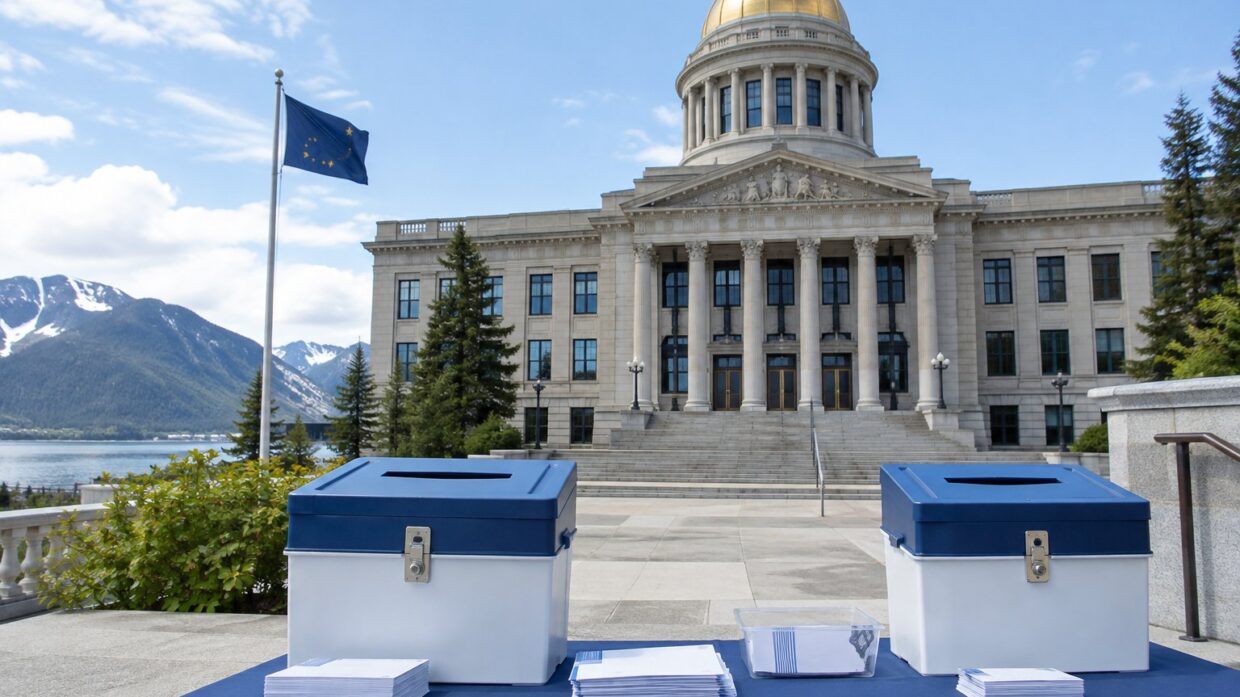
Photo: Well This Is News
Democrat Mary Peltola On Track to Flip Alaska Senate Seat
We haven't found a right-leaning take on this story yet.
Breaking stories sometimes publish before every side has covered them. We'd rather show you that than invent a view.
Alaska Senate Race: Peltola's Lead Holds as Vote Counting Continues
Key Takeaways
- Alaska's mail-in voting system and ranked choice voting method mean the race will not be officially decided until all ballots are counted and redistributed if necessary, a process that takes weeks.
- The margin of Peltola's current lead and the number of uncounted ballots remain unreported, leaving open the possibility that ranked choice redistribution could materially change the outcome.
- Neither the Republican candidate nor Alaska's Republican Party has publicly stated whether they accept the preliminary result or plan legal action, a crucial indicator of whether the race is settling toward closure or moving into contested terrain.
The Analysis
Alaska's Senate race remains undecided more than a week after Election Day, with Democrat Mary Peltola holding a lead as vote counting continues, according to NBC News Decision Desk analysis. The extended timeline reflects Alaska's mail-in voting system and the complexity introduced by ranked choice voting, a method that may determine the final outcome if no candidate achieves a majority on first-choice ballots.
The factual record so far: Peltola, a former Democratic representative who previously held Alaska's U.S. House seat, currently leads in vote totals according to NBC's analysis. The state has not yet completed its official count of all ballots, including mail-in votes received after Election Day. Alaska's ranked choice voting system, adopted by voters in 2020 and first used statewide in 2022, allows voters to rank candidates in order of preference. If no candidate wins a majority of first-choice votes, lower-ranked choices are redistributed until someone reaches 50 percent.
The left framing emphasizes Peltola's "likely" victory and describes her as "on track to win," language that treats the NBC analysis as approaching finality. This frame notes that Peltola maintains her position even as ranked choice considerations enter the picture, which reporters use to suggest the outcome is resilient to the state's voting mechanics. The language choice, "likely to win," reflects NBC's confidence assessment but also reflects political interest in demonstrating that a Democrat can win statewide in Alaska, a state Republicans have held in presidential contests.
The right framing is absent from the available reporting. No conservative outlet or Republican campaign statement is cited in the source material provided, leaving that perspective unrepresented in the available analysis.
What neither side yet addresses is the specific margin Peltola holds, how many ballots remain uncounted, or whether Republican voters' second and third choices could shift the outcome under ranked choice rules. Those details matter substantially. If Peltola's margin is narrow and Republican voters' secondary preferences split toward a non-Republican candidate, the final tally could change. The reporting also does not establish whether Alaska's Republican Party or the Republican Senate candidate have publicly accepted the preliminary outcome or raised legal challenges, a detail that would clarify whether this race is settling toward closure or moving toward contested terrain.
Alaska has become electorally unpredictable in recent years. The state voted for Trump in 2020 and 2024, but elected Peltola to the House in 2022 in a special election using ranked choice voting, then reelected her in the general election the same year. That pattern suggests ranked choice voting has materially changed Alaska's electoral behavior in ways that favor candidates who appeal beyond a single party's base.
The underlying question is whether Peltola's lead reflects a genuine shift in Alaska's electorate or a narrow win dependent on ranked choice mechanics that a traditional plurality-vote system would have produced differently. Until the state completes its count and, if necessary, executes ranked choice redistribution, neither certainty is available.
Alaska's ranked choice voting system is about to demonstrate whether it fundamentally reshapes Senate outcomes in Republican-leaning states. If Peltola wins, it will mark the second statewide victory under ranked choice rules in a state Trump carried twice, suggesting the voting method has durably altered Alaska's political behavior by rewarding candidates who build coalitions beyond partisan cores. This outcome would validate the 2020 voter decision to adopt ranked choice and give national Democratic operatives a template for competitive terrain in red states. Conversely, if Republican second-choice consolidation closes Peltola's lead during redistribution, it exposes ranked choice as vulnerable to strategic voting patterns and likely triggers Republican campaigns to challenge the system's legitimacy, as they have in other states.