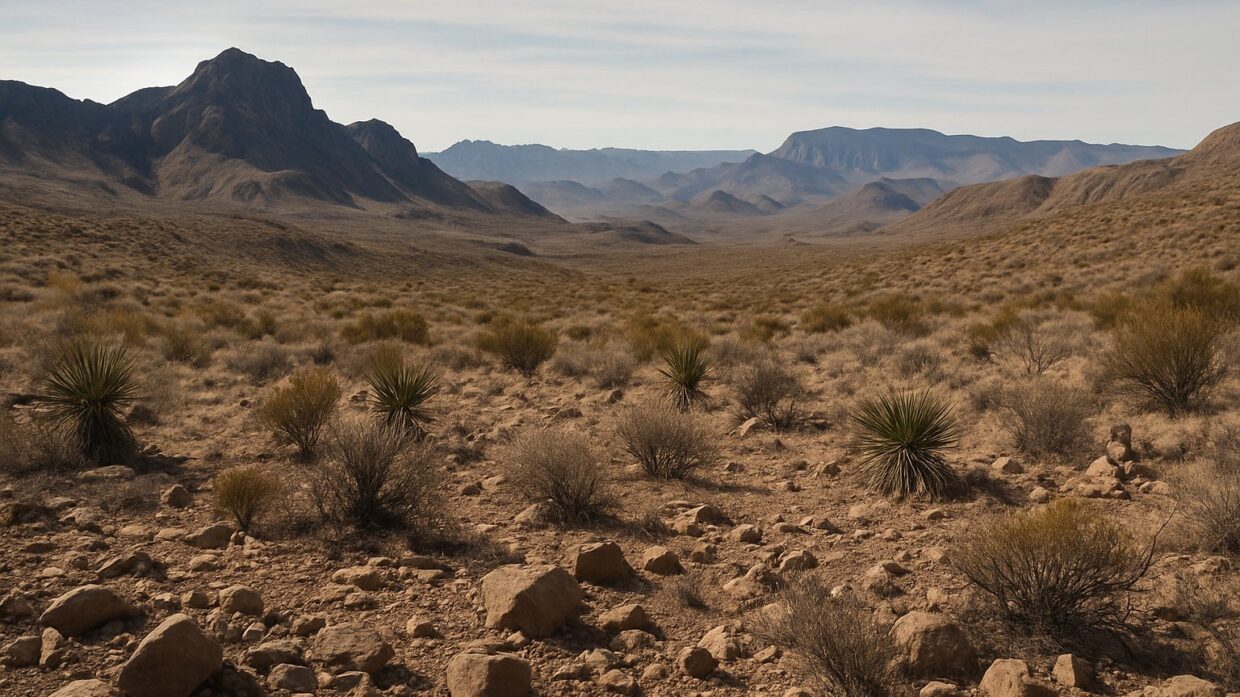
Photo: Well This Is News
Court Blocks Border Wall Construction in Texas' Big Bend , Major Win for Landowners and Environmentalists
Federal Judge Blocks Trump's Border Wall Construction Across Texas's Big Bend Sector
Federal Judge Halts Big Bend Border Wall Construction in Texas
Key Takeaways
- The judge's decision turns on whether the administration violated procedural requirements under environmental and administrative law, not on whether border security concerns are legitimate.
- The injunction applies to Big Bend National Park, adjacent state lands, and private property under different legal regimes, but reporting has not clearly separated which environmental laws protect which parcels.
- A preliminary injunction halts construction only pending the full case outcome and potential appeals, making this a temporary procedural gate rather than a final legal victory.
The Analysis
A federal judge issued a preliminary injunction Friday halting border wall construction in Texas's Big Bend region, a decision that pivots on a narrow legal question neither the administration nor its opponents is fully articulating: whether environmental law and property rights claims can override federal authority to fortify the border, and what that precedent means for future construction decisions.
Judge Kathleen Cardone, a Bush appointee, blocked construction after hearing testimony that spanned environmental damage, private property takings, and border security claims. The specific language matters. Cardone prohibited the administration from constructing "border barrier or related infrastructure, or engaging in any construction," according to reporting from The Hill and Inside Climate News. That language is broader than it initially appears. It does not say construction is banned forever. It says construction is halted pending resolution of the underlying legal claims. The preliminary injunction is a procedural gate, not a final judgment.
HuffPost frames this as a "major win for landowners, businesses and environmentalists," emphasizing the constituencies opposing construction. That framing is accurate about who sued and who benefits from the halt. What it leaves out is that preliminary injunctions are temporary. They last until the full case is decided or the injunction is lifted on appeal. HuffPost's headline language, "For Now," hints at this, but the body coverage emphasizes the victory rather than its conditional nature.
Breitbart leads with the fact that Homeland Security warned that blocking Big Bend construction could push illegal crossings into the region. That is a documented federal claim that appears in the reporting. Breitbart's framing emphasizes the security argument the administration made. What that framing does not fully explore is what evidence Cardone found unpersuasive about that argument, or whether the judge weighed it differently than the department did.
What neither framing adequately addresses is the prior legal history that made this decision possible. The National Environmental Policy Act and the Administrative Procedure Act are the statutory hooks on which the injunction hangs. Those laws require the federal government to disclose environmental impacts before construction and to follow procedural requirements in implementing policy. The reporting establishes that the judge heard testimony about environmental impacts. The reporting does not clearly establish whether the core dispute is about the substance of those impacts or whether the administration followed the procedural steps federal law requires. Those are different legal questions with different consequences.
Also undisclosed: whether this injunction applies only to Big Bend National Park proper, or to the adjacent state lands and private property the administration also planned to use. Multiple sources mention both national park and state park and private land, but no reporting clearly separates which environmental laws apply to which parcels. That distinction matters because national parks and private land operate under different legal regimes.
The sequence of events suggests the administration may have moved faster than environmental review processes allowed. That is not a claim either side is making explicitly. It is an inference from the injunction itself. If the legal process worked as intended, either environmental review was incomplete or the administration did not disclose it fully.
The real question is whether the Bush-appointed judge believed the administration's border security rationale outweighed established environmental and property law, or whether procedural violations in how the plan was implemented made the security argument inadmissible regardless of its merits. The available reporting does not clearly answer that.
This ruling establishes that federal border security authority is not exempt from environmental review requirements, a principle that will constrain how future administrations design and deploy border infrastructure across all 2,000 miles of the southern border. Judge Cardone's injunction rests on procedural violations in the Administrative Procedure Act, meaning the government cannot simply invoke national security to bypass environmental disclosure and property takings analysis. The Big Bend precedent directly affects how the Department of Homeland Security must sequence its projects, conduct NEPA reviews, and acquire land going forward. If upheld on appeal, this decision transforms border construction from an executive fast-track into a process requiring full compliance with statutes originally written for civilian infrastructure, not military or security purposes. The practical effect: any future wall, fence, or surveillance project in environmentally sensitive areas or on private land now faces mandatory judicial scrutiny before ground breaks.