Photo: Well This Is News
After gutting Voting Rights Act, Republicans rush to erase majority-Black district in Tennessee
Tennessee GOP approves map flipping final Democratic seat as protests erupt in capitol
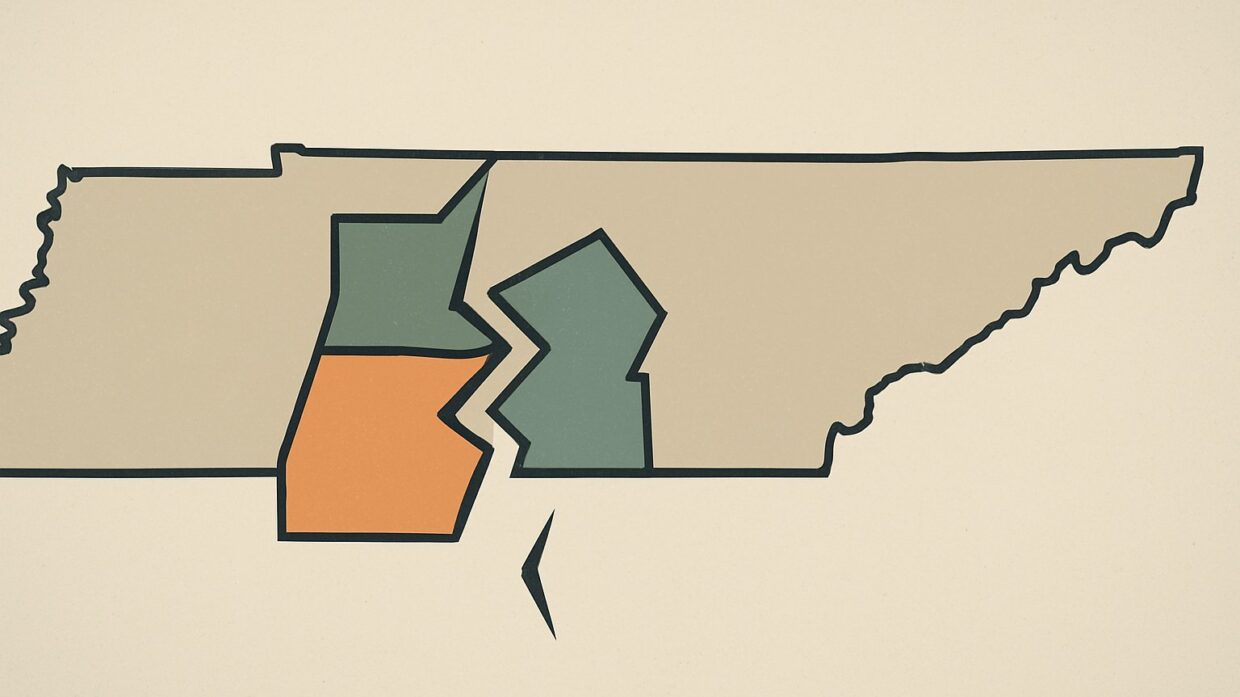
Tennessee Republicans pass congressional map eliminating lone Democratic seat by splitting Memphis district
Key Takeaways
- The Supreme Court's removal of Section 5 preclearance in 2013 specifically enabled what Tennessee is doing now, yet neither side is emphasizing that this map would have been blocked under the old law before 2013.
- Shelby County is only 48 percent Black despite being Tennessee's most Democratic stronghold, meaning the map eliminates concentrated Democratic power in the state's largest urban area rather than suppressing a majority-minority district.
- Both sides are describing the redistricting technique of cracking without explaining that what actually changed is not the technique itself but the removal of the federal government's power to reject it.
The Analysis
Tennessee Republicans passed a new congressional map Thursday that splits Shelby County, home to majority-Black Memphis, into three separate districts, eliminating the state's last Democratic House seat held by Steve Cohen. What both sides are loudly reporting, and what neither is fully explaining, is that this redistricting is legally permissible under current law precisely because the Supreme Court already weakened the exact federal tool that would have blocked it.
Here are the specific facts: The Tennessee legislature voted Thursday to approve a map that cracks Shelby County's voting power across three districts instead of keeping it concentrated in one. Steve Cohen's current 9th District, which is 48 percent Black and Democratic-leaning, will be redrawn. Republicans expect to flip the seat. The map passed along party lines. Democrats locked arms in the capitol in protest. Legal challenges are promised.
The left frames this as an emergency: "Jim Crow voting maps," they call it. Mother Jones used the exact phrase, "After SCOTUS Destroyed the Voting Rights Act, Southern States Rush to Pass Jim Crow Voting Maps." NPR and MSNBC emphasized that Tennessee cracked a "majority-Black district." This framing is accurate on the mechanics but omits the political context of why this became possible now. The Voting Rights Act Section 5 preclearance requirement, which gave the federal government the power to reject exactly these maps before 2013, is gone. Tennessee didn't create gerrymandering; Tennessee responded to the removal of the tool that prevented it. The left names the outcome but not the legal permission slip.
The right frames this as Democratic defeat: "Brutal Blow For Democrats In Red State," The Daily Wire headline read. Fox News emphasized "protests erupt inside Capitol," focusing on the theatrical response rather than the technical mechanism. The right's language treats this as business as usual redistricting, which it is, legally speaking, but the framing omits why this particular moment matters: Southern states didn't rush to redraw maps six months after a regular election by coincidence. They did it after the Supreme Court removed the prerequisite approval requirement.
The crucial omission both sides are making: Tennessee's current congressional delegation is 8 Republicans and 1 Democrat. That 1 Democrat represents a district that is only 48 percent Black in a state where African Americans are 17 percent of the overall population. Shelby County has been politically Democratic for decades and is Tennessee's most densely urban area. The redistricting map doesn't create minority voter suppression where none existed; it eliminates the concentrated political power of the state's largest Democratic stronghold by disaggregating it. This is the legal definition of cracking, a redistricting technique used since the 1980s. What changed is not the technique but the removal of federal oversight.
The real headline: Tennessee becomes the first Southern state to exploit the 2013 gutting of Voting Rights Act Section 5 by immediately redrawing a map that the federal government could have blocked two years ago, and both political sides are describing it without naming what made it possible: a specific Supreme Court decision that removed a specific 50-year-old statutory protection.
Tennessee's map elimination of Steve Cohen's district marks the first major test of whether Southern states will systematically exploit the 2013 Shelby County decision gutting Section 5 preclearance. This redistricting becomes a template: if Tennessee faces no legal consequences, Georgia, Mississippi, Louisiana, and other covered jurisdictions now understand they can redraw majority-minority districts without federal approval. The federal courts may block individual maps through Section 2 litigation, but that takes years and requires proving intent. Section 5 preclearance prevented discriminatory maps before implementation. Its absence means states gerrymander first and wait for lawsuits later. Cohen's seat dissolves not from a new technique but from institutional permission suddenly withdrawn. The consequence ripples beyond Tennessee: the Supreme Court decision enabled this moment, and Tennessee's success will trigger copycat redistricting across the former Confederacy, shifting House representation rightward without a single Republican converting a Democratic voter.