Photo: Well This Is News
Louisiana forced to halt elections after Supreme Court blocks racial gerrymander
Louisiana suspends primaries to redraw map following Supreme Court voting rights ruling
Louisiana suspends House primaries after Supreme Court strikes down congressional map
Key Takeaways
- The Supreme Court has been systematically weakening the Voting Rights Act since 2013, and today's Louisiana ruling extends that erosion by allowing states to challenge even remedial maps designed to protect minority voting power.
- The ruling creates an asymmetrical outcome where Republican states can redraw maps aggressively along partisan lines without racial scrutiny, while Democratic-drawn remedial maps get struck down for the same redistricting choices the Voting Rights Act once required.
- Republican-controlled states including Florida and Tennessee are already signaling plans to use this ruling to eliminate minority opportunity districts, flipping House seats from Democratic to Republican in the process.
The Analysis
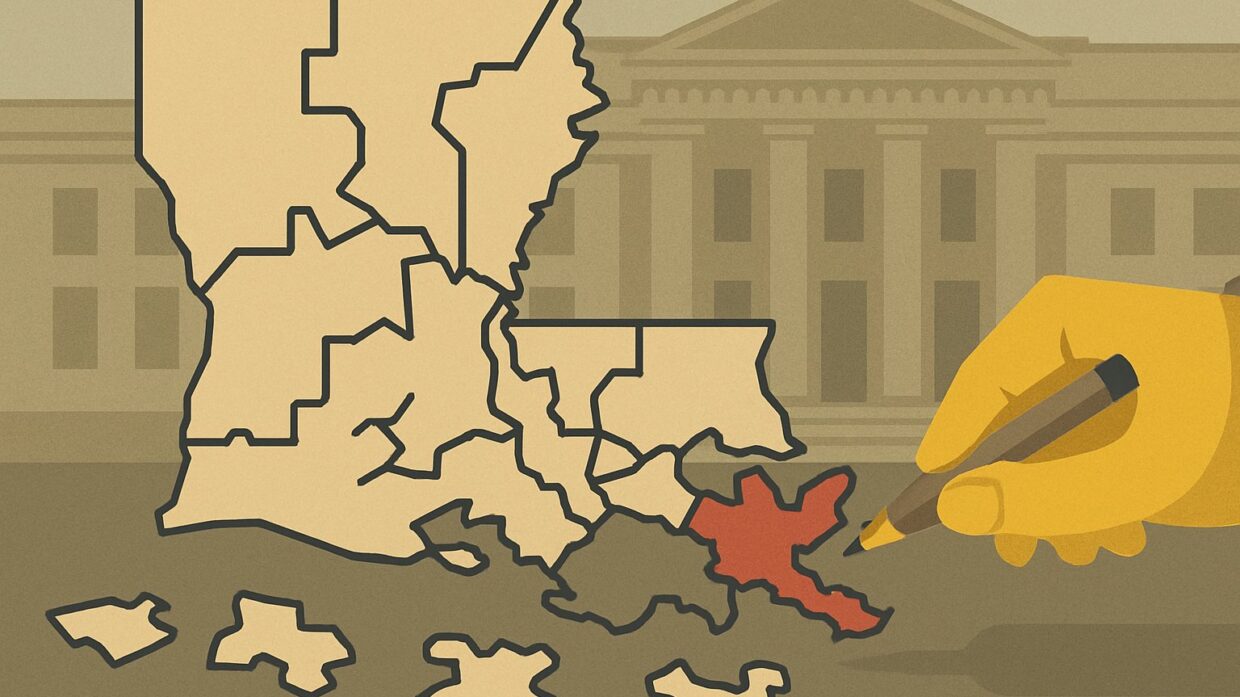
Louisiana suspended House primaries scheduled for May 16 after the Supreme Court ruled on Wednesday that the state's congressional map violated the Voting Rights Act by constituting an unconstitutional racial gerrymander, forcing Governor Jeff Landry to issue an executive order delaying elections to July 15. What neither the left nor the right is plainly stating is that this ruling does not create the clean victory either side is claiming, because the Supreme Court's decision itself narrowed voting rights protections in ways that benefit Republican redistricting nationwide.
The verified facts: The Supreme Court found Louisiana's congressional map unconstitutional specifically because it concentrated Black voters into districts at higher percentages than necessary to ensure their voting strength. The state had drawn one majority-Black district (District 6) and configured others to pack or dilute minority voting power. Early voting had been scheduled to begin Saturday. Governor Landry, a Republican, immediately announced the suspension and signaled the GOP-controlled legislature would redraw the map. Secretary of State Nancy Landry confirmed Thursday that all other races would proceed with early voting, but the six House seats would be removed from the ballot. The delay moves the primary from May 16 to July 15 at earliest.
The left's framing, deployed across NPR and similar outlets, emphasizes that the court "struck down" a map designed to protect Black voting rights and uses the phrase "unconstitutional racial gerrymander" as the central evil. This language implies the original map was excessive racial engineering. What this framing omits: the original majority-Black district (District 6) was itself a remedy negotiated after previous litigation and reflects Louisiana's actual Black population percentage. Eliminating it does not restore neutral mapmaking, it removes a seat where Black voters can elect their preferred candidate. The left avoids naming what comes next: a Republican legislature will redraw those lines, almost certainly creating a map with zero or one majority-Black district instead of two.
The right's framing, from the Washington Examiner and Breitbart, celebrates the ruling as striking down "race-based redistricting" and allowing the state to draw maps reflecting "actual political preferences." This language treats the original map as an outlier violation of colorblind mapmaking principles. What this framing omits: the Supreme Court itself has dramatically narrowed the Voting Rights Act in recent years, specifically Section 5, which once required federal approval for Southern states' voting changes. Today's ruling follows that erosion. Second, Republican legislatures nationwide are already signaling they will use this ruling to eliminate minority opportunity districts under the pretense of removing supposed Democratic gerrymanders. Florida lawmakers have already passed a new map that could flip four House seats Democratic to Republican, NPR reports. Tennessee appears ready to eliminate the lone deep-blue Memphis district, the Daily Wire notes.
Neither side is naming the actual redistricting precedent at work here. In 2013, the Supreme Court gutted Section 5 of the Voting Rights Act in Shelby County v. Holder, removing the requirement that covered jurisdictions (mostly Southern states with histories of discrimination) get federal approval before changing voting rules. That decision was sold as removing unnecessary federal overreach. What followed was a wave of voter ID laws, polling place closures, and aggressive redistricting in Republican states. Today's Louisiana ruling does not reverse that precedent, it extends it: now even remedial maps protecting minority voting power can be challenged as racial gerrymanders. The result is asymmetrical. Republican states can redraw aggressively along partisan lines without naming race. Democratic states that tried to remedy historical exclusion get struck down for doing exactly what the Voting Rights Act once required them to do.
Louisiana's redistricting crisis reveals how the Supreme Court's narrowing of voting rights protections creates a one-way ratchet that allows Republican legislatures to eliminate minority opportunity districts while insulating partisan maps from the same legal scrutiny.