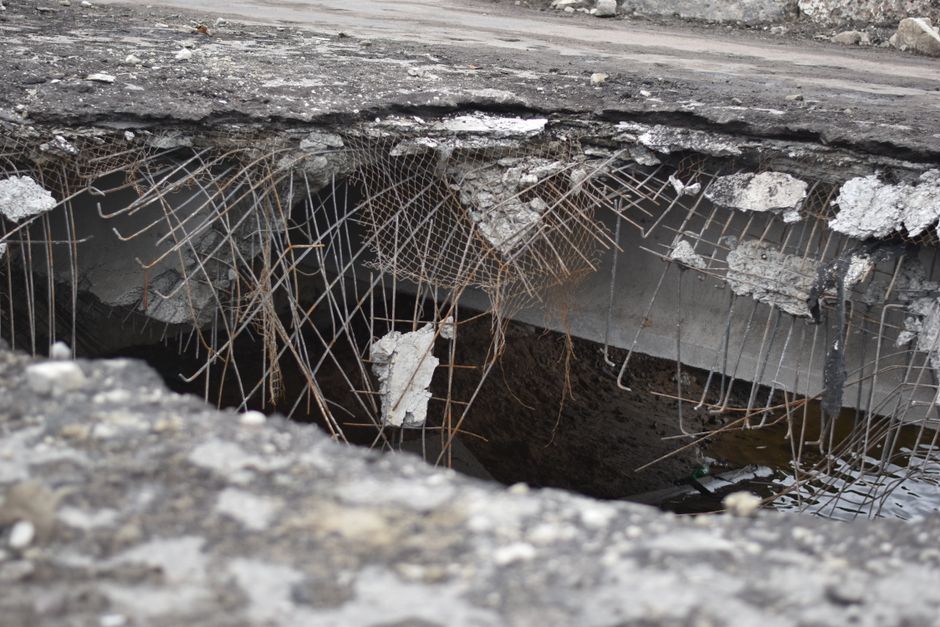
Photo: Serhii Bondarchuk
Russia systematically destroying Ukrainian power plants to make cities unlivable, officials say
We haven't found a right-leaning take on this story yet.
Breaking stories sometimes publish before every side has covered them. We'd rather show you that than invent a view.
Russia reports striking Ukrainian power plants as energy infrastructure faces sustained attack campaign
Key Takeaways
- Both Ukraine and Russia have conducted sustained strikes on each other's energy infrastructure, but Western reporting typically frames only Russian strikes as deliberate civilian targeting.
- Power plants and steel facilities have dual military and civilian functions, meaning their destruction can serve war-fighting objectives beyond causing civilian harm.
- The available evidence establishes that Russian strikes are happening and causing power outages, but does not definitively prove whether Russia's primary goal is military degradation, civilian punishment, or both.
The Analysis
Russian forces have conducted strikes against Ukrainian power generation facilities and steel plants, with the reported campaign producing rolling blackouts and water outages across Kyiv and Kharkiv. The specific sequence and timing of these attacks, their documented scale, and their measurable civilian impact are established facts. What remains contested is the strategic purpose behind them and what that purpose reveals about Russia's war objectives.
The Guardian frames these strikes through the language of deliberate civilian targeting. The headline asserts that 'Russia has given up on military victory,' implying a strategic pivot away from battlefield gains toward punishment. The reporting uses the phrase 'blueprint' to suggest a coordinated, premeditated plan to render Ukrainian cities 'unlivable.' This framing leaves out the prior question: whether power plants and steel mills qualify as legitimate military targets under the laws of war. Steel plants produce material inputs for weapons manufacturing. Power plants, particularly those serving industrial zones, have military utility distinct from their civilian function. The Guardian does not foreground the distinction between targeting infrastructure with dual-use capacity and targeting civilians directly. That omission is analytically convenient because it treats infrastructure destruction and civilian harm as morally and legally equivalent, which strengthens the narrative that Russia is engaged in pure punishment rather than war strategy.
The right-leaning perspective is absent from the available sources. Reporting that might emphasize Russia's stated military rationale for these strikes, the documented use of Ukrainian power plants to support military production, or the broader context of how both militaries treat dual-use infrastructure in this conflict does not appear in the provided material.
What neither side addresses directly is the precedent these strikes establish within this specific war. Ukraine's forces have also struck Russian energy infrastructure, power generation facilities, and bridges serving military supply lines. The Guardian reporting does not acknowledge this reciprocal targeting or explain why Russian strikes constitute a 'blueprint for making cities unlivable' while Ukrainian strikes on Russian infrastructure constitute legitimate military action. This is not false balance; it is an incompleteness that affects how readers assess the characterization of Russian strategy.
The underlying question is narrower than the framing suggests. The evidence establishes that Russia is conducting sustained strikes on Ukrainian power infrastructure. It does not establish Russian commanders' internal reasoning or whether these strikes are primarily punitive, primarily aimed at degrading military-industrial capacity, or both. The available reporting describes the civilian consequences accurately. It interprets the purpose through a lens that omits the military-target dimension of power plants and steel facilities, and that omits the precedent of reciprocal Ukrainian strikes on Russian infrastructure.
A fuller picture would acknowledge that both sides have targeted energy infrastructure, that power plants serve dual military and civilian functions, that civilian suffering is a documented consequence, and that Russia may be pursuing degradation of war-fighting capacity rather than pure punishment. None of these acknowledgments excuse targeting; they simply establish the terms on which the strategy should be assessed.
Ukraine's energy infrastructure will remain vulnerable to sustained Russian attack regardless of how Western media frames the targeting rationale. The practical consequence is that Ukrainian civilians face permanent degradation of their material conditions, not temporary wartime hardship. Rolling blackouts during winter months create cascading failures in water treatment, heating, and medical services that compound across months into irreversible harm to public health infrastructure. Ukraine's ability to restore these systems depends on Western military aid arriving faster than Russian strikes can destroy them, creating a grinding attrition dynamic where the pace of reconstruction becomes the actual measure of Ukrainian state capacity. This dynamic will persist through any eventual ceasefire negotiations and shape Ukraine's postwar reconstruction priorities for years. The strikes thus represent not a single military tactic but a systematic degradation of the physical foundation required to govern a functional state after the fighting stops.