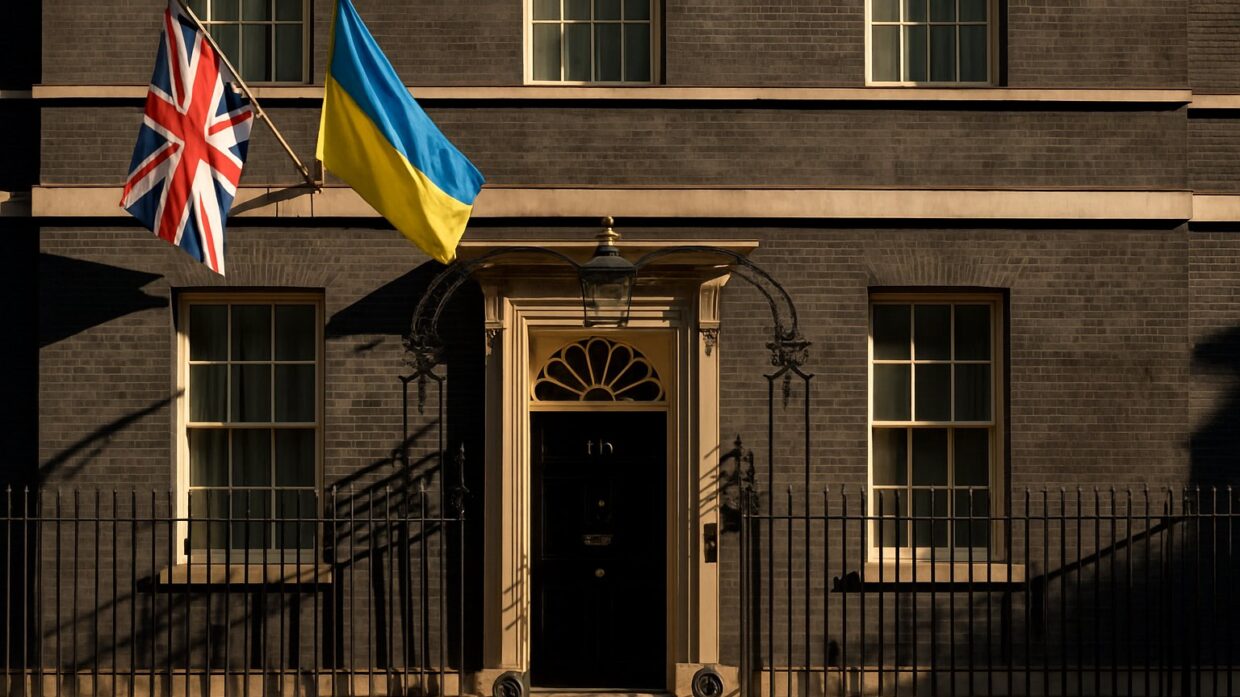
Photo: Well This Is News
UK shows 'rock-solid' support for Zelenskyy as Trump administration threatens to cut intelligence
Burnham hosts Zelenskyy amid Trump tensions over Ukraine support
Read More... from Burnham hosts Zelenskyy amid Trump tensions over Ukraine support
Burnham hosts Zelenskyy amid Trump tensions over Ukraine support
Key Takeaways
- The Trump administration has warned Ukraine it could cut off intelligence sharing, but the reporting does not explain what triggered this threat or whether it is conditional on Ukrainian actions.
- Bloomberg reports Trump is pursuing what it calls a 'diesel deal with Russia,' suggesting separate US-Russia negotiations on Ukraine, but the details, scope, and Ukrainian consent for these talks remain undisclosed.
- It is unclear whether Burnham's meeting is designed to position the UK as a genuine alternative security guarantor for Ukraine or to provide diplomatic reassurance while Trump pursues a parallel negotiating track with Moscow.
The Analysis
Burnham's Wednesday meeting with Zelenskyy is being framed in London as a show of alliance solidarity, but the timing and the silence from Washington reveal a more constrained diplomatic reality than either framing acknowledges.
The documented facts: Burnham will host Zelenskyy at Downing Street. Zelenskyy has told NPR that the Trump administration has warned Ukraine it could cut off intelligence sharing. Bloomberg reports the UK is responding to Trump's "diesel deal with Russia," language that suggests a negotiated arrangement, though the specifics remain undisclosed in the reporting. The Guardian characterizes the meeting as emphasizing "rock-solid" support, using language that mirrors official UK messaging.
The left framing, represented by The Guardian, foregrounds the contrast between Burnham's explicit commitment and Trump's public criticism of Zelenskyy. The phrase "rock-solid" appears directly in the headline, signaling durability and certainty. This framing leaves out several things: it does not explain what Trump's specific complaint about Zelenskyy is, does not detail what the intelligence cutoff threat entails or whether it is conditional, and does not examine whether Burnham's gesture has tangible policy consequences or functions primarily as symbolic reassurance. The Guardian's emphasis on "difficulties with Donald Trump" names the tension but does not establish its substantive origin.
No right-leaning source has been provided in the articles above, making a right perspective assessment impossible to construct with integrity. This absence itself is instructive: the reporting as supplied does not include skeptical or supportive framing from conservative outlets, making balanced opposition framing impossible to attribute.
What neither side fully captures: this meeting may signal that the UK is preparing to act as a diplomatic intermediary or as a counterweight to US policy toward Ukraine, but the public record does not establish whether Burnham has secured commitments beyond symbolic support. Bloomberg's mention of a "diesel deal with Russia" suggests Trump may be negotiating separate arrangements with Moscow, but the reporting does not detail what that deal entails, whether Ukraine was consulted, or how it affects existing security commitments. The sequence raises questions about coordination: did Burnham schedule this meeting to show daylight between the UK and Trump, or to demonstrate loyalty while Trump pursues a separate negotiating track? The available reporting does not answer this.
The underlying tension is whether this is a genuine policy realignment, with the UK positioning itself as a primary guarantor of Ukrainian security in the absence of full US commitment, or whether it is a holding action designed to stabilize Zelenskyy diplomatically while Trump and Russia negotiate terms. Burnham's language suggests the former; the structure of diplomatic events suggests the latter. A reader following only today's headlines leaves without understanding what changed in US-Ukraine relations to trigger Trump's intelligence threat, or whether that threat is a negotiating tactic, a policy reversal, or both.
Britain's embrace of Zelenskyy at Downing Street sets a precedent that could fracture NATO's unified Ukraine strategy if Trump proceeds with intelligence restrictions. The meeting signals the UK may assume primary security guarantor responsibilities, a role traditionally held by Washington. If Burnham commits to intelligence sharing independent of US channels or military aid without American coordination, those commitments become structural dependencies that reshape European defense architecture away from transatlantic alignment. The reported "diesel deal with Russia" suggests Trump is pursuing separate negotiations, meaning this gathering may force Britain to choose between Atlantic solidarity and Ukrainian survival, establishing a European-led security framework that bypasses Washington. That institutional break, once formalized in contracts or defense protocols, would prove difficult to reverse regardless of who occupies the White House next.