Photo: Well This Is News
Britain faces escalating security crisis from Iran, Russia as MI5 sounds alarm
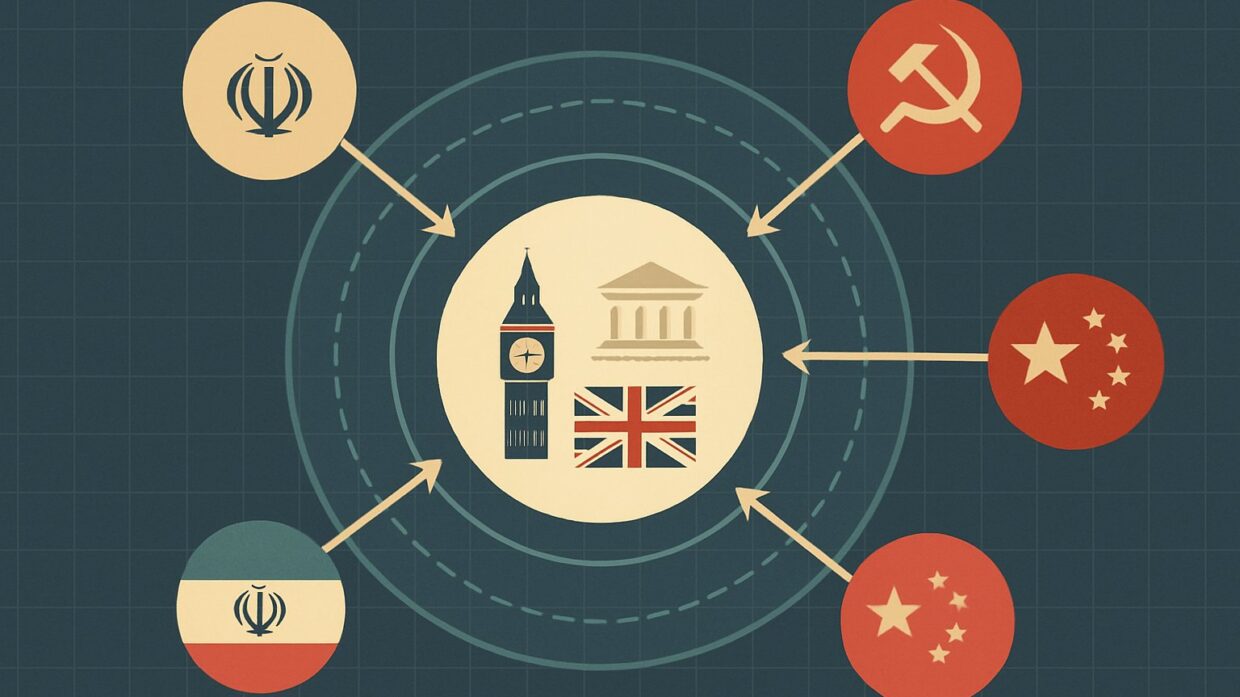
MI5 warns of Iranian military operations against UK sites as threats from Russia, China expand
MI5 warns of Iranian military operations against UK sites as threats from Russia, China expand
Key Takeaways
- Iranian military operations targeting British interests have been ongoing since at least 2022, making McCallum's warning potentially an announcement of intensified detection or escalation rather than an entirely new threat.
- Neither security officials nor political critics have disclosed what specific military response threshold Britain might cross, what concrete policy changes McCallum was signaling beyond acknowledgment, or whether public threat exposure actually degrades Iranian operational planning.
- The threat assessment appears informed by US intelligence-sharing and reflects operational conflict rooted in Britain's role in nuclear negotiations and sanctions, but the analysis of whether Iranian decision-making or Western military involvement drives the targeting remains absent from public discussion.
The Analysis
Britain's MI5 chief Ken McCallum delivered a warning last week that Iran has ramped up attempts to attack British military installations and intelligence facilities, describing this as part of a new era of security threats alongside those from Russia, China, and terrorist groups. What neither the security establishment nor political responses have fully clarified is how these Iranian operations fit into the broader Middle Eastern conflict, what specific vulnerabilities exist at the targeted sites, and whether the UK's current defensive posture is calibrated to the actual threat level.
The factual record established by MI5's public statement is straightforward: Iran has intensified targeting of UK military sites, including as part of a suspected plot against a U.S.-run air base last month. McCallum named specific threat vectors: state-sponsored cyber operations, assassination attempts against journalists and activists on British soil, and direct military targeting. He placed this within a wider intelligence picture that includes Russian espionage activity, Chinese influence operations, and persistent terrorist recruitment and planning. The sequencing matters. McCallum did not present these as equivalent threats or demand equal responses. Iran and Russia received the most sustained attention in available reporting of his statements.
The left-leaning framing, as reflected in NBC's coverage, emphasizes the scale and urgency of the threat. The language chosen was "new era" and "escalating" challenges that demand recognition as a fundamental shift in Britain's security environment. This framing leaves out several contextual elements: the specific capabilities Iran has demonstrated versus the capabilities it claims, the effectiveness of current British defensive measures, and whether the threat level represents genuine escalation or heightened detection of existing activity. The emphasis on the threat's novelty and breadth serves a narrative function: it justifies sustained funding, expansion of security services, and elevated public concern. What it does not address is whether this threat environment is primarily driven by Iranian decision-making or by regional dynamics and Western military involvement that create incentives for Iranian action.
Trump's counter-framing, articulated on Truth Social and reported by The Hill, takes a different analytical line. Trump argued that China and Russia have "too much to lose" by assisting Iran, using the phrase "Radical Left Morons and Lunatics" to dismiss concerns about such assistance. This framing assumes rational actor economics: that major powers will calculate costs and benefits and refrain from enabling Iran because the costs are too high. What this analysis does not examine is whether Russia and China perceive their interests as aligned with Iran's in ways that override those cost calculations, whether covert assistance differs from public support, or whether the reported Iranian operations are actually state-sponsored rather than proxy or rogue actor operations.
What neither framing adequately captures is the historical sequence. Iran's military operations against British interests did not begin this month. British and Iranian intelligence services have been in operational conflict since at least 2022, when British-Iranian tensions escalated following the UK's role in nuclear negotiations and subsequent sanctions support. The targeting of British military sites may represent escalation, but the baseline of Iranian targeting of Western military infrastructure has been consistent throughout that period. Additionally, neither framing examines whether the publicly announced threat serves an intelligence communication function, whether exposing the threat degrades Iran's operational planning, or what specific British policy response (beyond acknowledgment) McCallum was signaling.
The documented record establishes that Iran has conducted military operations targeting Britain and that MI5 views this as part of a broader threat environment. What remains undisclosed is the threshold at which Britain might respond militarily, whether the threat has changed in character or only in detection, and what intelligence-sharing with the United States informs the stated threat assessment.
Britain's decision to publicly elevate Iranian threats reveals a strategic recalibration with material consequences for UK defense spending and intelligence priorities. MI5's public warning signals not merely increased danger but a pivot in resource allocation away from counterterrorism operations that have dominated British security posture since 2001 toward state-level military threats requiring different technological infrastructure and personnel expertise. This institutional shift means reduced funding for domestic radicalization prevention programs, redeployment of human intelligence assets from terrorist networks to Iranian military tracking, and restructured relationships with allies like the US that now treat Iran alongside Russia and China as a tripartite threat requiring coordinated responses. The warning's public nature itself becomes operational: it constrains Iranian planning while simultaneously committing Britain to defensive measures that must now demonstrate effectiveness or face credibility damage to MI5's institutional authority and government claims about security competence.