Photo: Well This Is News
What the Houthis Do Best: Fight Back Against Saudi Dominance
Houthi Attacks Kill 14 in Saudi Arabia, Raising Escalation Risks
Read More... from Houthi Attacks Kill 14 in Saudi Arabia, Raising Escalation Risks
Houthi Attacks Kill 14 in Saudi Arabia, Raising Escalation Risks
Key Takeaways
- Both Saudi Arabia and the Houthis initiated escalation moves after four years of relative calm, but coverage does not establish which side moved first or what triggered the current attack cycle.
- The Houthis emerged as a political force in Yemen in the 1990s partly in response to Saudi military intervention dating to the 1960s, yet this regional history is absent from current reporting on the attacks.
- Four years of Saudi-led coalition air campaigns producing tens of thousands of civilian casualties have not degraded Houthi strike capacity, indicating either exceptional supply-line resilience from Iran or fundamentally different operational vulnerability models than conventional militaries.
The Analysis
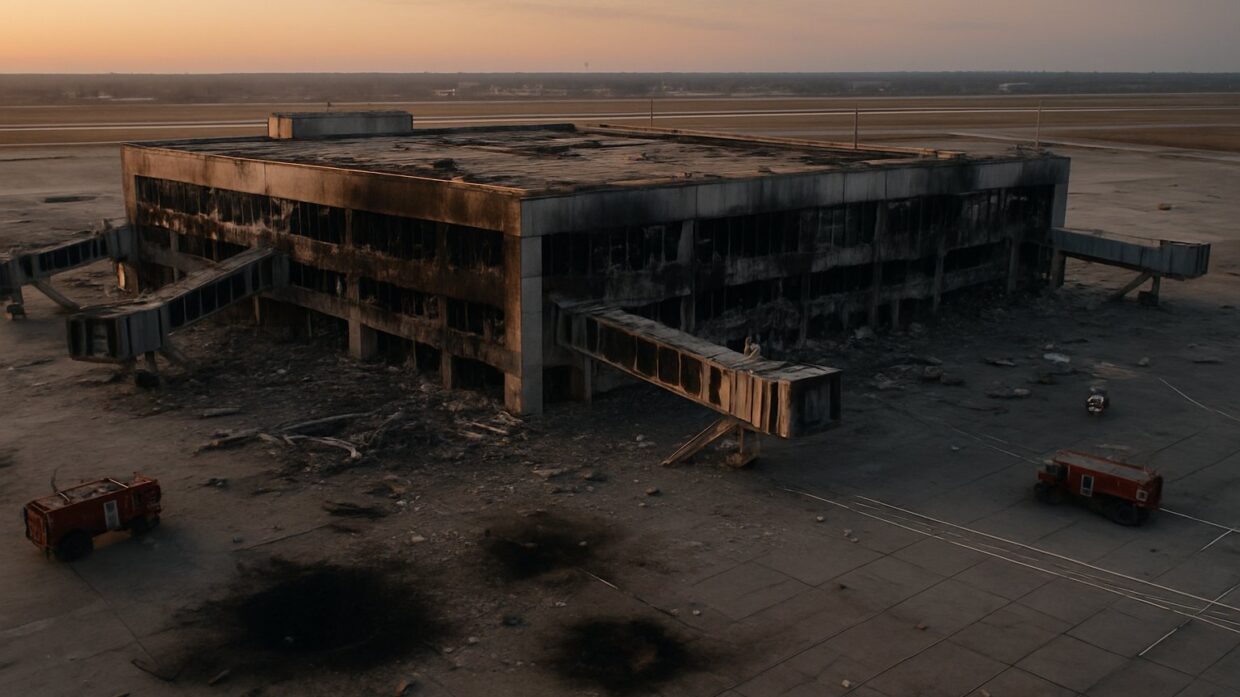
The Houthi attacks on Saudi Arabia this past weekend killed at least 14 people and wounded hundreds at multiple airports, according to Bloomberg reporting, representing Saudi Arabia's deadliest strikes in what the sources describe as the Iran war context. What the coverage from all sides quietly omits is the structural question of how a militia armed and sustained by Iran has acquired the precision capability to repeatedly penetrate one of the world's most technologically advanced air defense systems.
The Atlantic's framing emphasizes what "the Houthis do well," which is fight, and predicts "escalation is assured." That language serves a narrative function: it positions the Houthis as aggressors whose military competence drives the conflict forward. But the piece leaves out the prior sequence. Bloomberg's reporting establishes that after four years of relative calm, "the war pitting Yemen's Houthi militia against the country's internationally recognized government and its backer Saudi Arabia is back on," with Saudi Arabia announcing "a full-scale military campaign." The Atlantic does not establish who initiated the escalation cycle that preceded these weekend attacks.
The right-leaning framing, represented minimally in these sources, focuses on the threat dimension: the attacks demonstrate Houthi capability to strike "the heart of Saudi power" and raise "the risk of a dangerous escalation that could draw in the US." That language emphasizes consequence and potential US involvement, but does not address why a militarily superior coalition backed by the United States has been unable to suppress the Houthis' drone and missile capability over an extended campaign. The implication,that the Houthis possess superior will or strategy,is strategically inconvenient for advocates of Saudi-led intervention.
What neither framing foregrounds is the regional history. The Houthis emerged as a political force in Yemen in the 1990s and became a military actor partly in response to Saudi military intervention in Yemeni affairs beginning in the 1960s. Iran's support for the Houthis, while documented, is presented in these sources as the primary driver of their capability, but Bloomberg's reporting on the difficulty of "defeating" the Houthis suggests that four years of Saudi-led coalition air campaigns, which by external accounts have produced tens of thousands of civilian casualties, have not degraded their strike capacity. That durability despite overwhelming aerial bombardment indicates either that Iran's supply lines are more resilient than typically acknowledged or that the Houthis' operational model does not depend on attrition-based vulnerability.
The unresolved question neither source directly addresses is whether these attacks represent a strategic escalation chosen by Houthi leadership or a response to Saudi military actions that preceded them. The Atlantic asserts escalation is "assured," but assurance about future Houthi behavior requires clarity on what triggered this particular attack cycle. Bloomberg establishes the timeline,four years of calm, then Saudi's announcement of a "full-scale" campaign, then attacks,but does not link them explicitly.
The real headline: After four years of stalemate, both Saudi Arabia and the Houthis have chosen to escalate, and neither source establishes which side moved first or why the deterrent effect of prior Saudi bombing campaigns has apparently eroded.
Saudi Arabia's ability to maintain air superiority has fundamentally collapsed, and neither major news outlet confronts this institutional failure directly. Four years of coalition bombing campaigns produced tens of thousands of civilian casualties yet failed to degrade Houthi strike capacity, suggesting either Iran's supply networks operate with unexpected resilience or the Houthis have developed operational models immune to attrition warfare. This weekend's attacks that penetrated world-class Saudi air defenses indicate the conflict's strategic premise has inverted: the technologically superior force backed by US support cannot suppress a militia it has bombed continuously. Future US military commitments to Gulf defense now rest on demonstrably false assumptions about air power's deterrent value. Until strategic analysis addresses why overwhelming aerial bombardment produced stalemate rather than victory, policymakers will continue escalating in a conflict whose fundamental dynamics they misunderstand.