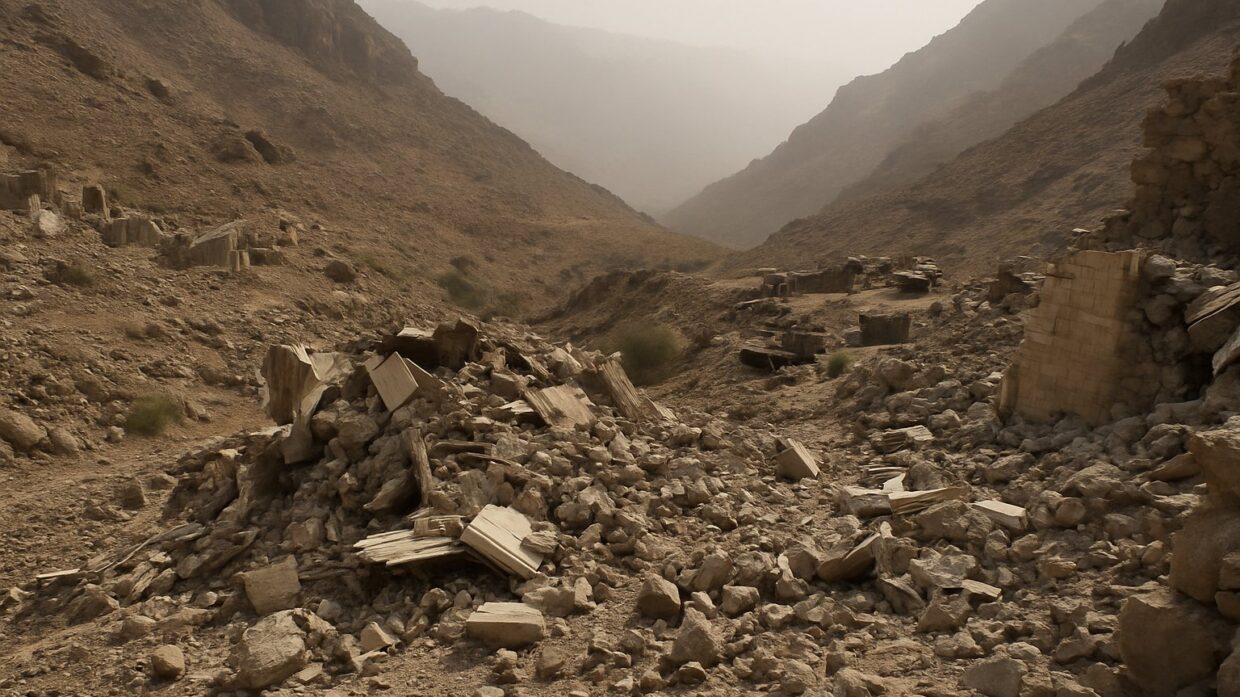
Photo: Well This Is News
Saudi Arabia escalates Yemen war with new military push against Iranian-backed Houthis
Yemen's government begins comprehensive operation to reclaim territory from Houthi militants
Saudi-backed Yemen forces launch major offensive to retake Houthi-held territory
Key Takeaways
- Yemen's government announced a major offensive against Houthi-held territory on October 4-5, 2026, following the Houthis' reported closure of supply access to the contested city of Taiz.
- After a decade of Saudi-backed military campaigns that have failed to dislodge the Houthis from major population centers, neither side's reporting explains what changed in military capability or regional dynamics to enable success now.
- The public record does not disclose whether Saudi Arabia has revised its victory conditions or whether Yemen's government has the capacity to hold recaptured territory without continued external military support.
The Analysis
Yemen's government announced a major military offensive against Houthi-controlled territory on October 4-5, 2026, hours after the rebel group reportedly cut supply access to the contested city of Taiz. The operation represents an attempt to reverse territorial gains the Houthis have made in recent weeks, marking an escalation in a conflict that has persisted for years with Saudi Arabian military backing. What the immediate reporting does not establish is whether this offensive signals a shift in Saudi strategy, a response to specific tactical setbacks, or a renewal of a campaign that has produced minimal territorial gains relative to its stated objectives.
The left framing, as presented in The Guardian, emphasizes the word "launched" and places immediate context around Iranian backing and Houthi gains. This framing leaves out the specific territorial map,which areas are held by each side, the strategic value of Taiz, or the scale of forces involved. By opening with the supply route closure, the reporting frames the Houthis as the active aggressor, but does not discuss why Taiz remains besieged after years of this conflict or what would constitute success for either side. The emphasis on "militant group" description reflects vocabulary choices that shape how readers interpret the Houthis' status within Yemen's political landscape.
The right framing, via Bloomberg, emphasizes "full-scale military campaign" and "internationally recognized government," which establishes the government's legitimacy claim and the comprehensiveness of the operation. This framing leaves out the specific military capabilities involved, whether Saudi air support is included in this offensive, or what happened in previous "full-scale" attempts. The phrase "recapture all Houthi-held territory" appears in both right-leaning coverage and neutral reporting, suggesting a narrative goal rather than a tactical plan,capturing "all" territory is different from capturing strategic locations. The coverage does not foreground the humanitarian cost of such an operation or the civilian population distribution across contested areas.
What neither framing fully addresses is the history that makes this moment legible. Yemen's Houthis consolidated control over major population centers starting in 2014-2015. Saudi intervention began in 2015 explicitly to restore the internationally recognized government. After a decade of military operations, billions in Saudi expenditure, and reported air strikes numbering in the tens of thousands, the Houthis remain in control of the most densely populated areas. The announcement of another "full-scale" offensive, therefore, requires context about why previous such campaigns did not succeed and what has changed in the military balance that would enable success now. Neither the left nor right reporting establishes whether this reflects new military capabilities, changed regional dynamics, or a restart of a campaign that has historically failed to achieve its stated territorial objectives. The public record does not disclose Saudi Arabia's current assessment of victory conditions or the Yemeni government's capacity to hold recaptured territory independently.
The actual headline this reporting should carry: After a decade of Saudi-backed military intervention, Yemen's government announces another major offensive to retake Houthi territory, the outcome of which remains uncertain given the pattern of previous operations.
A decade of Saudi-backed military offensives has failed to dislodge Houthis from Yemen's most densely populated areas, yet the announcement of another "full-scale" campaign carries no explanation of what has changed in the military balance or Saudi strategy. Previous operations numbering tens of thousands of strikes have not reversed Houthi territorial consolidation since 2014-2015, yet coverage frames this offensive without addressing whether new capabilities exist or whether victory conditions have been redefined. The pattern suggests either escalating commitment to an unwinnable objective or a fundamental shift in Saudi assessment that remains undisclosed. Without acknowledging this structural failure, each new offensive announcement obscures rather than clarifies Yemen's actual trajectory toward either negotiated settlement or indefinite stalemate.