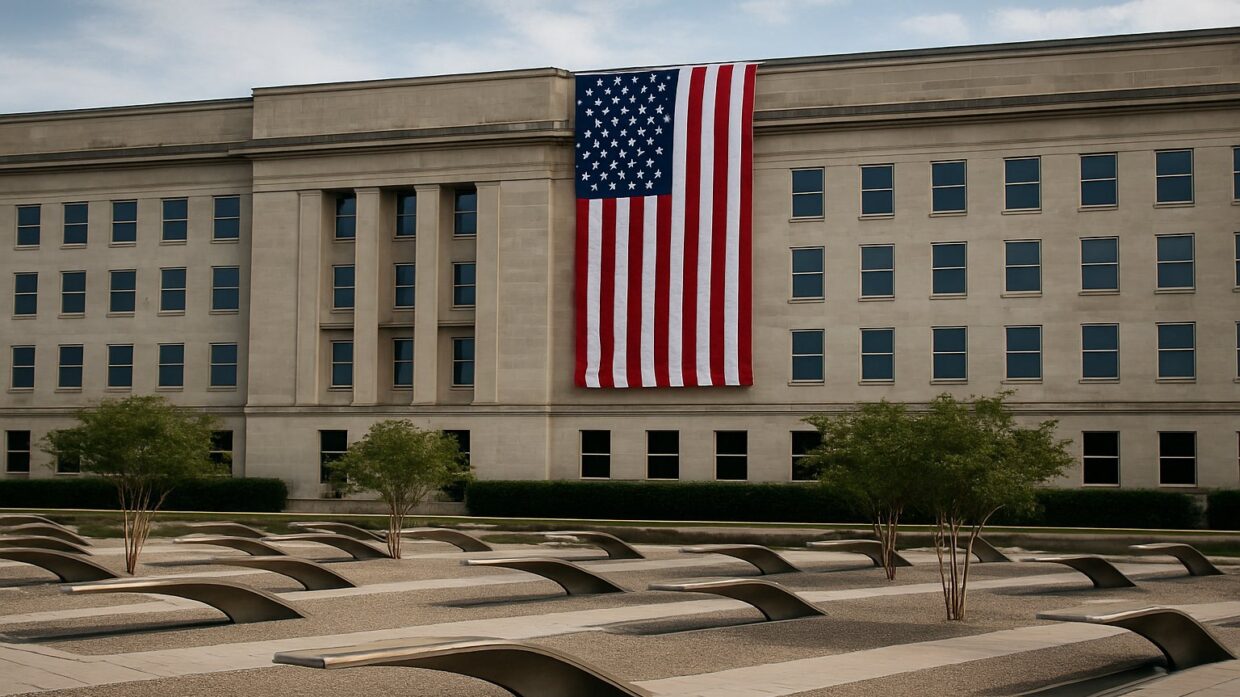
Photo: Well This Is News
Trump exploits 9/11 tragedy to defend unpopular Iran war
Trump honors 9/11 victims while addressing ongoing Middle East threats
Trump and Hegseth link Iran war to 9/11 at Pentagon memorial ceremony
Key Takeaways
- Neither major news account published the exact quotes from Trump and Hegseth's speeches, making it impossible for readers to evaluate whether officials claimed Iran's direct involvement in 9/11 or instead characterized Iran as a separate regional threat.
- The public record does not clarify whether the officials' descriptions of Iran's actions constitute a genuine strategic connection to 9/11 or a rhetorical device, because the specific evidence they cited and the actual claims they made remain unreported.
- Both left and right coverage avoided examining the documented history of US-Iran military operations since 2001, which would be necessary to determine whether the officials' characterizations of those operations are factually accurate or exaggerated.
The Analysis
Trump and Hegseth's decision to connect Iran to 9/11 during a memorial ceremony represents a specific strategic choice about which historical narrative to activate at a moment of national commemoration. The question worth examining is what the public record actually establishes about those connections, what each side chooses to emphasize or omit, and what remains unsaid by both interpretations.
The documented facts are these. On September 11, 2026, at the 25th anniversary 9/11 memorial service at the Pentagon, Trump and Defense Secretary Pete Hegseth delivered remarks that linked current US military operations against Iran to the 2001 terrorist attacks. The Guardian reports that both officials explicitly made this connection during their speeches. The Hill confirms that "Trump and Hegseth tie Iran war into 9/11 speeches." Neither source provides the exact quotes from those speeches, which is a significant omission. The characterization of Iran's specific role in the remarks, and whether the officials claimed direct responsibility or instead described Iran as a destabilizing force that poses contemporary threats, remains unclear from the available reporting.
The left frame, articulated by The Guardian, emphasizes that Trump and Hegseth "use 9/11 memorial remarks to defend war on Iran" and characterizes this as an attempt to "link worst terrorist attack in US history to current unpopular war." This framing treats the rhetorical move as exploitative: the argument is that officials are instrumentalizing grief and national commemoration to build support for a military policy that the public does not otherwise support. The language choice is deliberate. Calling it a "use" of the memorial and an attempt to "link" attacks from 2001 to current operations suggests political calculation rather than strategic analysis. What this framing leaves out is whether the 9/11 attacks and current Iran operations share any operational, organizational, or strategic connection that would make the comparison factually defensible rather than merely rhetorical. It also does not engage with whether Iran's documented activities in the region pose genuine security concerns independent of 9/11 rhetoric.
The right frame, represented by Breitbart's coverage, treats the event as a straightforward memorial attendance: "President Donald Trump and First Lady Melania Trump attend a memorial service at the Pentagon on the 25th anniversary of the 9/11 terrorist attacks." The available summary does not detail what Trump said or how Iran was characterized. This framing emphasizes ceremonial participation and omits the controversial rhetorical move entirely. By treating the event as a memorial attendance rather than a speech with political content, this coverage sidesteps the question of whether the connection drawn was persuasive or problematic.
What neither side foregrounds is this. The public record does not establish exactly what claims Trump and Hegseth made about Iran's role in 9/11, whether they attributed operational involvement or instead described Iran as a regional actor whose actions create contemporary threats, or what evidence they cited. It also does not establish whether the "war on Iran" characterization is accurate to the military operations being described, or whether officials used different terminology. A fuller picture requires knowing the precise claims made, the specific evidence offered, and the actual history of US-Iran military engagement in the region since 2001. The absence of exact quotes from the speeches is itself revealing: it suggests that what matters is the framing of the act rather than the substance of the claims.
Trump and Hegseth's invocation of 9/11 during a Pentagon memorial to justify current Iran operations establishes a new rhetorical baseline for connecting historical terrorist attacks to contemporary military policy. This move will likely embolden future administrations to frame unpopular wars through the lens of America's most traumatic national event, making it harder for Congress and the public to evaluate military commitments on their actual strategic merits rather than through inherited grief. The weaponization of memorial ceremonies for policy defense transforms these events from spaces of collective mourning into campaign platforms, fundamentally altering how national remembrance functions as a constraint on executive power.