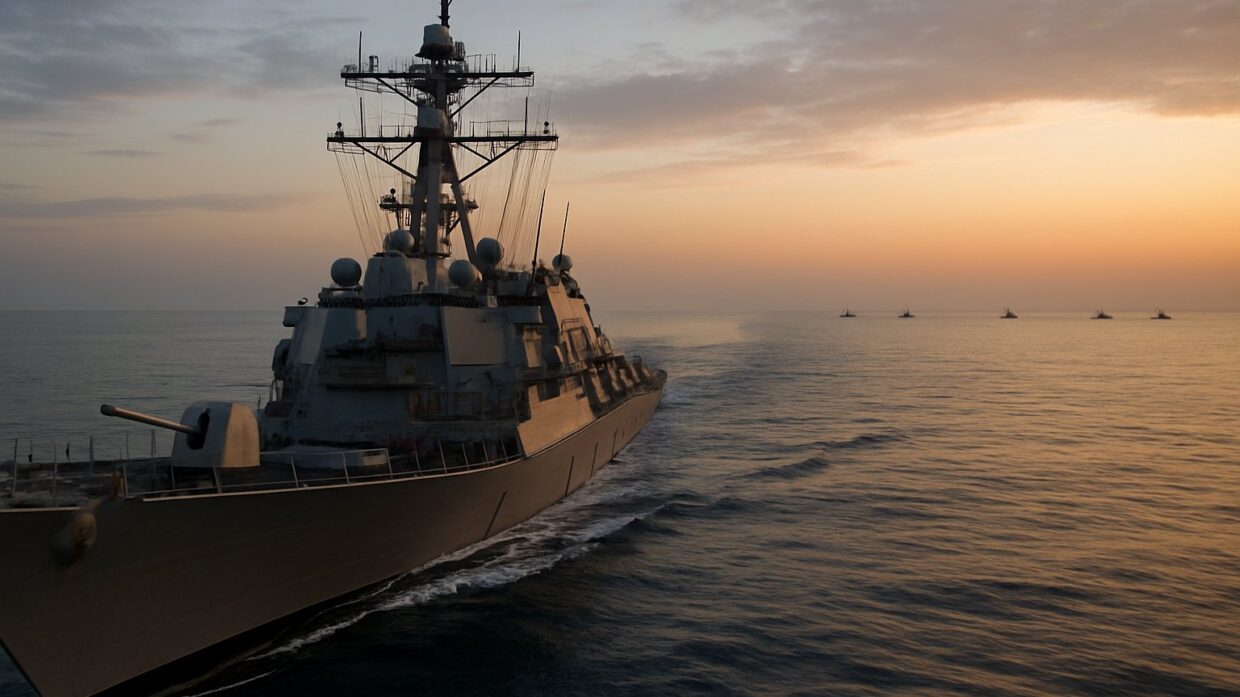
Photo: Well This Is News
Trump officials obscure war realities while Americans die in Iran conflict
Gulf oil flows freely as Trump administration manages Iran tensions ahead of midterms
US-Iran military operations continue amid competing claims of progress and stalemate
Key Takeaways
- The Trump administration is simultaneously claiming the operation is not a war, denying American casualties, and citing military progress on oil exports, but these competing narratives are logically incompatible and leave the core question unanswered: what does success look like and when do American forces leave.
- Polling shows 55 percent of Americans oppose the conflict and 60 percent disapprove of Trump's handling of it, yet neither the administration's messaging nor media coverage from either side is addressing this significant public opposition.
- The administration's factual claims have fractured into self-contradictions within 48 hours (Lutnick's casualty denial followed by Trump's reframing) in a way that suggests either calculated messaging discipline or genuine operational confusion, but the public record does not establish which one.
The Analysis
The Trump administration is simultaneously claiming military progress, economic success, and semantic ambiguity about a six-month-old conflict that now enters its seventh month with no exit strategy. What the public record actually establishes is a stalled operation where administration messaging has fractured into incompatible claims.
The documented facts: Vice President JD Vance stated on Thursday that he would not characterize the operation as a war, citing the absence of active shooting, even as military strikes intensified in the region this week. Commerce Secretary Howard Lutnick told CNBC that no Americans have been killed in an Iran war, a statement Trump later attributed to Lutnick's confusion about a Venezuela operation. According to Bloomberg reporting, the conflict remains locked between ceasefire and all-out war with no end in sight. Iranian strikes this week killed at least 18 people along the southern coast according to Iran's health minister. The Trump administration cites 40 commercial vessels carrying 18 million barrels of oil moving through the Strait of Hormuz on Tuesday as evidence the operation is working.
The left frame, represented by The Guardian, emphasizes the Lutnick casualty claim as evidence of deliberate obfuscation: that administration officials are either deceiving the public or so disconnected from operational reality that they deny documented deaths. This framing leaves out whether Lutnick's statement actually reflects his own confusion versus a calculated messaging choice. The left coverage also does not address why, if the administration wanted to hide casualties, it would contradict itself through Trump's own explanation within 48 hours.
The right frame, represented by The Daily Wire, emphasizes the oil output figures and the administration's framing of progress, positioning the conflict as economically manageable rather than strategically intractable. The Daily Wire headline "Back in Business" and the invocation of G20 relations through Lutnick's 9/11 tribute suggest the conflict is subordinate to larger diplomatic and economic wins. This framing leaves out the Washington Examiner's polling data: 55 percent of Americans oppose the war, and 60 percent disapprove of Trump's handling of it. It also does not explain why oil flows alone would justify continued military operations if the administration truly had an exit strategy.
What neither side fully captures is the underlying tension between Vance's semantic downgrading of a conflict that still produces military casualties and Bloomberg's reporting that the US and Iran remain genuinely stalled. If the operation is not a war, it lacks the institutional and legal framework for escalation or resolution. If it is a war, the administration cannot credibly claim victory with 18 million barrels moving through a strait that requires constant military protection. The public record does not establish whether the casualty denial reflects policy discipline or administrative dysfunction.
The real headline: Seven months into an operation with no defined endpoint, the Trump administration is using competing narratives about oil flows, casualty counts, and conflict classification to avoid answering the midterm-relevant question neither side addresses: what does success look like, and when will American forces leave?
Seven months without a defined endpoint means the conflict will reshape Congress's 2026 budget allocation before voters know whether the operation prevents Iranian escalation or merely freezes it. The administration's inability to align on casualty figures and conflict classification creates legal exposure: if officials cannot distinguish between war and military operation, military commanders lack statutory authority for sustained rules of engagement. Congress will face pressure to either ratify the operation through formal authorization or demand withdrawal, forcing Democrats and Republicans to vote on a conflict 55 percent of Americans oppose before the 2026 midterms. The Strait of Hormuz remains dependent on continuous naval presence regardless of oil flow claims, meaning the operation's true cost compounds monthly without triggering the institutional accountability mechanisms that come with declared war.