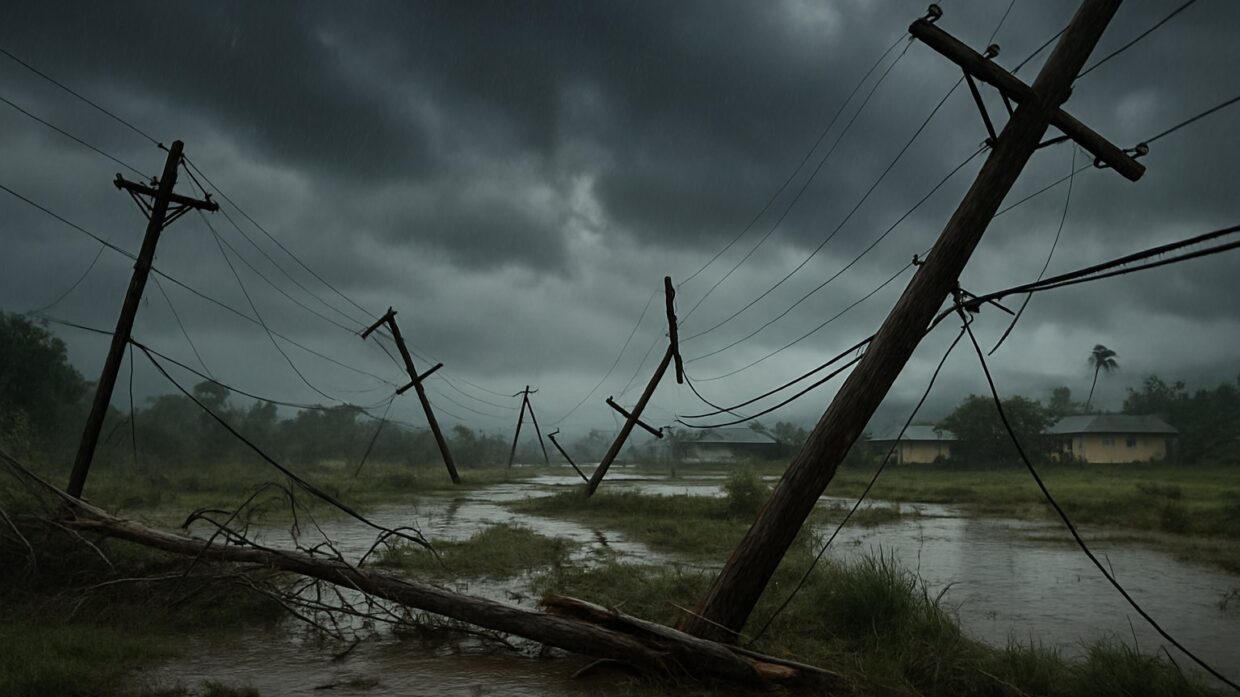
Photo: Well This Is News
Hurricane Lala devastates Hawaii with three feet of rain, 130,000 without power
Hawaii avoids direct hurricane hit as Lala weakens to tropical storm
Tropical Storm Lala weakens after skirting Hawaii, leaving flooding and power outages
Key Takeaways
- The reporting on both sides omits when Lala officially downgraded to tropical storm status relative to when the heaviest rainfall and wind damage occurred, leaving unclear whether the three feet of rain and hurricane-force gusts were produced by a hurricane or tropical storm.
- Neither major news outlet addresses whether Lala represents a pattern of climate-driven storms that weaken just before impact but still produce rain and flooding equivalent to direct hurricane hits, making the distinction between near-miss and actual disaster operationally meaningless.
- One death, 130,000 power outages, and three feet of rain are facts that hold true regardless of landfall status or wind-speed classification, yet the public narrative splits between disaster framing and resilience framing based on technical categories rather than actual community consequences.
The Analysis
Hurricane Lala weakened to a tropical storm Sunday after skirting Hawaii's Big Island without making direct landfall, yet the storm still delivered damage across the state that most emergency management frameworks do not fully address: destruction caused by a system that technically dodges the worst-case scenario. The available reporting confirms three feet of rain in some locations, hurricane-force wind gusts on the Big Island, over 130,000 households without power, and one reported death. What the three sources frame differently is not the facts themselves, but which facts dominate the headline and what the reader is invited to emphasize.
The left-leaning sources, particularly The Guardian and MSNBC, lead with the volume of damage: "three feet of rain," "raging torrents," "130,000 households without power." The Guardian's phrasing, "Hurricane Lala devastates," assigns agency and scale to the damage itself. These outlets emphasize that the storm "wasn't done punishing" and "still punished" the Big Island, using language that centers the ongoing threat even after the system weakened. The framing treats the near-miss as secondary to the material consequences. By leading with damage metrics and death toll, these sources invite readers to understand this as a disaster event, regardless of whether technical landfall occurred.
NPR and the right-aligned framing lead instead with what did not happen: the storm "skirted Hawaii without making landfall" appears in the opening. This is not a mischaracterization, but it is a choice about emphasis. The NPR lede acknowledges damage ("hurricane-force gusts") but situates it within the context of avoidance. That framing invites readers to understand the outcome as a near-miss, where emergency protocols functioned as intended. The implicit message is containment, resilience, and the system working.
What neither source fully foregrounds is a fact that reshapes how this storm should be understood: the technical definition of a tropical storm versus a hurricane in modern forecasting. Lala weakened to a tropical storm before the worst effects reached the islands, which means it crossed the wind-speed threshold (below 74 mph sustained) but continued delivering rainfall and gusts that met or exceeded what weaker hurricanes would have produced. The reporting does not establish whether the "three feet of rain" fell before or after the official downgrade, which would clarify whether the damage was hurricane-scale or tropical-storm-scale.
The omission on both sides is what this reveals about Hawaii's exposure. A system that downgrade-then-damages fits a pattern of climate-driven intensification in warming waters, where storms can strengthen rapidly, weaken just before impact, yet still produce rainfall and surge comparable to direct hits. Neither framing addresses the pattern of near-misses becoming indistinguishable from hits in terms of actual consequences. The emergency management success story ("we avoided direct landfall") and the disaster narrative ("130,000 without power") are both factually true and mutually compatible in a way the sources do not quite reconcile.
The underlying story is not whether Lala was dangerous, but whether the operational categories that drive public understanding and response,landfall, downgrade, tropical storm status,still map onto what communities actually experience. One person died. 130,000 lost power. Three feet of rain fell. Those facts hold regardless of wind speeds or landfall technicalities.
Hawaii's emergency management and infrastructure vulnerability has now been exposed by a system that technically weakened before impact yet still produced hurricane-scale consequences. The distinction between a tropical storm and hurricane, meaningful for forecasting, becomes operational fiction when three feet of rain and hurricane-force gusts deliver identical damage to communities. As warming ocean temperatures enable storms to intensify rapidly then weaken just before landfall, Hawaii will face recurring near-misses that produce direct-hit damage while authorities declare success based on avoided landfall. The current response framework treats downgrade as containment rather than recognizing it as a new climate pattern where technical downgrades and catastrophic outcomes now occur simultaneously. This demands infrastructure hardening and response protocols built around rainfall and surge potential rather than wind-speed categories that no longer reliably predict actual community impact.