Photo: Well This Is News
Trump-Aligned Colombian President Sworn In as US Pledges Billion in Military Support
Conservative Abelardo de la Espriella Inaugurated as Colombia's President, Vows Crime Crackdown
Colombia's New Conservative President De la Espriella Takes Office, US Pledges $1B in Security Aid
Key Takeaways
- Colombia has received continuous US security assistance since 2000 under both Democratic and Republican administrations, meaning the $1 billion commitment likely continues an established two-decade pattern rather than representing a new Trump-era strategy.
- De la Espriella won a narrow election amid concerns about violence and finances, leaving unclear whether Colombian voters rejected leftism itself or simply grew frustrated with Petro's specific performance on these issues.
- Neither the incoming Colombian president nor his predecessor has publicly detailed what tactical or strategic differences distinguish their respective crime-fighting approaches, making it impossible to assess whether the $1 billion reflects genuinely new doctrine or routine continuation of existing security doctrine.
The Analysis
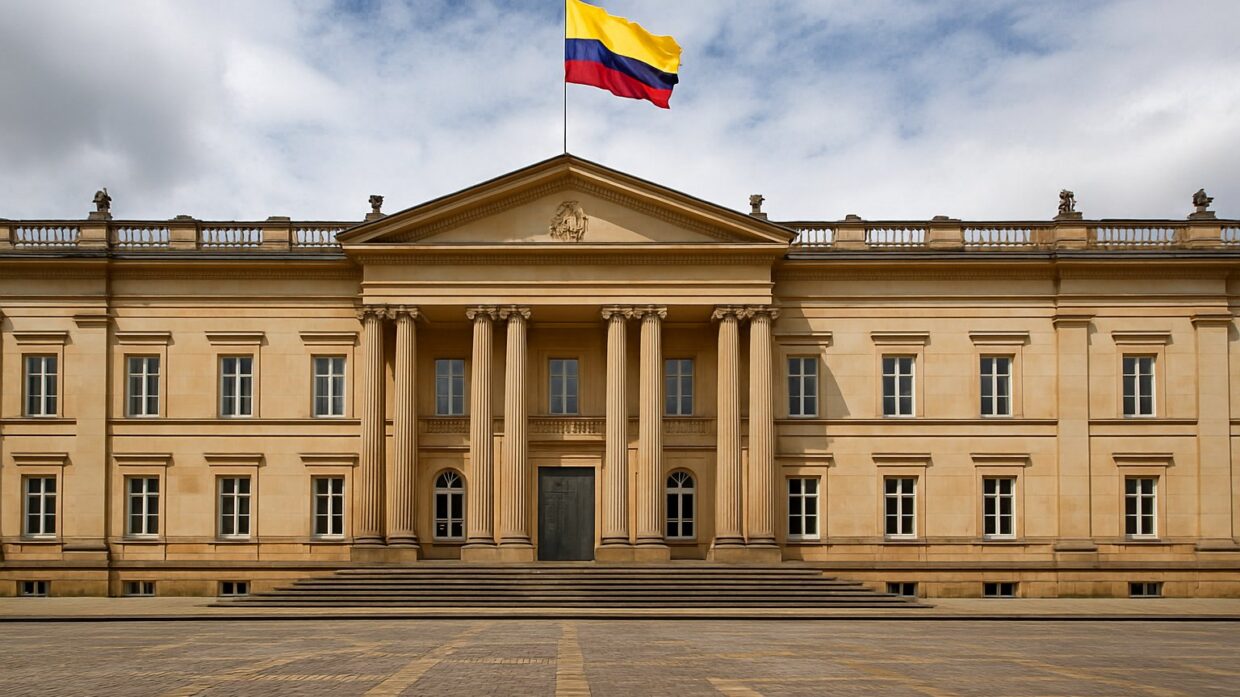
Colombia's new conservative president Abelardo de la Espriella took office Friday after winning a narrow June election, and within hours the Trump administration announced $1 billion in security assistance to support his stated agenda of cracking down on crime and drug trafficking. The sequence itself is the story: the timing reveals how aligned the incoming Colombian government is with Trump administration priorities, and what neither side's framing fully captures is that this represents a return to a much older pattern in US-Latin American relations.
The Guardian's framing emphasizes the Trump administration's speed in pledging security funds and describes De la Espriella as "Trump ally" and "rightwing," positioning the aid as evidence of ideological alignment between Washington and Bogota. The headline leads with the dollar figure ($1bn) before naming the new president, linguistically treating the aid commitment as the primary news. That editorial choice reflects a left-aligned concern: that the US is instrumentalizing military support to strengthen a conservative government ideologically compatible with Trump. The Guardian does not establish what specific reforms De la Espriella has proposed or whether they differ materially from Petro's approach to drug enforcement.
Breitbart's framing emphasizes De la Espriella's ideological credentials, noting his citation of Thomas Jefferson and describing him as a "conservative" who offers a "sharp break" from leftism. The reporting celebrates the transition as a return to ideological clarity and does not foreground the US security commitment at all, treating De la Espriella's presidency as a domestic Colombian matter. This framing leaves out the international dimension entirely, which is analytically significant because it omits the question of whether De la Espriella's agenda depends on US support.
What neither framing addresses is the documented history that preceded this moment. Colombia has received US security assistance continuously since 2000, when the Clinton administration launched Plan Colombia, a $1.3 billion commitment nominally targeted at drug trafficking but widely understood as Cold War-era counterinsurgency by another name. That program persisted through Democratic and Republican administrations. De la Espriella is not the first Colombian president to pledge a "crackdown." Gustavo Petro, the leftist he is replacing, also made crime reduction a centerpiece of his platform. The public record does not establish what specific tactics De la Espriella will deploy that differ from his predecessor's approach, or whether the $1 billion commitment reflects new strategy or continuation of existing doctrine.
Bloomberg notes that De la Espriella won a "tight race" in June and that he represents a "sharp break" with Petro's administration, while also flagging concerns over "the nation's finances and increased violence." That framing is analytically more complete because it establishes that the transition occurs amid institutional instability, not as a referendum on leftism itself. The reporting leaves open the question of whether De la Espriella's election reflects Colombian voters' rejection of leftist governance or fatigue with Petro's specific performance.
What the record establishes is that Colombia's new president takes office with immediate US military backing at a moment when the country faces both drug trafficking and internal violence. What remains undisclosed is whether the $1 billion commitment reflects new priorities or the continuation of a two-decade security partnership that has transcended ideology.
Colombia's security partnership with the United States predates De la Espriella by a quarter-century, yet the immediate $1 billion pledge obscures whether his administration represents tactical innovation or ideological repackaging of existing doctrine. Plan Colombia, launched in 2000 under Clinton and sustained through successive administrations regardless of political orientation, established a framework that has persisted across both leftist and conservative Colombian governments. The real question is not whether De la Espriella aligns with Trump ideologically, but whether his specific enforcement strategies materially differ from those of his predecessor Petro, who also campaigned on crime reduction. The speed of the US commitment signals continuity in Cold War-era security relationships, not a break with prior policy, and masks the deeper institutional reality: Colombia's capacity to address drug trafficking and internal violence remains structurally dependent on sustained American military investment, regardless of which ideology occupies the presidency.