Photo: Well This Is News
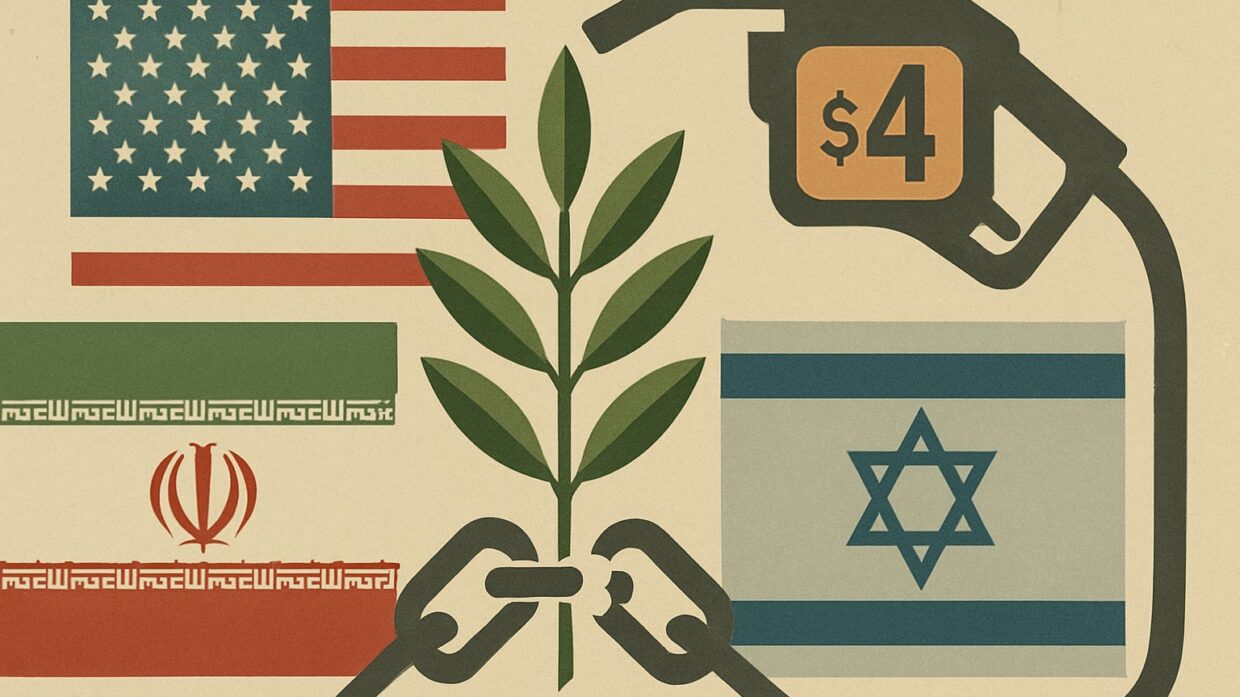
Trump pushes comprehensive Middle East peace as gas prices fall below $4
Trump seeks ceasefire on all fronts while Israel deepens military presence in Lebanon
Trump calls for ceasefire across all Middle East fronts as Iran deal framework takes shape
Key Takeaways
- Trump has announced a ceasefire framework but there is no public evidence that Israel, Iran, Hezbollah, or Lebanon have actually agreed to accept it, leaving the status of all parties' commitment unknown.
- Gas prices did fall below $4 per gallon but remain roughly $1 higher than before the U.S.-Israel attack on Iran that triggered the original escalation, meaning the agreement only partially reversed prior economic damage.
- The Iran framework is described as a preliminary agreement rather than a final deal, with no disclosure of what specific commitments Iran made, what verification systems exist, or whether sanctions relief is included.
The Analysis
Trump announced a framework agreement with Iran and called for a comprehensive ceasefire spanning Israel, Lebanon, and Hezbollah, but the reporting from both sides leaves out whether the parties have actually committed to what he is proposing. The Guardian reported that Trump said he expects a 'complete ceasefire on all fronts, including Lebanon, Hezbollah and Israel,' and encouraged regional countries to 'maintain commitment to allowing our negotiations to beautifully unfold.' Breitbart framed the statement as Trump renewing his call for peace while Israel simultaneously 'deepened its military presence inside southern Lebanon.' Neither framing addresses the fundamental question: are the parties responding to Trump's call, or is Trump calling for something that has not yet been achieved or accepted.
The left's framing emphasizes the Iran deal as a 'historic breakthrough' that 'reduces tensions' and 'lowers the risk of war.' The Guardian linked gas price relief directly to the agreement, reporting that prices fell below $4 per gallon 'after Trump's signing of Iran deal.' This narrative leaves out that gas prices had already begun declining in prior weeks, and that current prices remain roughly $1 higher per gallon than they were before the U.S.-Israel attack on Iran that triggered the escalation. The framing makes the agreement appear to have solved an economic problem when what it may have done is partially reverse damage from an earlier conflict. It also does not establish what specific mechanisms the Iran deal contains or how compliance will be verified.
The right's framing emphasizes the gap between Trump's ceasefire call and Israel's continued military operations. Breitbart reported that Israel is 'deepening its military presence inside southern Lebanon' while Trump 'renewed his call for peace.' This framing implies tension between what Trump is asking for and what Israel is doing, but it leaves out whether Israel views the ceasefire call as applying to Lebanon, or whether Israel believes it retains operational latitude. The Washington Examiner piece hints at 'the Middle East's unthinkable next step,' suggesting the agreement raises new risks, but the summary does not detail what those risks are or whether they are speculative.
What neither side fully establishes is the actual status of the Iran agreement itself. Both report Trump announcing a 'framework,' but a framework agreement is not a final deal. The public record does not disclose what specific commitments Iran made, what verification mechanisms exist, whether sanctions relief is included, or how the agreement relates to the 2015 JCPOA that Trump withdrew from in 2018. Neither framing addresses why this framework is being presented now, whether other parties like Saudi Arabia or regional proxies have agreed to related arrangements, or what happens if one of the named parties (Israel, Hezbollah, Lebanon) does not accept the ceasefire Trump is calling for.
The sequence suggests Trump is attempting to establish a diplomatic umbrella under which multiple conflicts can be negotiated, but the reporting does not establish whether he has secured agreement from all parties to participate. The absence of direct statements from Israel, Iran, or Hezbollah confirming their acceptance of the ceasefire framework is notable. The real headline is not whether the Iran agreement is a breakthrough or a risk, but whether the parties have actually committed to the ceasefire Trump is calling for, or whether Trump is calling for something in advance of having secured those commitments.
A framework agreement means nothing without binding commitments from the parties involved, yet neither left nor right-leaning outlets have reported whether Israel, Iran, Hezbollah, and Lebanon have actually accepted Trump's ceasefire proposal. The Guardian attributed gas price drops to the Iran deal while ignoring that prices had already declined and remain $1 above pre-escalation levels, conflating partial damage reversal with economic success. Breitbart highlighted Israel's deepening military presence in Lebanon against Trump's peace call without clarifying whether Israel views itself bound by the ceasefire terms. The critical institutional consequence: if any named party rejects participation, the entire diplomatic structure collapses, yet the public has no clarity on their actual positions. This gap between announcement and acceptance determines whether the framework becomes binding international law or dissolves into rhetorical positioning when implementation begins.