Photo: Well This Is News
Trump-backed far-right millionaire Abelardo de la Espriella wins Colombia election amid vote irregularity claims
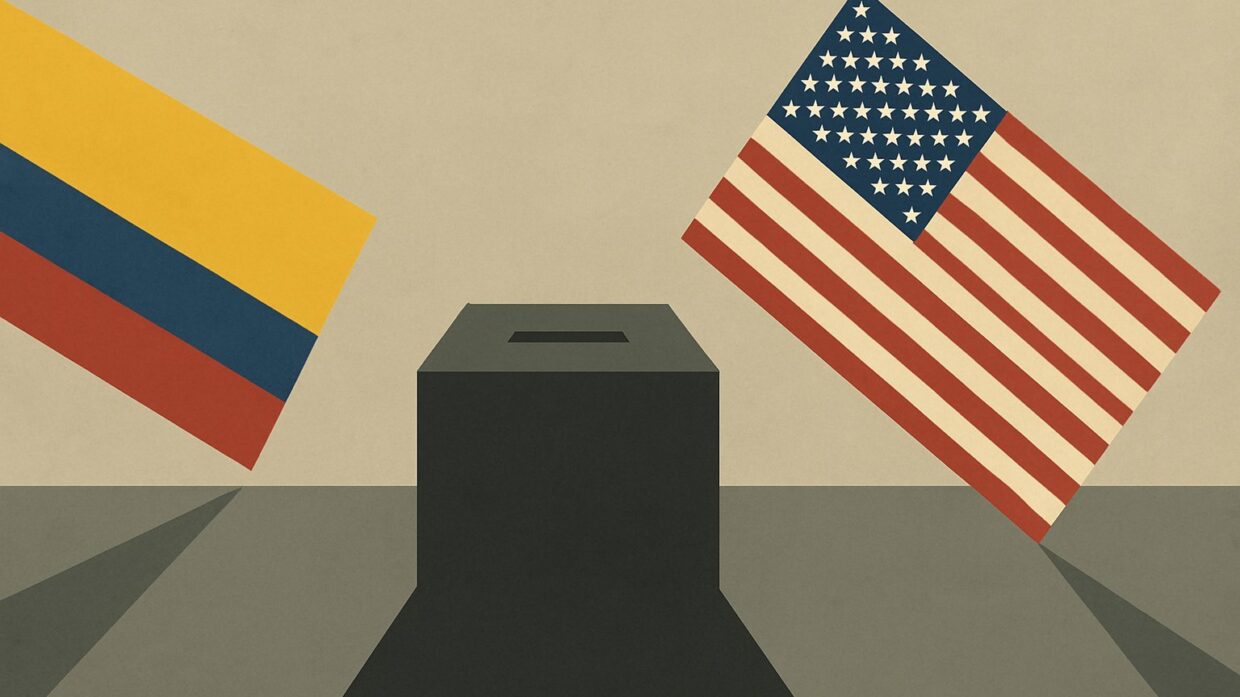
Colombia elects pro-business conservative Abelardo de la Espriella, signaling shift toward US alignment
Conservative lawyer Abelardo de la Espriella wins Colombia's presidential runoff
Key Takeaways
- Both left and right frames treat De la Espriella's election as a simple ideological choice between peace talks and military action, but Colombian voters were actually calculating which specific approach works against the successor armed groups currently operating in the country, which have different structures and incentives than earlier versions.
- Petro's peace framework faced documented critiques from security analysts who argued it left armed groups with territorial and economic control, yet De la Espriella's military-first alternative has historical precedent for producing civilian casualties and forced displacement, meaning neither approach has a proven track record against current threats.
- The election result itself appears legitimate based on preliminary counts pending certification, but the real scrutiny should focus on whether either candidate's security assumptions about how contemporary armed groups respond to negotiation versus force are actually accurate.
The Analysis
Abelardo de la Espriella won Colombia's presidential runoff with a narrow preliminary majority, defeating leftwing senator Iván Cepeda. What neither the celebrations nor the recriminations fully address is what this election reveals about how Colombian voters are calculating risk in a country where the armed conflict has transformed but not ended.
The documented facts: De la Espriella, a lawyer and businessman with known admiration for Trump, secured the leading position in initial vote counts reported by electoral authorities. NPR and Bloomberg both reported the preliminary results showing his narrow lead. Cepeda's campaign stated it had identified irregularities in vote tallies, though formal certification and investigation of those claims were still pending as reporting concluded. De la Espriella has publicly stated his intention to abandon the peace-negotiation framework that has governed Colombia's approach to armed groups for the past decade and return to what he characterizes as military-first security policy.
Leftist coverage frames this as a rightward lurch enabled by Trump-aligned backing and driven by wealthy interests. The Guardian's language emphasized "far-right millionaire" and highlighted Trump's endorsement. NPR framed the election around "conflict warnings" and characterized De la Espriella's position as "intensified military action over peace talks." The left's concern is legible: a security-first approach historically enabled paramilitary violence and human rights abuses in Colombia, and there is documented history of far-right movements in the country leveraging security rhetoric to justify extrajudicial killings. What the left frame underplays is that Cepeda and Petro's peace-focused approach also faced documented critiques from security analysts who argued the strategy left armed groups with territorial and economic control, particularly over cocaine trafficking infrastructure.
Conservative coverage emphasizes market confidence and alignment with US interests. Bloomberg described the result as heralding a "pro-market turn" and "pro-US" realignment. The right's framing treats security intensification as rational cost-reduction: fewer armed groups operating openly means more stable investment environment, more reliable rule of law, and better conditions for US-Colombian cooperation on regional security. What the right frame does not foreground is the precedent: previous military-first phases in Colombia produced documented cases of civilian casualties, forced displacement, and extrajudicial detentions.
What neither frame adequately captures is the actual security dilemma Colombian voters appear to have been weighing. The armed groups operating in Colombia in 2026 are not the FARC of earlier decades, but rather successor organizations and splinter groups with different structures and incentives. The question Colombians face is not whether peace talks or military action is theoretically superior, but which approach works against which specific groups in which specific territories. Petro's framework assumed negotiation could work with rational actors; De la Espriella's appears to assume only force produces compliance. Both assumptions are testable claims, and the public record does not establish which analysis of contemporary armed groups is accurate.
The election result itself is legitimate as reported so far, pending certification. What merits scrutiny is not the outcome but the framing around it: both sides have incentive to treat this as a simple ideological choice rather than a difficult security calculation with no documented perfect answer.
De la Espriella's victory will force a concrete operational shift in how Colombia's government engages armed successor groups over the next four years, abandoning a decade of negotiation-based counterinsurgency for military-first tactics. This choice carries documented historical consequences: previous Colombian security periods relying primarily on military action produced documented civilian casualties and extrajudicial detentions, while the negotiation framework left some armed groups with territorial control over drug trafficking. What makes this election consequential is not ideological but tactical. Colombian voters chose an untested approach against contemporary armed groups with different organizational structures than earlier FARC-era opponents, meaning the institutional apparatus for military counterinsurgency will be rebuilt and deployed against adversaries whose actual vulnerabilities and incentives remain analytically unclear. The result will either validate De la Espriella's security assumptions or expose them, producing either improved stability for foreign investment and regional cooperation or repeating documented patterns of civilian harm that under