Photo: Well This Is News
Trump declares Iran war over while G7 allies navigate fractured summit and Republican skepticism
Trump's Iran deal moves forward despite GOP demands for specifics and Congress kept in the dark
Trump administration announces Iran interim peace deal as Senate Republicans demand details and congressional vote
Key Takeaways
- The Trump administration negotiated an 'interim' agreement scheduled for signing in Switzerland while keeping the actual terms secret from Congress, which is not standard practice for either treaty ratification or war powers notification.
- Trump declared the deal simultaneously finished and incomplete by different officials, and neither major news frame investigates whether specifics like sanctions relief, oversight mechanisms, or Iranian commitments actually exist or remain unresolved.
- Senate Republicans cannot or have not leveraged their committee authority to demand emergency disclosure of an agreement affecting major U.S. foreign policy, suggesting either they lack the political will to press the administration or the reporting is incomplete about their behind-the-scenes efforts.
The Analysis
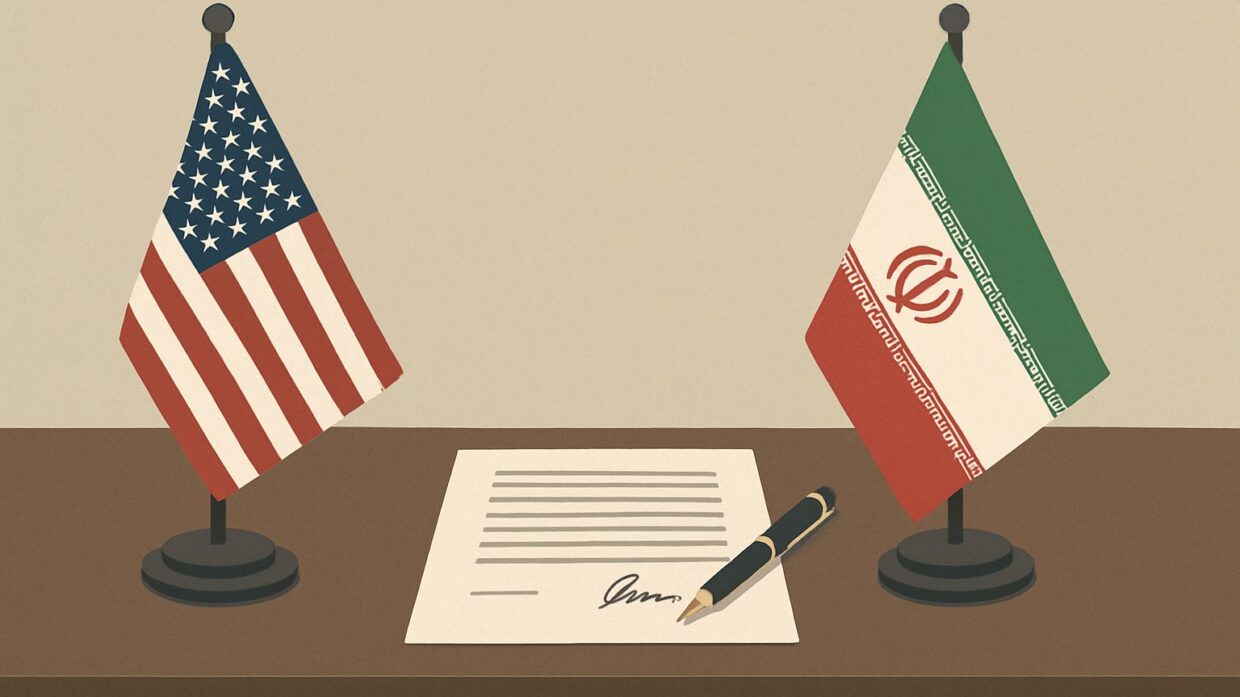
Trump announced an interim peace deal with Iran at the G7 summit in France, expected to be signed Friday in Switzerland, but the specific terms remain undisclosed even to Congress, creating a rare moment where Republican skepticism appears justified and institutionally grounded rather than reflexive.
The documented facts: Trump declared the deal "all signed" at the G7 meeting in Évian-les-Bains on Tuesday, according to The Guardian reporting. JD Vance, Trump's running mate, acknowledged that specifics were "to be worked out," per The Guardian's reporting from June 16. The memorandum of understanding is scheduled to be signed Friday at Burgenstock, Switzerland, according to Bloomberg citing the Swiss foreign ministry. The agreement would allow Iran to resume oil and fuel sales. Senate Republicans have requested detailed briefings and signaled they will demand a congressional vote on the final agreement, according to reporting from Fox News, The Washington Examiner, and Bloomberg.
The left frame emphasizes Trump's unilateral declaration and the lack of transparency, positioning this as evidence of presidential overreach and poor diplomacy. Guardian reporting highlights that Starmer appeared sidelined at the summit, with a meeting about Ukraine delayed and the prime minister reduced to making small talk. The framing suggests Trump's approach leaves allies confused and weakens collective Western strategy. This narrative leaves out that Republican senators, not exclusively Democratic critics, are the ones demanding specifics and congressional involvement, which complicates a purely partisan reading of Trump overreach. The left's emphasis on G7 discord and Starmer's reduced influence also underplays that Trump appears to have secured an agreement multiple allies hoped for, whatever its ultimate terms.
The right frame emphasizes Trump's diplomatic accomplishment and Republican institutional caution. Fox News and The Washington Examiner report that GOP senators are defending Trump publicly even while pressing for details, framing this as appropriate oversight rather than obstruction. Bloomberg reports that Republicans "signaled Congress will ultimately vote," describing this as expected constitutional process rather than skepticism born of exclusion. This framing positions Senate Republicans as serious stewards of foreign policy, not partisan antagonists. What this frame leaves out is that the administration has not disclosed the terms even to Congress, which is not routine practice. The right's narrative also omits that Trump declared the deal "all signed" while simultaneously saying specifics were still being worked out, a contradiction neither the left nor right fully interrogates.
What neither side fully addresses is the institutional question the record establishes: this is not the standard treaty ratification process or even the war powers notification process Congress typically receives. Trump appears to have negotiated an "interim" agreement that will later require a formal accord and congressional vote, compressing the initial disclosure period and keeping the Senate in a position where they learn about major foreign policy shifts after the fact. The reporting does not establish whether this structure was intentional or whether the administration withheld details because they genuinely remain unresolved. Senate Republicans demanding a vote is not unusual; what is notable is their simultaneous inability or unwillingness to request an emergency briefing or leverage their committee positions for immediate disclosure.
The available reporting also does not establish what the oil sale provisions actually are, whether they include sanctions relief, what oversight mechanisms exist, or what Iran commits to in return. Bloomberg reports Trump called it a "peace deal," but The Guardian notes it is technically an "interim" agreement, suggesting the war has not formally ended but been paused pending further negotiation. This distinction matters considerably and remains underdeveloped in all reporting examined.
Trump's compressed disclosure timeline for a major Iran agreement establishes a new procedural precedent that bypasses the standard treaty review process Congress has historically used to constrain executive foreign policy power. Senate Republicans requesting details after the fact, rather than before signature, signals they have accepted a reduced institutional role in advance agreement review. If this interim structure becomes the model for subsequent agreements, Congress loses its ability to condition ratification on disclosed terms, transforming the Senate from a deliberative body into a post-hoc validator. The undefined "interim" status also leaves undefined what commitments Iran makes in exchange for resumed oil sales, creating ambiguity that future administrations can exploit to avoid full congressional scrutiny of major concessions.