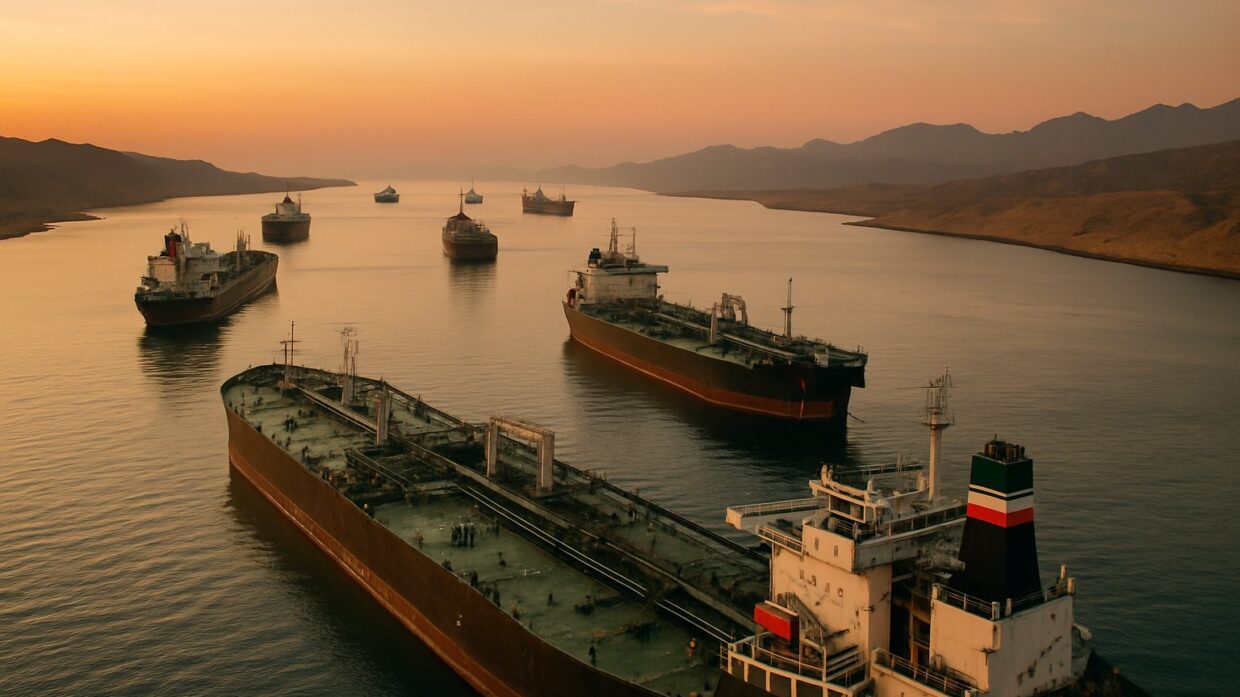
Photo: Well This Is News
Trump strikes Iran deal but threatens to resume bombing if Tehran steps out of line
Trump secures Iran agreement lifting sanctions while keeping military option on table
Trump administration announces Iran deal framework allowing oil sales; details and enforcement mechanisms remain undefined
Key Takeaways
- The agreement text remains unpublished at the time of announcement, meaning Congress, Israel, and the public cannot yet evaluate whether Iran actually faces binding nuclear and missile constraints or simply receives sanctions relief.
- Critical verification and enforcement procedures that would monitor Iranian compliance and trigger potential American military response have not been publicly disclosed, leaving the mechanism for detecting violations undefined.
- The comparison to the 2015 JCPOA shows that major nuclear agreements typically require months of detailed negotiation after a framework announcement, but the current timeline for finalizing technical specifications remains unclear.
The Analysis
The Trump administration announced an outline agreement with Iran at the G7 summit in France that would allow Tehran to resume oil and fuel exports in exchange for nuclear and missile program constraints, but the text remains unpublished and enforcement mechanisms are undefined. Vice President JD Vance said specifics would be released by Friday, while Trump stated at the summit that the US would "go back to shooting" if Iran "don't behave." Senate Republicans have requested detailed information on verification and enforcement procedures before the agreement moves forward.
The documented facts: Trump withdrew from the 2015 JCPOA (Joint Comprehensive Plan of Action) in 2018 and reimposed comprehensive sanctions on Iran's oil exports, financial sector, and banking system. The current framework reportedly allows Iran to sell oil and fuel while accepting undefined constraints on its nuclear program and ballistic missile development. The public record does not yet establish what verification mechanisms would enforce Iranian compliance, what happens if Iran breaches the agreement, or what specific nuclear and missile restrictions Tehran would accept. Guardian reporting indicates Trump rejected the premise that the US would contribute $300 billion to an Iran fund, calling such claims false.
The left frame emphasizes Trump's inflammatory language, specifically his threat to "go back to shooting" if Iran "acts up." This framing presents the agreement as unstable because it depends on Trump's personal judgment about Iranian compliance rather than on established verification protocols. The Guardian reporting notes that Trump said the deal was "not final," which the left interprets as suggesting the agreement lacks the binding quality necessary for long-term stability. This framing leaves out that Trump administration officials have stated the full text will be released and that Senate input is expected. It also does not address what verification mechanisms might exist or what specific Iranian concessions the agreement contains.
The right frame emphasizes that Trump secured a significant diplomatic achievement by bringing Iran back to the negotiating table after the previous administration's departure from the JCPOA. This framing highlights that the agreement allows Iran to sell oil, which suggests sanctions relief, while the US retains military leverage through Trump's explicit statement that force remains an option. The right interpretation leaves out that enforcement mechanisms and verification procedures remain undefined at the time of announcement, which raises institutional questions about how compliance would be monitored and what would trigger American military response.
What neither side fully captures is that the announcement occurred before the agreement text was public, which means critical stakeholders, including Congress and Israel, lack the specific information necessary to assess whether the deal actually constrains Iran's nuclear and missile programs or simply provides sanctions relief. The record does not establish whether the agreement includes International Atomic Energy Agency access to Iranian military sites, timeline restrictions on uranium enrichment, or inspection protocols. The comparison to the 2015 JCPOA is instructive: that agreement required six months of negotiation after the framework announcement before the text was finalized and specified verification details. The current timeline and technical details remain undisclosed. What matters is not whether Trump or his critics are correct in their framing, but whether the public and Congress can evaluate the actual terms before implementation begins. The underlying question is whether this framework, once detailed, represents a durable constraint on Iranian nuclear capacity or a temporary sanctions pause.
This agreement's lack of published enforcement mechanisms creates immediate institutional chaos for Congress and intelligence agencies tasked with monitoring Iranian compliance. Without defined verification procedures, the International Atomic Energy Agency cannot establish baseline inspection protocols at Iranian military sites, leaving the US unable to detect violations before they advance Iran's nuclear program. The 2015 JCPOA required six months of detailed negotiation after the framework stage to specify enrichment timelines and site access; rushing to implementation without these specifics allows Iran months of unmonitored activity. When the text eventually emerges, Congress will face pressure to approve an agreement already announced as fait accompli, undermining legislative oversight of a commitment that could last decades. The absence of triggers for enforcement means Trump's personal judgment about Iranian "behavior" becomes substitute for established protocol, destabilizing any successor administration's ability to manage the agreement predictably.