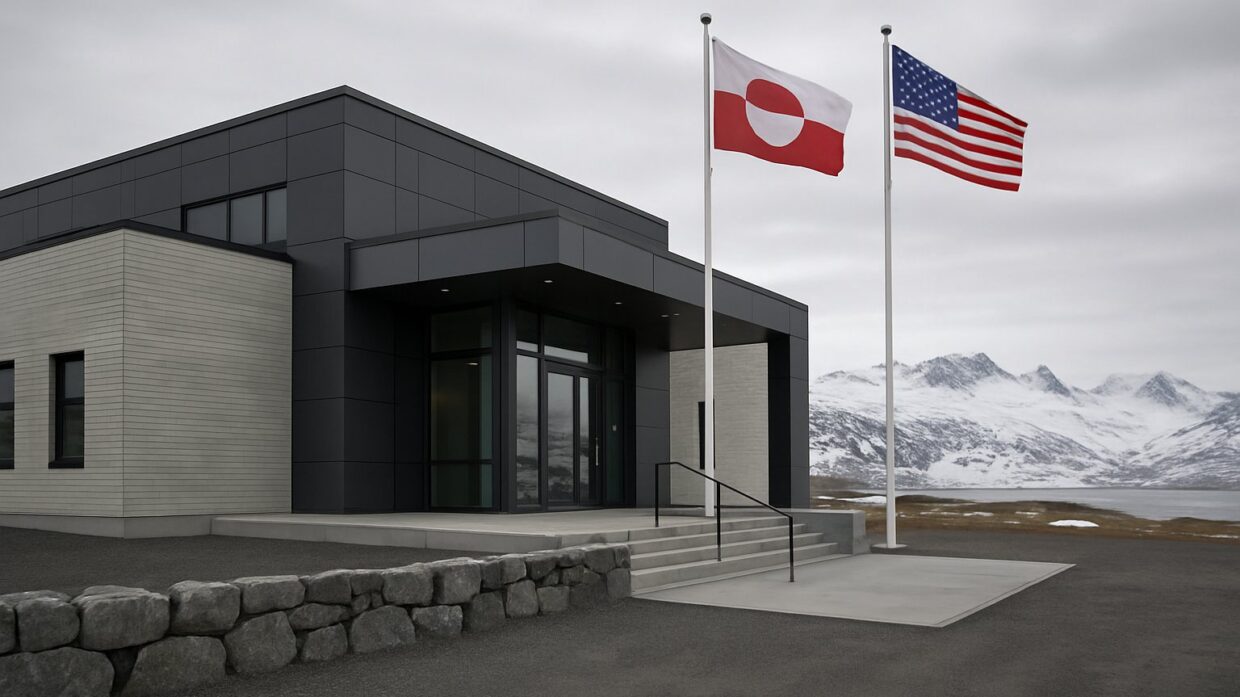
Photo: Well This Is News
Trump's Arctic Ambitions Spark Outcry as Greenlanders Reject US Expansion
Greenlanders Protest US Consulate Opening, Voice Sovereignty Concerns
US Opens Greenland Consulate Amid Hundreds of Local Protests
Key Takeaways
- A consulate requires host government approval to exist, yet reporting does not disclose whether Greenland requested it, approved it reluctantly, or had it imposed,creating a factual gap that explains why the Prime Minister boycotted while the building opened.
- The US strategic interest in Greenland stems from Arctic geopolitics driven by Russian and Chinese expansion and climate change opening new shipping routes, not new Trump ambitions, yet this structural context is largely absent from coverage of the protest.
- Greenland has been progressively asserting independence from Denmark since 1979 and now acts as a separate political actor, meaning a US consulate could simultaneously represent routine diplomatic recognition of that shift and a strategic move to bypass Denmark,both interpretations supported by the same facts.
The Analysis
A US consulate officially opened in Nuuk, Greenland on Thursday while hundreds of local residents protested outside, chanting "go home" and waving Greenlandic flags. This was not a routine diplomatic event. The specific language used by the Trump administration's special envoy to Greenland, Jeff Landry, framed the consulate opening as Washington's effort to "put its footprint back" on the island, a phrase that carries explicit territorial implication and triggered the protest.
The documented facts: hundreds of Greenlanders gathered outside the consulate, held signs reading "Stop USA" or "USA Asu," and the Prime Minister of Greenland publicly boycotted the ceremony. The consulate represents an official US diplomatic presence in the territory, which previously relied on consular services from Copenhagen. No previous Greenlandic Prime Minister boycotted a consulate opening.
The left framing, visible in The Guardian, emphasizes Trump administration "ambitions" and frames the consulate as part of a territorial acquisition strategy. The coverage foregrounds Landry's language about "putting its footprint back" and treats the protest as justified resistance to imperial overreach. This framing leaves out the distinction between establishing a consulate, which is routine diplomatic infrastructure, and the actual policy proposals under discussion. It also does not clearly separate Landry's rhetoric from official US policy toward Greenland.
The right framing, visible in the Washington Examiner, focuses on Greenlanders telling Americans to leave and emphasizes the phrase "Greenland belongs to Greenlanders." This coverage takes the protesters' own words seriously and presents local sovereignty concern as the primary story. What this framing underplays is that the Trump administration's strategic interest in Greenland is not new to this presidency, nor is it secret. Trump proposed acquiring Greenland during his first term in 2019. The current consulate opening follows years of increased US military interest in Arctic infrastructure as a counter to Russian and Chinese expansion in the region.
What neither side fully establishes is the specific policy driver behind the timing of this consulate opening. A consulate requires staffing, budget, and approval from the host government. The reporting does not disclose whether Greenland's government requested this consulate, whether it approved it reluctantly, or whether it was positioned against Greenlandic preference. The Prime Minister's boycott suggests political distance, but the consulate exists, which means some official approval occurred. The available reporting does not clarify how these facts coexist.
The historical context both framings avoid: Greenland has been moving toward independence from Denmark since 1979. In 2009, it gained home rule. In 2024, Greenlanders voted to reduce the use of Danish in official contexts, a symbolic step toward identity assertion. The US strategic interest in Greenland flows from Arctic geopolitics, particularly as climate change opens new shipping routes and resource access. Denmark retains formal sovereignty, but Greenland's government increasingly acts as a separate actor. The consulate opening reflects US acknowledgment of that shift, even if framed in routine diplomatic language.
The real question neither side addresses directly: Does a consulate represent routine diplomatic upgrading, or is it a strategic move toward closer US-Greenland relations that bypasses Denmark? The evidence suggests both can be true simultaneously.
The consulate opening establishes a permanent US diplomatic foothold that operationalizes Washington's Arctic strategy without requiring formal territorial acquisition or Denmark's explicit consent. This creates institutional leverage for future negotiations over resource access, military positioning, and shipping routes as climate change reshapes the Arctic. Greenland's Prime Minister boycotting the ceremony signals that the government approved the consulate under diplomatic pressure rather than voluntary partnership, meaning the US has installed infrastructure for Arctic competition that local leadership actively rejected. This precedent allows Washington to deepen engagement with Greenland's government structures directly, marginalizing Copenhagen's historic role as intermediary and accelerating Greenland's strategic realignment toward the US rather than Europe.