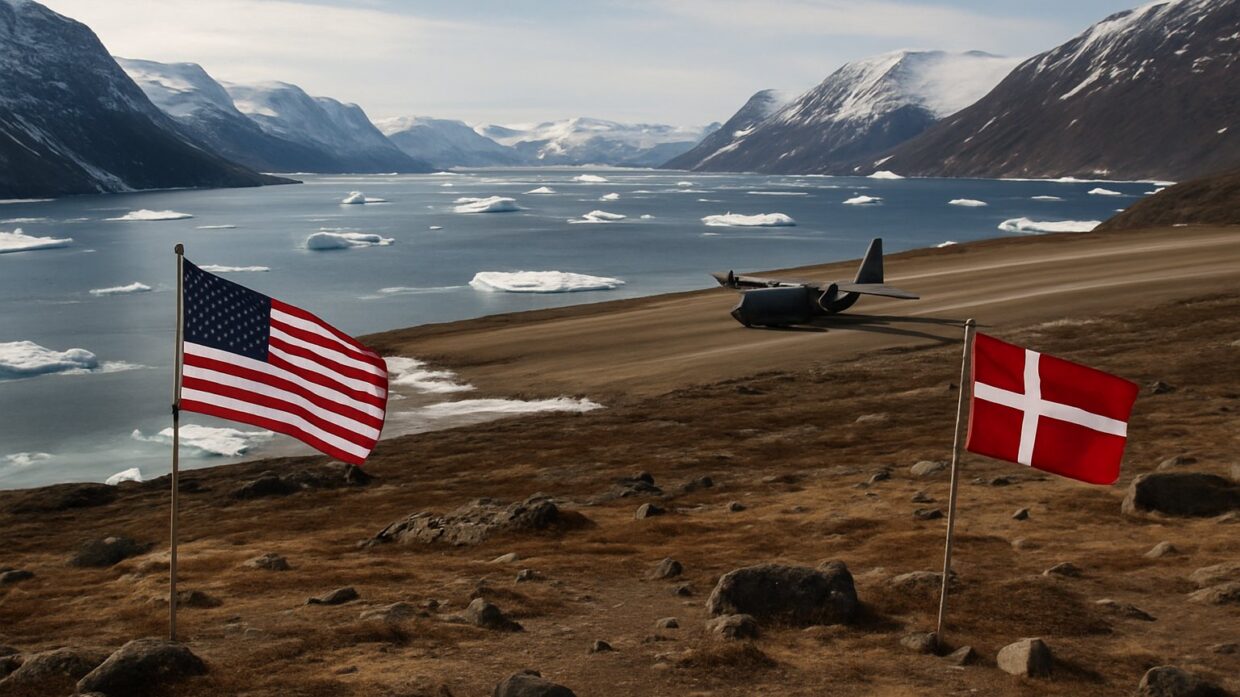
Photo: Well This Is News
Trump's Greenland Ambitions End in Defense Pact as Arctic Tensions Rise
Trump Secures Greenland Military Deal, Strengthens NATO Arctic Presence
US, Denmark, Greenland Sign Arctic Security Agreement With Two New Military Bases
Key Takeaways
- The reporting on both sides does not disclose the locations, operational purpose, or whether these bases will be conventional or nuclear-capable, leaving the public unable to assess what the agreement actually commits.
- Greenland was not informed about the nuclear weapons capabilities of the previous US base at Thule until decades after the Cold War, and the current agreement reporting contains no information about transparency safeguards or Greenlander oversight of these new installations.
- Neither side explains whether the bases were the Trump administration's original objective or a fallback position after acquiring Greenland as territory proved diplomatically impossible, which shapes whether this represents strategy or compromise.
The Analysis
The agreement signed at the UN General Assembly represents a pivotal shift: Trump's months-long campaign to acquire Greenland as US territory has been redirected into a security partnership that includes two new American military bases, which the available reporting does not name or locate. What the reporting establishes is the basic structure of the deal: the US gains a military footprint in the Arctic, Greenland retains its sovereignty under Danish authority, and Denmark ostensibly maintains its position as a NATO ally capable of hosting the American presence.
The left framing, represented in The Guardian's coverage, emphasizes the word "tensions" repeatedly and foregrounds Greenlander "emotions" described as a "mixture of hope, skepticism and fear." This framing serves a function: it normalizes military escalation as a response to unspecified threat, and it personalizes Greenlandic ambivalence while leaving the substance of those concerns undisclosed. The Guardian does not establish what specific Arctic security threat prompted the agreement, what intelligence assessments drove it, or what threat Russia poses that justifies two new bases. The word "tensions" names the problem as abstract NATO-level friction rather than asking whether the bases themselves create new tensions. That omission is significant: a reader following this account learns that the deal "eases tensions between NATO allies" without understanding what tensions those are or how a larger US military presence alleviates them.
The right framing, from Breitbart, uses the phrase "strengthening Arctic and North Atlantic security" and describes the agreement as "addressing legitimate security concerns." Breitbart names the bases as new infrastructure while avoiding the substantive question of what they will do, what their purpose is operationally, or what escalatory effect they may have. The framing positions the deal as a diplomatic success, a characterization the reporting does not establish with evidence. The sequence,Trump publicly demands Greenland, months of diplomatic friction, then bases appear in a signed agreement,appears framed as resolution, but the reporting does not explain whether the bases were the original objective or a consolation after the acquisition idea failed.
What neither side fully captures is the strategic history that explains why this moment matters. The United States has sought military presence in Greenland since World War II. During the Cold War, the US maintained Thule Air Base, a nuclear-capable installation that Denmark's government nominally approved but Greenlanders were not informed about until declassification revealed its nuclear weapons status decades later. That historical precedent,secret military infrastructure on Greenlandic soil,contextualizes why current Greenlander sentiment is mixed. The available reporting does not disclose whether these new bases will be conventional or nuclear-capable, whether Greenlanders will have transparency about their operations, or whether this agreement includes the kind of disclosure safeguards that did not exist under Thule.
The underlying question is whether this arrangement represents a genuine security partnership or a return to a Cold War model where Greenland's strategic geography is leveraged while Greenlanders retain limited input over military operations on their soil. That distinction shapes the actual significance of the deal, and neither the left nor right framing establishes it.
The two new Arctic military bases represent a return to Cold War infrastructure precedent without addressing the transparency failures that preceded it. Greenland's history with secret nuclear weapons at Thule Air Base, undisclosed to the island's population until decades later, establishes why the current agreement's silence on base capabilities and operational oversight matters institutionally. If these installations are nuclear-capable or exempt from Greenlandic transparency requirements, the deal replicates the exact governance model that generated decades of mistrust. The agreement's failure to specify whether bases operate under disclosure requirements or Greenlandic oversight determines whether this is genuine partnership or strategic leverage. That omission, present in both left and right coverage, leaves unresolved whether Denmark and the US have constructed safeguards against repeating Thule's classified precedent or have simply formalized it under a different name.